
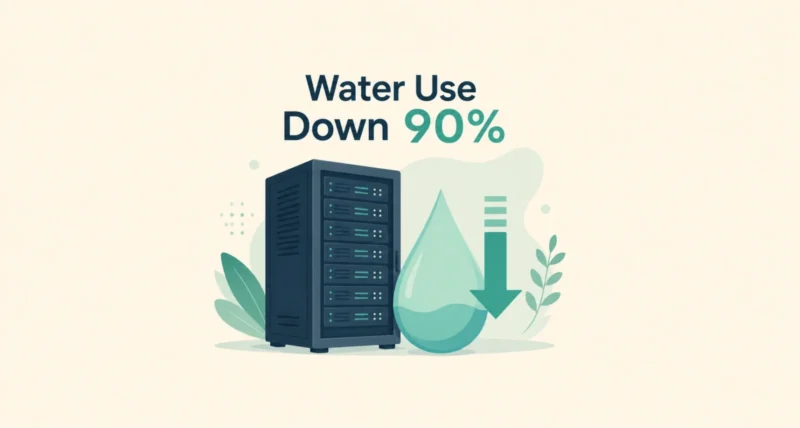
Every AI question you ask runs on a machine that gets hot, and cooling that machine has long meant burning through water. So here is a surprising number. Microsoft datacenter water use per unit of computing has fallen by nearly 90 percent over two decades, even as cloud and AI demand exploded. On June 24, 2026, Microsoft laid out exactly how it pulled that off, and the story is more useful than a press release.
| Quick Answer Microsoft has cut its datacenter water intensity by nearly 90 percent since the early 2000s, dropping from 2.3 liters per kilowatt-hour to 0.27 in 2025. That figure is roughly three times better than the industry average. The company aims for a 40 percent improvement by 2030 and has already reached 25 percent. In its 2025 fiscal year, Microsoft also replenished more water than it withdrew globally for the first time. |
Key Takeaways
- Microsoft’s water use effectiveness fell from 3 to 0.27 liters per kilowatt-hour, a drop of almost 90 percent.
- That 0.27 figure is about three times better than the datacenter industry average.
- The 2030 goal is a 40 percent cut in water intensity, and 25 percent is already done.
- In fiscal year 2025, Microsoft replenished more water than it used, reaching water positive for the year.
- Closed-loop and zero-water cooling designs are the main reason the numbers keep falling.
Why Do Datacenters Use Water at All?
Datacenters are buildings full of servers, and servers run hot. The chips that power cloud apps and AI draw a lot of electricity, and most of that energy turns into heat. If that heat is not removed, the hardware slows down or fails.
For years, the cheapest way to shed heat was evaporative cooling. Water evaporates, carries heat away, and cools the air around the servers. It works well, but it drinks a steady supply of fresh water, often from the same sources nearby communities rely on.
| Worth Knowing Water and power are linked. Cooling can account for a large share of a datacenter’s energy use, so cutting water often means rethinking energy too. The two challenges travel together. |
If you want the wider picture on this, our explainer on whether AI uses a lot of water breaks down the full environmental footprint in plain terms.
What the Numbers Actually Show
Microsoft measures water efficiency using a metric called water use effectiveness, or WUE. It is the liters of water used for every kilowatt-hour of computing. Lower is better.
Back in the early 2000s, a typical Microsoft facility used 2.3 liters per kilowatt-hour. By 2025, that fell to 0.27. As GeekWire reported, that 0.27 figure is about three times better than the industry average.
| Metric | Then | Now (2025) |
| Water use effectiveness | 2.3 L/kWh | 0.27 L/kWh |
| Improvement | Baseline | Nearly 90 percent lower |
| Vs industry average | Similar | About 3x better |
| 2030 intensity goal | 40 percent cut | 25 percent reached |
How Microsoft Cut Water Use, Step by Step
The drop did not come from one trick. Microsoft layered several changes over many years. Here is the simple version of how the numbers fell.
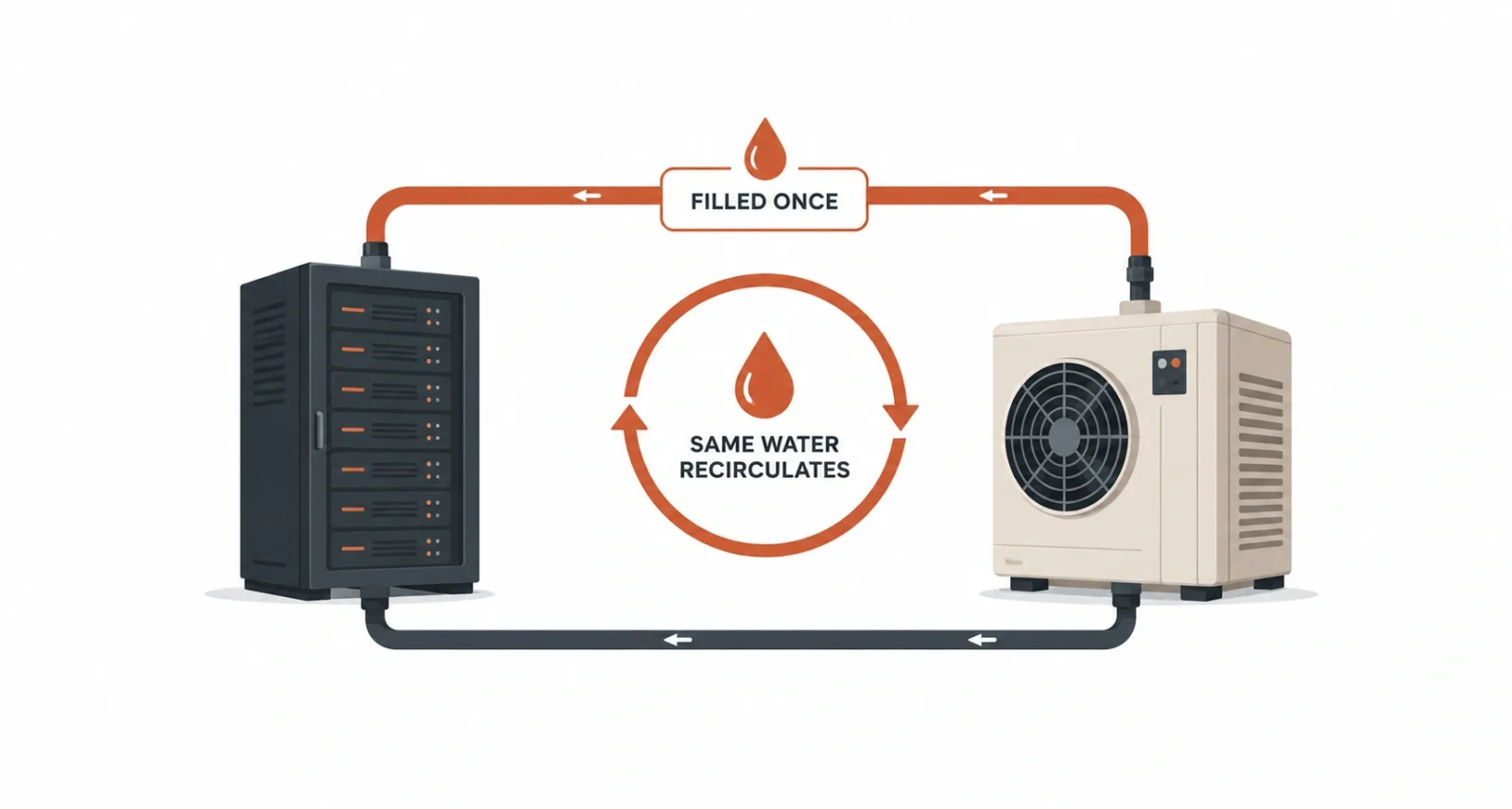
- Closed-loop cooling. New designs fill a cooling loop once, then recirculate the same water instead of evaporating fresh supply.
- Zero-water designs. Since August 2024, new datacenter designs aim to use no water for evaporation, relying on air and recycled liquid instead.
- Direct-to-chip liquid cooling. Cold plates sit right on the hottest chips, pulling heat at the source rather than chilling whole rooms of air.
- Wider temperature ranges. Running servers a little warmer, within safe limits, cuts how much cooling is needed in the first place.
- Recycled and reclaimed water. Where water is still needed, many sites use reclaimed or non-potable sources instead of drinking water.
The Standout
Microsoft says its newest closed-loop AI campus, Fairwater in Mount Pleasant, Wisconsin, fills its cooling loop once and then runs with essentially zero water consumption. CEO Satya Nadella compared its yearly water use to that of a single restaurant.
Old Cooling vs New Cooling
The shift is easiest to see side by side. Traditional evaporative cooling trades water for simplicity. The newer closed-loop approach trades a little more upfront energy for far less water.
| Feature | Evaporative Cooling | Closed-Loop Cooling |
| Water source | Constant fresh supply | Filled once, then recirculated |
| Ongoing water use | High | Near zero |
| Best for | Older designs | New AI workloads |
| Trade-off | Low energy, high water | Slightly higher energy, low water |
This same closed-loop approach shapes Microsoft’s newest builds. Our breakdown of Microsoft’s new AI datacenter in Pecos, Texas shows how the design plays out at a brand new campus.
What Does Water Positive Mean?
Water positive means a company replenishes more water than it consumes across its operations. Microsoft pledged in 2020 to become water positive by 2030. In its 2025 fiscal year, it reached that balance globally for the first time, returning more water than it withdrew through replenishment projects.
| Quick Take Replenishment can mean funding wetland restoration, recharging aquifers, or precision irrigation that saves water elsewhere. The global tally adds up withdrawals and replenishment across all operations, not site by site, so local impact still varies. |
Why AI Makes This Harder
AI is the twist in this story. Modern AI chips run far hotter than older silicon, with some accelerators pushing past 1,000 watts each. More heat usually means more cooling, which historically meant more water.
That is why the efficiency push matters now more than ever. Microsoft frames new AI growth under a water-first design idea, where water used per unit of AI capacity keeps falling even as total compute climbs. The goal is to decouple datacenter growth from water use.
| Quick Tip When you read a single impressive water stat, check whether it covers the whole fleet or just the newest sites. Microsoft’s current network still mixes older water-cooled and newer designs, so fleet-wide averages tell the fuller story. |
How Microsoft Compares to Others
Microsoft is not alone in this race. The announcement landed in the same stretch as similar moves from rivals. Amazon shared comparable water stats, and Google issued updated water-positive pledges.
The common thread is public pressure. Communities near datacenters, especially in dry regions, increasingly want to know how much water these buildings use. That scrutiny is pushing the whole industry toward closed-loop and air-based cooling.
Microsoft datacenter water use is a rare good-news story in a debate full of alarming numbers. A nearly 90 percent cut in water intensity, while compute demand soared, shows that efficiency and growth can move together.
The caveats are real. The newest stats often reflect the newest sites, and a global tally hides local detail. Still, the direction is clear, and the pressure from communities is keeping it honest. That is worth watching as AI keeps scaling.
| Your Move Curious how AI and the cloud shape the wider world? Browse more in our Technology section for clear breakdowns of the trends that matter. |
Frequently Asked Questions
How much has Microsoft reduced its datacenter water use?
Microsoft cut its water use effectiveness from 2.3 liters per kilowatt-hour in the early 2000s to 0.27 in 2025, a drop of nearly 90 percent. That figure is roughly three times better than the datacenter industry average.
What is water use effectiveness (WUE)?
WUE measures the liters of water a datacenter uses for every kilowatt-hour of computing energy. A lower number means more efficient water use. Microsoft uses it to track cooling and humidification efficiency over time.
Is Microsoft water positive now?
In its 2025 fiscal year, Microsoft replenished more water than it withdrew globally for the first time. That marks progress toward its pledge to be water positive across operations by 2030, measured as a global tally.
How does closed-loop cooling save water?
A closed-loop system is filled with water once, then recirculates the same water between servers and chillers to move heat. Because it does not evaporate fresh supply, ongoing water use drops to near zero.
Does AI increase datacenter water use?
AI chips run hotter and need more cooling, which can raise water demand. Microsoft is countering this with water-first cooling designs that aim to lower water used per unit of AI capacity even as total compute grows.
What is Microsoft’s 2030 water goal?
Microsoft aims to improve datacenter water-use intensity by 40 percent by 2030 across its owned fleet. As of 2025, it had reached a 25 percent reduction, putting it well over halfway to that target.

