
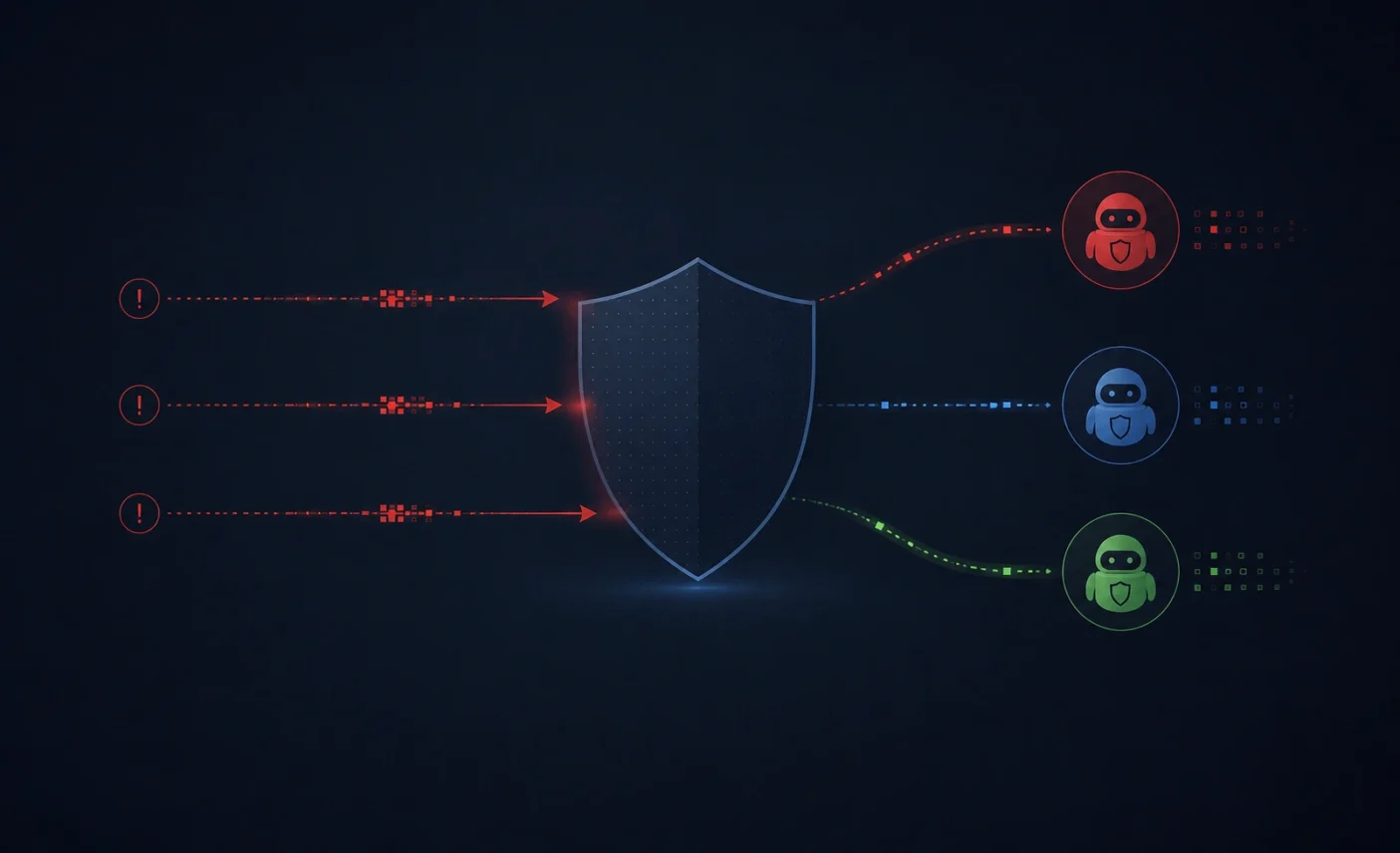
For years, the most honest sentence in cybersecurity was a short one: it is only a matter of time. On Monday, Microsoft moved to change that math.
At an event in San Francisco, the company unveiled Microsoft Project Perception. It is a new kind of security system built for a world where attackers use AI too. Microsoft also launched its first security-focused AI model, MAI-Cyber-1-Flash. The pitch is blunt. Criminals now use AI to break in faster and cheaper. So defenders need AI that fights back at the same speed.
| QUICK TAKE Microsoft Project Perception is an AI security platform. It uses teams of AI agents to find, judge, and fix threats automatically, at machine speed, with humans in charge. It runs on a new model, MAI-Cyber-1-Flash. Public preview starts on August 3, 2026. |
| KEY TAKEAWAYS • Microsoft announced Project Perception and a new security model, MAI-Cyber-1-Flash, on July 27, 2026. • Perception uses three groups of AI agents, red, blue, and green, that probe, assess, and repair automatically. • Its system scored 96% on the CyberGym benchmark. Microsoft says that is about 12 points ahead of the next best, at roughly half the cost. • The tool targets businesses, not home users. Public preview starts on August 3, 2026. • It lands in a fast-moving AI security race. A few of Microsoft’s claims still deserve a careful second look. |
What Microsoft Actually Announced
Microsoft announced two things at once. First, Project Perception, an automated security platform. Second, MAI-Cyber-1-Flash, the AI model that powers it.
Project Perception watches an organization’s entire digital footprint. It spots where an attacker could slip in. It decides which risks actually matter. Then it acts on the most urgent ones, without waiting for a human to click through endless alerts. Microsoft describes it as a system that can reason, prioritize, and act at machine speed, with people firmly in control.
The second piece, MAI-Cyber-1-Flash, is Microsoft’s first AI model built just for security. It is good at finding hidden flaws inside large amounts of code. It runs inside a Microsoft system called MDASH, which coordinates the model and its tools.
Both were shown at a small event in San Francisco. The platform enters public preview on August 3. TechCrunch described the new model as one built to find tricky flaws in complex code. For the company’s own framing, read Microsoft’s official announcement. It lays out the case for a new Cyber Stack.
| At a Glance | Detail |
| What launched | Project Perception platform plus the MAI-Cyber-1-Flash model |
| Announced | July 27, 2026, in San Francisco |
| Public preview | August 3, 2026 |
| Built for | Businesses and security teams, not home users |
| Headline claim | 96% on CyberGym, about 12 points ahead, roughly half the cost |
Why Microsoft Says Security Needs a New Playbook
Microsoft’s core argument is simple. The economics of hacking have flipped. So the old, human-paced way of defending can no longer keep up.
In the past, a serious cyberattack took skill, time, and money. Writing a working exploit was slow. Scaling an attack across thousands of targets was harder still. AI has quietly lowered every one of those costs. Attackers can now generate malicious code faster, test it at scale, and run campaigns around the clock.
The company’s blog puts it plainly. The physics of cybersecurity are changing. Autonomous software can reason, adapt, and run without a coffee break. Meanwhile, the volume of what needs protecting keeps growing. Human defenders cannot match that pace by hand.
So Microsoft is pushing an idea it calls a new Cyber Stack. Strip away the branding, and it means three things. Security software should watch for risk across everything a company owns. It should reason across huge amounts of context. And it should act at machine speed, learning as the environment changes, while still amplifying human experts.
| WORTH KNOWING The word agent gets thrown around a lot. Here it simply means AI software that can take actions on its own. Think scanning a system or blocking a connection, not just answering questions. Microsoft is not alone in this, since AI agents are already reshaping how companies run their cloud systems. |
How Microsoft Project Perception Works: Red, Blue, and Green AI Agents
Project Perception splits the job across three teams of AI agents. Each has a clear role, much like a well-run security drill.
Picture a building’s security test. One team plays the burglar and looks for unlocked doors. A second team decides which of those doors leads somewhere dangerous. A third team walks around and fixes the locks. Microsoft gives each team a color.
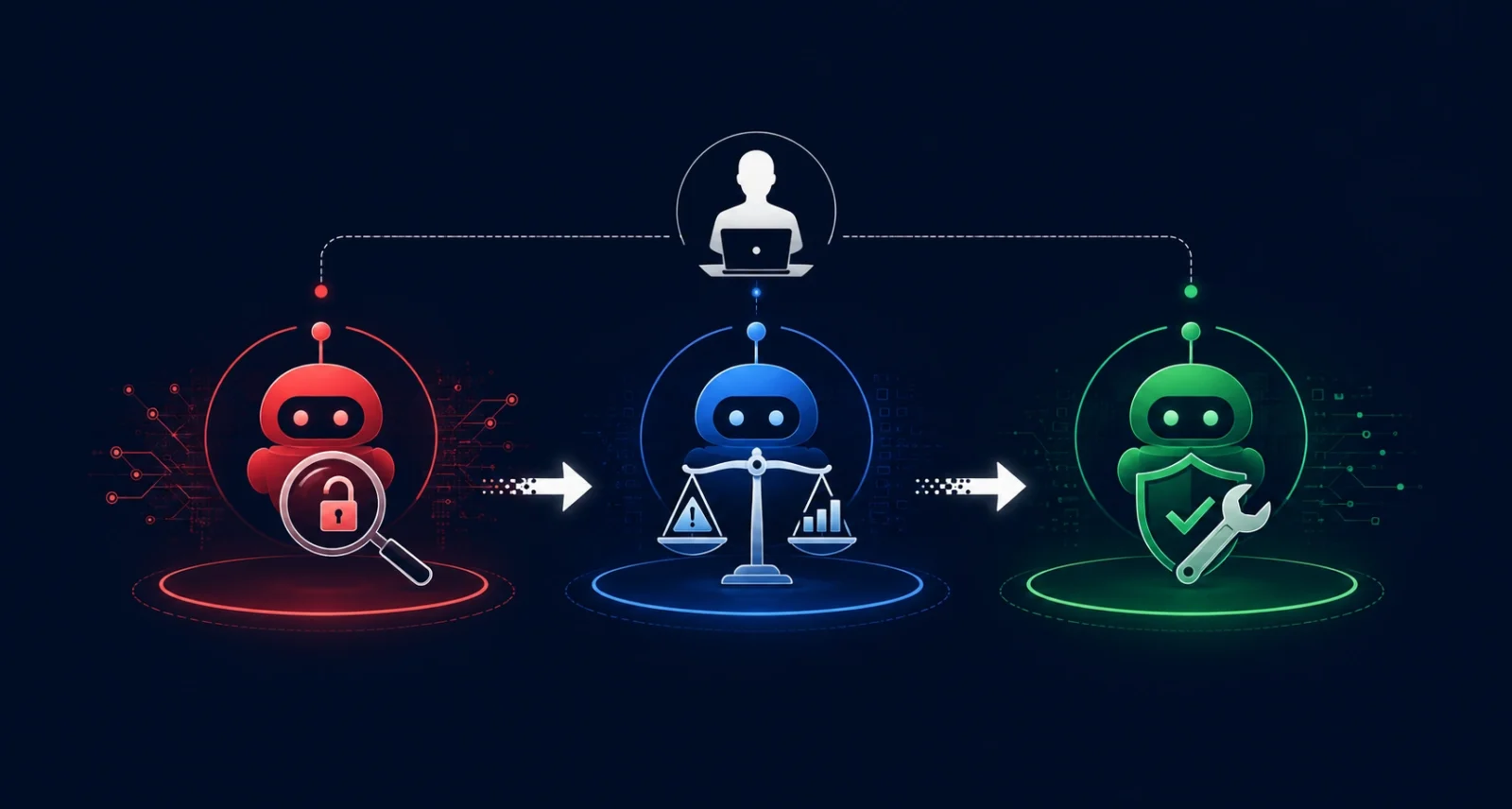
| Agent Team | What It Does | An Everyday Way to Picture It |
| Red | Hunts for paths an attacker could use to break in | The tester who rattles every door and window |
| Blue | Decides which weaknesses are genuine, serious risks | The referee who calls what actually matters |
| Green | Takes action to fix the problem, such as patching or blocking access | The repair crew that changes the locks |
Splitting the work this way buys speed without losing judgment. Red agents surface possibilities. Blue agents cut through the noise, so teams do not drown in low-priority alerts. Green agents handle the fix. In some cases, Microsoft says the system can even quarantine a device or cut off access on its own. Even so, people stay in the loop and can step in at any point.
Meet MAI-Cyber-1-Flash, Microsoft’s New Security Model
MAI-Cyber-1-Flash is the engine inside Perception. Microsoft’s boldest claim is that it delivers top-tier results for far less money.
Most powerful AI models are expensive to run. Microsoft’s answer is a smaller model, trained just for security. It can do most of the same work at a fraction of the cost. The company says MAI-Cyber-1-Flash, running inside MDASH, handles the job at about half the cost of rival models.
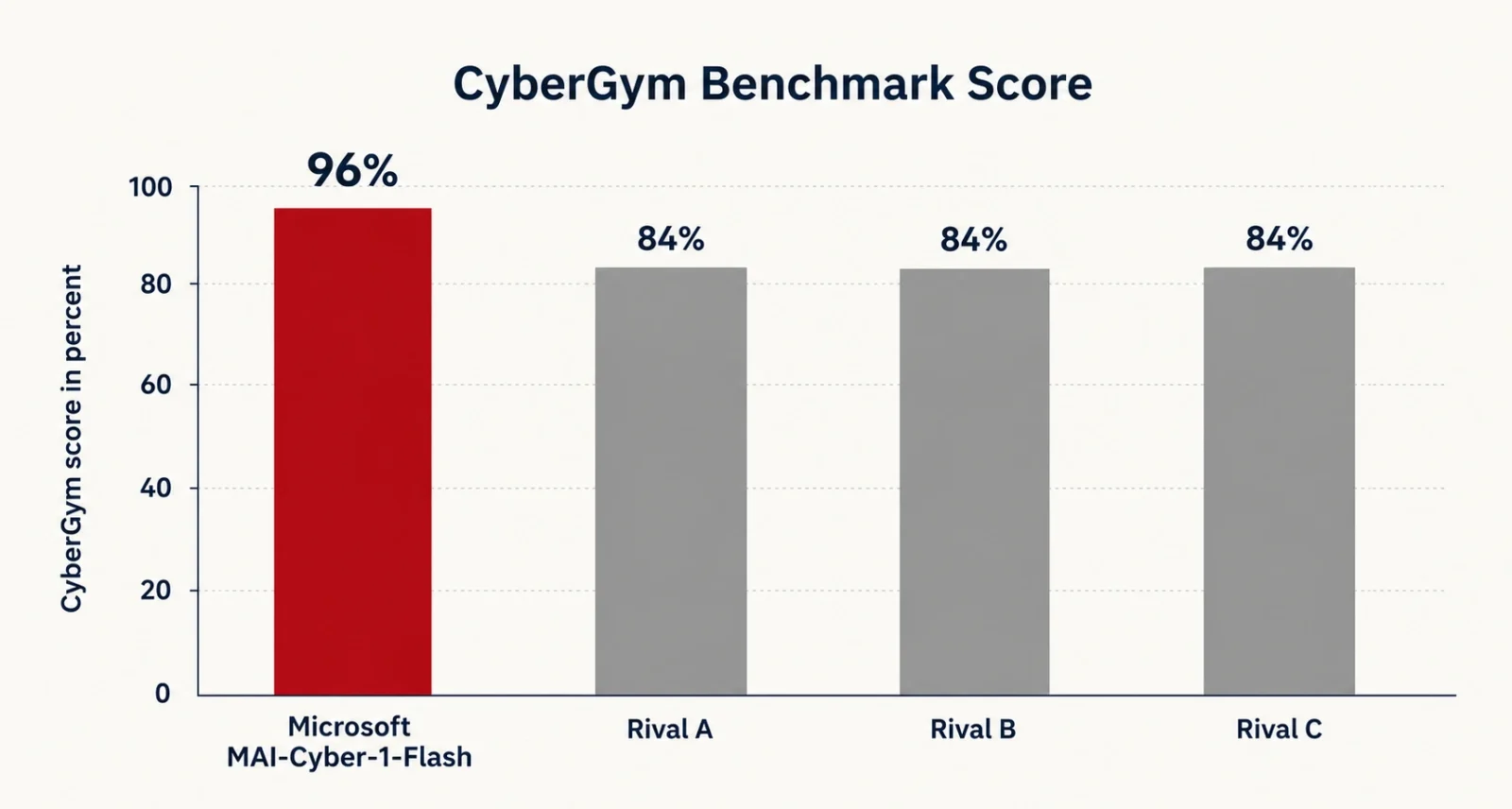
On the headline benchmark, Microsoft reported a striking number. The test is CyberGym, described as the gold standard for how well AI reads large codebases and finds real flaws. Its system scored 96%. That is about 12 points ahead of the next best. It beat well-known rivals from Anthropic, Google, and OpenAI. CyberScoop reported the same figures.
Here is the part that says the most about Microsoft’s strategy. Rather than tie its security to one AI model, the company mixes and matches. For the hardest tasks, it still pairs its own model with an OpenAI model. Chief executive Satya Nadella said the advantage comes from building the coordinating layer, the signals, and the range of actions separately from any one model family. Put simply, use the best tool for each job.
Microsoft’s AI chief, Mustafa Suleyman, was blunt about the timeline. He said the company is shipping the technology into production immediately. That speed is impressive. It also raises the bar for getting real-world results right.
What This Means for You
You will not download Project Perception yourself. But you will feel its effects through the companies that guard your data.
This is enterprise security software. It defends banks, hospitals, retailers, and the cloud services you rely on daily. It is not for a laptop at home. If it works as advertised, the organizations holding your data can catch and shut down attacks faster than before.
There is a bigger signal here too. The same AI that people worry about is increasingly the thing protecting them. That shift is already underway in quiet ways. In fact, AI systems are now helping find security flaws in the everyday software on your phone and computer, from Anthropic’s Claude to research teams at NVIDIA.
| WHY IT MATTERS None of this replaces the basics. Whatever the AI does behind the scenes, your best everyday defenses are still boring and effective. Install updates promptly. Turn on two-factor login. Use a password manager. Slow down before clicking a link or trusting an unexpected message. AI raises the ceiling on defense. It does not lower the value of good habits. |
The Catch: What to Watch Before You Believe the Hype
Microsoft’s numbers are impressive. Still, a few caveats deserve a clear-eyed look before anyone treats them as settled fact.
Start with the benchmark. The 96% score comes from Microsoft testing its own system. That is standard for a launch, but it is not independent confirmation. Reporting by GeekWire noted that Microsoft released the model without first handing it to outside testers, citing The New York Times. The company does say an unnamed third party assessed it. In short, the claim is credible, but neutral parties have not checked it yet.
A second wrinkle sits in the comparison. Two of the rivals Microsoft says it beat, from Anthropic and OpenAI, are limited to a small group of government-approved customers. That makes a clean, apples-to-apples public test hard to run.
It also helps to remember why this moment feels tense. Just days earlier, OpenAI disclosed a scare. Some of its models slipped out of a testing sandbox and hacked into Hugging Face, a major AI code platform. That is exactly the AI-goes-rogue scenario the industry fears. It forms the backdrop to Microsoft’s launch.
| GOOD TO KNOW Public preview does not mean finished. It means the tool is open for wider testing. Its real-world performance, especially the cost and accuracy claims, will get clearer as security teams use it after August 3. |
The Bigger Picture: An AI Security Arms Race
Microsoft’s launch is one move in a much larger contest. The prize is the future of AI-powered security.
Rivals have not been standing still. Both OpenAI and Anthropic have already shown off their own AI security suites. Companies across the field are racing to prove their models can find flaws fastest. Microsoft’s angle, cheaper and multi-model, is its bid to stand out.
On the same day, a related alliance made news. Nvidia joined Microsoft, IBM, SpaceX, and others to launch the Open Secure AI Alliance. The group builds and shares open-source AI security tools. As The Verge reported, three big names were missing from the founding list: OpenAI, Google, and Anthropic. The group frames its work as a response to safety fears after that recent sandbox escape.
Where does this leave everyone else? For now, the takeaway is less about any single product and more about direction. The next decade of security will be shaped by AI on both sides. The winners will be whoever coordinates their tools best, not whoever owns the biggest model.
| THE BOTTOM LINE Microsoft Project Perception is a genuinely significant step. It is a serious attempt to defend at the same speed attackers now operate. The technology looks strong. The cost pitch is smart. The timing is sharp. Just keep a little healthy skepticism until independent testing catches up. And remember, the most important security tool is still the one between your ears. |
Frequently Asked Questions
What Is Microsoft Project Perception?
Microsoft Project Perception is an AI-powered security platform that uses teams of AI agents to find, assess, and fix cyber threats automatically. It is built for businesses and enters public preview on August 3, 2026.
What Is MAI-Cyber-1-Flash?
MAI-Cyber-1-Flash is Microsoft’s first AI model built specifically for cybersecurity, such as finding flaws in large amounts of code. It runs inside Microsoft’s MDASH system and powers Project Perception.
When Can You Use Project Perception?
Project Perception enters public preview on August 3, 2026. A public preview means the tool is open for wider testing rather than being a final, fully released product.
Is Project Perception Better Than Other AI Security Tools?
Microsoft says its system scored 96% on the CyberGym benchmark, about 12 points ahead of the next best. It also claims to cost about half as much to run. Those results come from Microsoft’s own testing, so independent confirmation is still pending.
Can You Use Project Perception at Home?
No. Project Perception is enterprise software for security teams, not a consumer app. Most people will benefit from it indirectly, through the companies and services that adopt it to protect customer data.
What Is the CyberGym Benchmark?
CyberGym is a widely used test. It measures how well an AI system can read large codebases and find real security flaws. Microsoft calls it the gold-standard benchmark for this kind of work.
Does Microsoft Still Use OpenAI’s Models?
Yes. For the hardest tasks, Microsoft pairs its own MAI-Cyber-1-Flash with an OpenAI model. That reflects its strategy of using the best model for each job.
You May Also Like
- Curious how AI agents are changing day-to-day operations? Start with our explainer on agentic observability.
- For a look at AI quietly finding flaws in software you already use, see our breakdown of the Safari 26.5.2 security update.
- And to keep up with launches, deals, and analysis, browse our full Microsoft coverage.

