
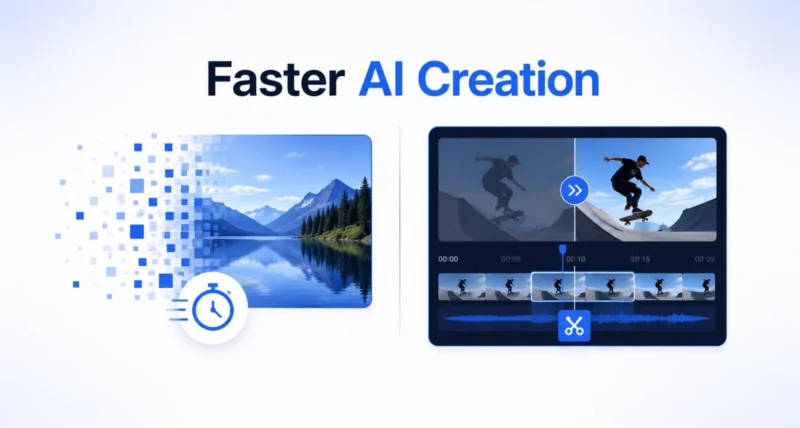
Waiting on a render used to be part of the creative process. Google just made that wait a lot shorter. On June 30, 2026, Google Cloud introduced Nano Banana 2 Lite and Gemini Omni Flash. Both are new AI models built for speed and low cost, joining the Gemini Enterprise Agent Platform. One generates images in as little as four seconds. The other turns text and images into fully edited video. Here is exactly what each one does, step by step, and how developers can start using them today.
| Quick Answer Nano Banana 2 Lite and Gemini Omni Flash are two new AI models Google Cloud released on June 30, 2026, for its Gemini Enterprise Agent Platform. Nano Banana 2 Lite, also called Gemini 3.1 Flash-Lite Image, is now generally available and can generate an image in as little as four seconds, built for speed and low cost. Gemini Omni Flash is in public preview and generates and edits video using natural language, priced at $0.10 per second of video output. Both models add C2PA content credentials and SynthID watermarks by default, and companies including Adobe, Figma, and WPP are already building with them. |
Key Takeaways
- Nano Banana 2 Lite is now generally available and can generate an image in as little as four seconds.
- Gemini Omni Flash is in public preview and generates and edits video from natural language, priced at $0.10 per second.
- Both models live inside the Gemini Enterprise Agent Platform, a developer and business tool, not the consumer Gemini app.
- Every output carries SynthID watermarks and C2PA content credentials by default.
- Adobe, Figma, WPP, Invideo, Artlist, and Manus AI are already building with these models.
What Are Nano Banana 2 Lite and Gemini Omni Flash?
Nano Banana 2 Lite and Gemini Omni Flash are two new AI models built for creative work at scale. Both live inside Google’s Gemini Enterprise Agent Platform, a tool developers and businesses use to build AI-powered apps and workflows. This is different from the consumer Gemini app on your phone. It is the same underlying model family, but aimed at companies embedding image and video generation directly into their own products.
As Google Cloud explained in its announcement, the goal behind both releases is simple. Cut regeneration time and cost, so creative teams can iterate faster without waiting on slow renders or a large bill.
| Worth Knowing If you have used the consumer Nano Banana feature inside the Gemini app for personal photo editing, this is a related but separate release. Nano Banana 2 Lite is the developer-facing version, built for apps, agents, and high-volume workflows. |
Step One: Meet Nano Banana 2 Lite
Nano Banana 2 Lite, officially named Gemini 3.1 Flash-Lite Image, is now generally available. Google describes it as the fastest and most cost-efficient model in the entire Nano Banana image family. Teams that need to generate a large volume of images quickly stand to benefit most.
Built for speed
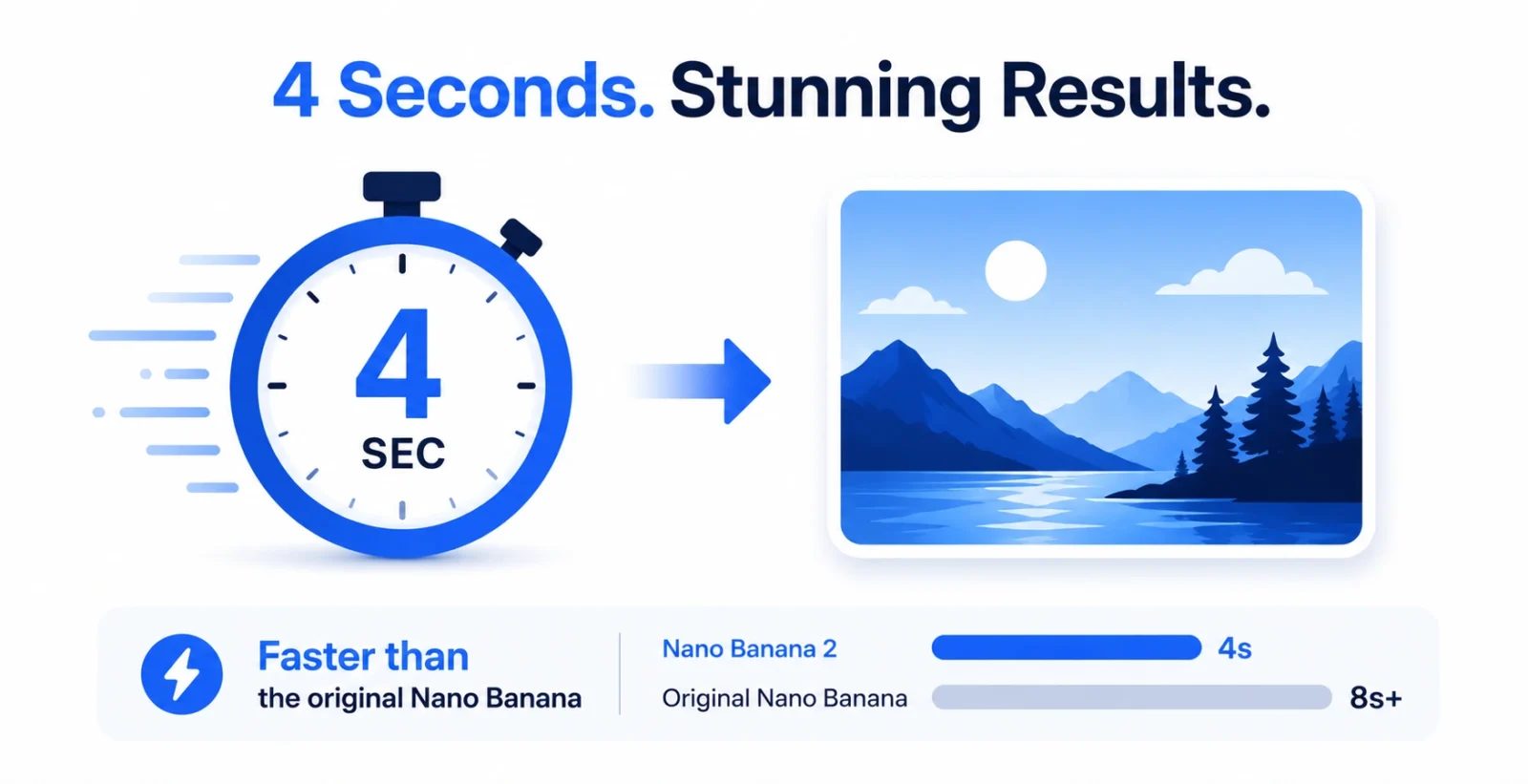
The headline number is speed. Nano Banana 2 Lite can generate an image in as little as four seconds. Teams running A/B tests on ad creative, prototyping designs, or powering social apps with millions of users gain the most. That speed changes how many ideas a team can explore in a single session.
What improved over the original Nano Banana
Compared to the earlier Nano Banana model, Gemini 2.5 Flash Image, Google says this version brings a real leap in visual quality alongside its speed. Three improvements stand out.
- World knowledge. It can quickly draft accurate contextual scenes, rough data visualizations, and location-specific mockups.
- Character consistency. It maintains character identities and object details across multiple fast generations, useful for storyboarding tools or virtual try-ons in ecommerce.
- Text and localization. It can render legible text directly into images, making it easier to test how ad copy looks across different languages and layouts.
| Quick Tip Image generation is the fastest task for this model. Image editing may take a little longer to respond, so plan accordingly if your workflow mixes both. |
Step Two: Meet Gemini Omni Flash
Gemini Omni Flash is the video half of this release, currently in public preview. Instead of just generating video from a prompt, it is built for conversational editing. You can refine a clip the same way you would give notes to an editor, just by describing what you want changed.
Google built the model around four core areas.
- Conversational editing. Swap characters, relight scenes, or change camera angles using plain language, while keeping the original audio and video tracks intact.
- Multimodal input. Combine text, images, and video to guide generation. The model also creates audio automatically with every video, while keeping characters, objects, and style consistent.
- World knowledge and simulation. It blends an understanding of real-world physics with Gemini’s broader knowledge of history, science, and culture, so scenes feel grounded rather than just photorealistic.
- Text and action sync. It can render legible text and graphics into a video, syncing on-screen typography with the movement happening in the scene.
| Please Note A few capabilities are still on the way. Google says support for audio references, video references, using a last frame as a starting point, scene extension, and higher resolutions through the API will roll out to Gemini Omni Flash soon. |
Step Three: Pricing and Availability
Both models are live now, but at different stages of release. Nano Banana 2 Lite is generally available, which means it is fully ready for production use. Gemini Omni Flash is in public preview, meaning anyone can try it, though Google may still adjust it before a full release.
| Model | Status | Pricing |
| Nano Banana 2 Lite | Generally available | See Google’s official pricing page for current per-image rates |
| Gemini Omni Flash | Public preview | $0.10 per second of video output |
Google says both models offer some of the best price-performance among leading frontier models for image and video generation on the market today. For exact, current numbers, Google’s official Agent Platform pricing page is the source to check, since usage-based AI pricing can shift over time.
Step Four: Safety and Enterprise Controls
For any tool generating images and video at scale, trust and traceability matter. Google built in a few safeguards by default, rather than as an opt-in extra.
- C2PA content credentials. An industry-standard way to attach information about how an image or video was made, helping verify authenticity.
- SynthID watermarks. An invisible digital watermark that Google embeds in AI-generated content, so it can be identified as AI-made even after edits.
- Provisioned throughput. A way for businesses to reserve guaranteed capacity for high-volume API requests. It is available today for Nano Banana 2 Lite, with the same option coming soon for Gemini Omni Flash.
Together, these features serve enterprise customers who need predictable performance. They also give a way to prove content came from an AI system, not just a promise that it did.
Who Is Already Building With Them
This is not a theoretical release. Several companies are already integrating these models into their products.
- Bringing both models into Adobe Firefly, its all-in-one creative AI studio, as part of a connected workflow for creators.
- Using Nano Banana 2 Lite inside Figma Weave, its node-based design canvas, to help designers iterate on ideas quickly.
- Testing Gemini Omni Flash inside WPP Open, its agentic marketing platform, for tasks like localizing assets and swapping products in ad creative.
- Invideo, Artlist, and Manus AI. All exploring the models for video production, stock content creation, and autonomous AI agent workflows.
| The Cool Part Multiple companies describe the same shift: when generation gets fast enough, creators stop waiting on the tool and stay inside the idea instead. That is the practical value behind these releases, not the raw speed number itself. |
How Developers Can Start Building
Getting started does not require rebuilding your whole stack. Here is the simple path Google recommends.
- Try the models first. Use Agent Studio inside the Gemini Enterprise Agent Platform to test both models directly, no setup required.
- Read the API documentation. Google publishes full docs for Nano Banana 2 Lite and Gemini Omni Flash covering every capability and integration step.
- Use the starter notebooks. Google provides Colab notebooks for both models, a fast way to see working code before you build your own.
- Check current pricing. Review the Agent Platform pricing page so your usage estimates match what you will actually be billed.
- Follow the prompting guides. Google’s prompting guides for Nano Banana and Gemini Omni Flash help you get better results faster, especially for complex edits.
If you are newer to Google’s AI tools generally, our guide to how to use Google AI Mode is a good starting point before diving into developer-facing tools like these.
Nano Banana 2 Lite and Gemini Omni Flash both chase the same goal from different directions. They aim to make AI creative tools fast and cheap enough that they stop interrupting the creative process. A four-second image generation time and a per-second video price point are the kind of numbers that change how teams actually work, not just how a demo looks.
If you build products that touch images or video, these are worth testing now, especially with major platforms like Adobe and Figma already shipping them to their own users. Start with Agent Studio, read the docs, and see how much faster your workflow gets.
Frequently Asked Questions
What is Nano Banana 2 Lite?
Nano Banana 2 Lite, also called Gemini 3.1 Flash-Lite Image, is a fast, cost-efficient AI image generation model from Google Cloud. It is now generally available on the Gemini Enterprise Agent Platform and can generate an image in as little as four seconds.
What is Gemini Omni Flash?
Gemini Omni Flash is a Google Cloud AI model for video generation and conversational editing, currently in public preview. It lets developers swap characters, relight scenes, and edit video using natural language, priced at $0.10 per second of output.
Are Nano Banana 2 Lite and Gemini Omni Flash available in the consumer Gemini app?
No. These are developer and enterprise models released through the Gemini Enterprise Agent Platform. They are built for companies embedding image and video generation into their own apps, not features inside the everyday consumer Gemini app.
How much does Gemini Omni Flash cost?
Gemini Omni Flash is priced at $0.10 per second of video output. Google says this offers strong price-performance compared to other leading video generation models currently on the market.
Is AI-generated content from these models watermarked?
Yes. Both models add C2PA content credentials and SynthID watermarks by default, helping verify that content was AI-generated even after it has been edited or shared.
Which companies are using Nano Banana 2 Lite and Gemini Omni Flash?
Adobe, Figma, WPP, Invideo, Artlist, and Manus AI have all confirmed they are integrating one or both models into their products, spanning creative software, marketing platforms, and AI agent tools.

