
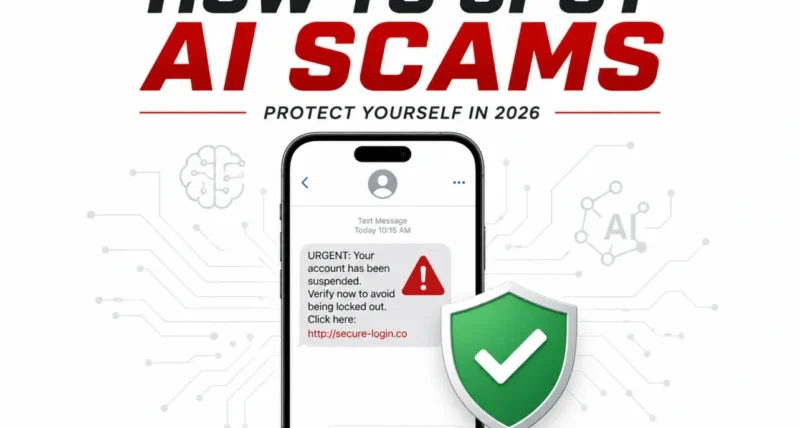
You have seen the texts. A fake package alert, an urgent bank warning, a panicked note about a compromised account. Behind many of them now sits an AI-powered crime network built to steal your passwords and card details. The good news is that the biggest tech and telecom players just went on the offensive, and a few simple habits can keep you safe.
| Quick Answer AI scams use artificial intelligence to send convincing fake texts, calls and emails at huge scale. In June 2026, Google sued a major scam network and partnered with the FBI and carriers to fight back. You can stay safe by slowing down, never clicking links in unexpected messages, and verifying directly with the source. |
What Are AI Scams
AI scams are fraud campaigns that use artificial intelligence to look more real and reach more people. Instead of clumsy, typo-filled spam, criminals now generate clean text, cloned voices and fake websites that closely copy trusted brands.
The goal stays the same as old-school fraud. Scammers want your login details, your card numbers or a quick payment. AI simply makes the bait more convincing and far cheaper to send at scale.
| Quick Take The danger is not that AI invented a new crime. It is that AI removed the old warning signs, like broken English and obvious fakes, that used to help you spot a scam in seconds. |
How AI Scams Actually Work
Most AI scams follow a simple playbook. Understanding the steps makes them much easier to catch.
- The hook. You get a text, call or email that creates urgency, such as a delivery problem or a security alert.
- The impersonation. It copies a brand you trust, often a bank, a courier or a big tech company, using real logos and language.
- The link. A button or URL sends you to a fake site that looks almost identical to the real login page.
- The capture. You enter your details, and the scammers grab them instantly to drain accounts or sell the data.

Common Types of AI Scams to Watch For
AI scams show up across every channel you use. These are the most common forms in 2026.
- Smishing (scam texts). Fake delivery, toll or bank alerts that push you to click a link fast.
- Voice cloning calls. A familiar sounding voice, sometimes a relative or boss, asking for money or codes.
- Phishing emails. Polished messages that mimic real companies and link to fake login pages.
- Fake websites and ads. Lookalike stores or support pages built to harvest payments and passwords.
- Investment and crypto traps. AI-generated profiles and deepfake videos promising fast, guaranteed returns.
How Google Is Fighting Back in 2026
In June 2026, Google announced a coordinated push against AI-driven scams. The plan combines legal action, law enforcement and partnerships rather than software alone.
At the center is a lawsuit against a China-based cybercrime network known as the Outsider Enterprise. The group coordinated through Telegram and sold phishing kits that let criminals blast out fake texts posing as Google and other trusted brands. Google is working with the FBI and with carriers AT&T, T-Mobile and Verizon to block these texts and dismantle the infrastructure.
| Why It Matters The scale here is staggering. Google linked this single group to about 9,000 fake websites and over 1 million fraudulent URLs, and Android users flagged 55,000 spam texts tied to it in just two weeks. Fighting that needs more than one company acting alone. |
Here is a quick look at the numbers behind the crackdown.
| What Google Reported | The Figure |
| Victims financially scammed | Hundreds of thousands |
| Estimated losses | Millions of dollars |
| Fake websites linked to the group | About 9,000 |
| Fraudulent URLs connected | Over 1 million |
| Spam texts flagged in two weeks (May 2026) | 55,000 |
| Messages the group sent to Android users | 2.5 million |
| Malicious messages Google blocks monthly | More than 10 billion |
Google is also backing seven bipartisan bills, including the Stop SCAMS Act, to make these protections permanent in law. The aim is a national strategy that links law enforcement, government and industry.
How to Protect Yourself From AI Scams
You do not need to be a security expert to stay safe. A handful of habits stop the large majority of these attacks.
- Slow down. Urgency is the main trick. Any message that rushes you deserves a second look.
- Never click links in unexpected messages. Open the app or type the website address yourself instead.
- Verify through the real source. Call your bank or courier using the number on their official site, not the one in the message.
- Turn on two-factor authentication. Even if scammers grab your password, a second step can block them.
- Use a passkey or strong unique passwords. A password manager makes this easy and removes reuse risk.
- Keep your phone and apps updated. Built-in scam and spam filters improve with every update.
| Quick Tip Set a simple family rule for voice-cloning scams. Agree on a private code word that any caller claiming to be a relative in trouble must say before you act or send money. |
What to Do if You Think You Were Scammed
Acting fast limits the damage. Work through these steps in order.
- Change your passwords for the affected account and any account that shared the same one.
- Contact your bank or card provider to freeze cards, reverse charges and watch for fraud.
- Report the scam to your local authority and to the platform where it reached you.
- Enable extra security, such as two-factor authentication and account alerts, on every key account.
Red Flags vs Safe Habits
| Red Flag | Safe Habit |
| A message pushing you to act right now | Pause and verify before doing anything |
| A link to log in or pay from a text | Open the official app or site yourself |
| A caller asking for codes or gift cards | Hang up and call the real number back |
| A deal that sounds too good to be true | Assume it is a scam until proven real |
Frequently Asked Questions
What Is an AI Scam
An AI scam is fraud that uses artificial intelligence to create convincing fake texts, calls, emails or websites that impersonate trusted people and brands to steal money or personal data.
How Is Google Fighting AI Scams
In June 2026, Google sued a China-based scam network called the Outsider Enterprise, partnered with the FBI and major carriers to block scam texts, and backed seven bipartisan bills including the Stop SCAMS Act.
What Is the Outsider Enterprise
The Outsider Enterprise is an organized cybercrime group, based in China and coordinating through Telegram, that sold phishing kits used to send fake texts impersonating Google and other trusted brands.
How Can I Tell if a Text Is a Scam
Watch for urgency, links that ask you to log in or pay, and small differences in the sender or web address. When in doubt, do not click and verify directly with the company.
Are AI Voice Cloning Scams Real
Yes. Scammers can clone a familiar voice from short audio clips. Agree on a family code word and verify any urgent money request through a separate, trusted channel.
What Should I Do First if I Was Scammed
Change the password on the affected account immediately, then contact your bank to protect your money and report the scam to the platform and your local authority.

