
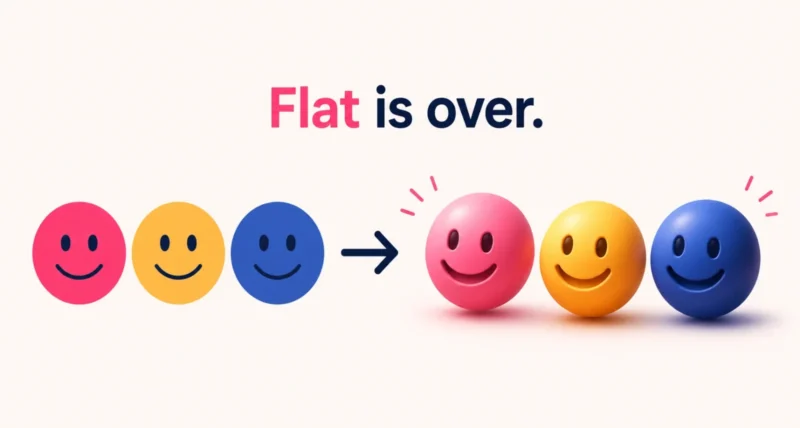
Emoji stopped being decoration a long time ago. They are how we soften a blunt message, land a joke, or say the thing we cannot quite type. Now Google has rebuilt the entire set. The new Google 3D emoji, officially called Noto 3D, cover all 3,977 characters. The redesign also arrived with usage data about how our habits have shifted, a few genuinely strange design problems, and a free download for anyone who wants to play. Here is the behind-the-scenes story.
| The Short Answer Google 3D emoji, officially Noto 3D, is a full redesign of Google’s emoji library covering all 3,977 characters. Google rebuilt them as true 3D models instead of flat images, aiming for depth without photorealism. The team leaned on Gboard usage data, large-scale user studies, and an AI contrast tool that checks every emoji at the pixel level so darker skin tones stay visible in dark mode. The set reaches Pixel phones first, then other Google products. Google has also released the models as open-source OBJ files, so anyone can drop them into Blender, a game engine, or a very silly meme. |
What Google 3D Emoji Is, in One Minute
Noto 3D is Google’s rebuilt emoji library, announced on World Emoji Day by Jennifer Daniel, creative director for Android and Pixel. Every character has been redrawn with dimension, richer expression, and better accessibility. Google calls it an industry first, since the whole set exists as true 3D models rather than flat pictures.
| The Detail | What to Know |
| What it is | Noto 3D, a full redesign of Google’s emoji set |
| How many | 3,977 characters, the complete library |
| The change | True 3D models, not flat images |
| Where first | Pixel phones, then other Google products |
| Accessibility | An AI tool fixes low contrast in dark mode |
| For creators | Free open-source OBJ model files |
On timing, 9to5Google reports the new set arrives on Pixel phones later this year before rolling out across other Google products. So most people will meet these gradually rather than all at once.
| Good to Know Noto is not a random name. It stands for “no tofu.” Tofu is what typographers call the empty rectangle your screen shows when a font has no glyph for a character. Google’s whole Noto project exists to make sure every written symbol on Earth has something to display, which is a quietly lovely mission for a font family. |
How We Stopped Using Emoji Literally
The redesign starts from a simple observation about us, not about pixels. In the early years we used emoji literally. You sent the nail polish emoji because you were, in fact, getting your nails done.
That is not how we use them now. Today emoji carry subtext. They deliver a shrug, a wink, or that very specific “it is fine but it is actually not fine” energy. Google describes them as the language inside the language, the thing that stops a blunt message from flattening the mood. There is a neat piece of science behind this too. Your brain reads an emoji faster than it reads text, which is exactly why one small symbol can redirect the tone of a whole sentence.
Why the Laughing-Crying Emoji Lost Its Crown
This is the part worth sharing at dinner. Google tracks emoji use through Gboard Federated Analytics, and the data shows our emotional vocabulary getting louder.
For years, face with tears of joy was the undisputed champion. Then it went into a multi-year slide and slipped down the charts by 2025. What replaced it says a lot about internet culture. We no longer just laugh. We collapse, or internally scream.
| The Feeling | The Old Favorite | What We Use Now |
| Laughing | Face with tears of joy | Rolling on the floor laughing |
| Being overwhelmed | Face with tears of joy | Loudly crying face |
| Heartbreak | Broken heart | Wilted flower |
The loudly crying face is the clearest example. It manages to be funny and devastating at the same time, and it captures total overwhelm in a way nothing else does. When we do want to signal laughter, hyperbole takes over, which pushed rolling on the floor laughing to the top. Even heartbreak has drifted from the blunt broken heart toward the softer, sadder wilted flower.
The Strangest Question Google Had to Answer
Moving from flat art into three dimensions forced the team to solve problems nobody had ever needed to solve. The best one: what does the back of a smiley face look like?
Think about it for a second and it becomes genuinely hard. Is a smiley a concave mask, hollow like a Halloween prop? Maybe it is a solid bouncy ball. Or perhaps a flat piece of paper with a face printed on the front. Flat emoji never had to answer that. A real 3D model does.
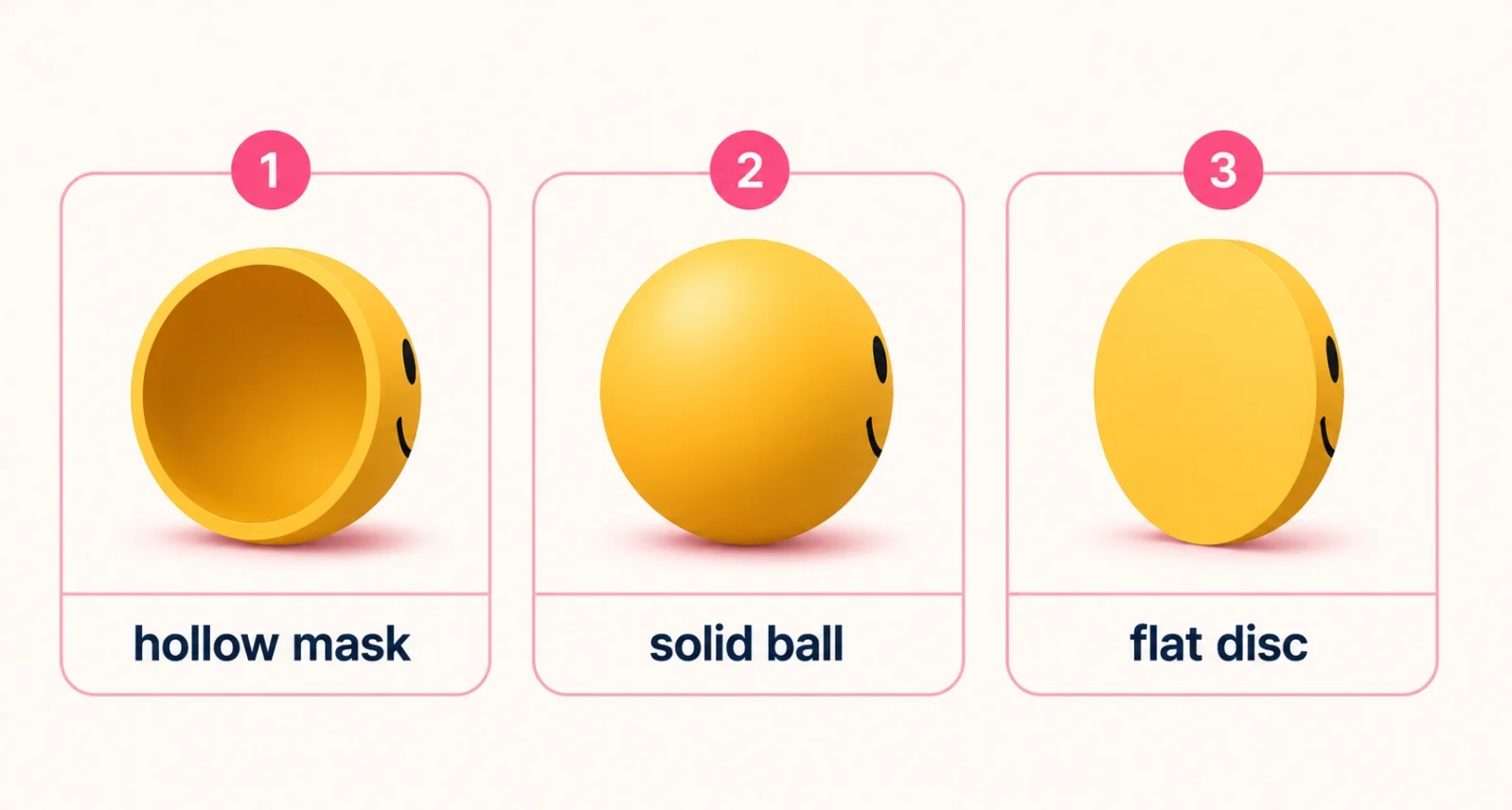
Google’s answer to the wider question was to keep personality ahead of realism. The new emoji have depth without turning photorealistic. Daniel says they need “a pulse and a soul,” rather than the cold precision of engineering models. Her example is perfect: look closely at a real kangaroo and it is a slightly alarming animal. An emoji kangaroo does not need anatomical accuracy. It needs to feel like a kangaroo.
What Google Learned From Testing Emoji on Real People
Redesigning emoji is riskier than it sounds. Billions of people use them trillions of times a day, so a small change can quietly break how people understand each other. Google ran large-scale user studies to check exactly that, and three findings stand out.
| What the Research Found | Why It Matters |
| People prefer full-body animals over floating heads | A whole creature reads more clearly than a cropped face |
| Adding props hurts comprehension | Extra detail makes the core meaning harder to grasp |
| Tiny tweaks can cause real offense | Flipping the direction of a wink turned mild confusion into outrage |
That last one is the sharpest lesson. A change most designers would call trivial, the direction a character winks, moved people from puzzled to genuinely annoyed. It shows how much meaning we load into these tiny images without noticing.
How Google Fixed Emoji That Vanish in Dark Mode
Here is the most useful change, and the one almost no coverage leads with. Emoji using the darkest skin tones can be hard to see against a dark background. That affects the person sending them and the person receiving them, and it has been a real accessibility gap for years.
Google built an AI-powered contrast tool to deal with it. The tool examines every emoji at the pixel level and flags any case where the contrast ratio falls too low. It then proposes higher-contrast fixes that human designers apply. It is a small piece of engineering with a genuinely inclusive result: the emoji you choose stays visible on someone else’s screen.
How to Download and Remix the Google 3D Emoji
This is the part creators will care about. Google has released the whole Noto portfolio as open source and handed over the raw OBJ files. That format matters, because OBJ is not a Google-only container. It imports cleanly into Blender, most 3D software, and common game engines.
Here is how to put them to work.
- Find the official files. Start at Google’s open-source Noto Emoji project rather than a random mirror, so you know what you are downloading.
- Grab the OBJ models. These are raw 3D files, so expect model geometry rather than ready-made images.
- Import into your tool of choice. Blender is the usual free starting point, and most game engines accept OBJ directly.
- Light it and render. A 3D model needs lighting, so a few minutes on lights and materials makes a huge difference.
- Read the license before you sell anything. Open source has conditions, and terms can differ for models, textures, edits, and redistribution.
You can find Google’s emoji resources through its official Noto Emoji project on GitHub, which is also where the documentation lives. Google pitches the 3D files at immersive worlds, indie apps, and, in its own words, weird memes. That last category will almost certainly win.
| The Golden Rule Open source is not the same as anything goes. If your project is personal, a meme, or a class assignment, download and enjoy. If you plan to ship something commercial, spend ten minutes reading the actual license terms first, since permissions often differ for the models themselves, their textures, your modifications, and redistribution. |
The Google 3D emoji redesign is more interesting than a coat of paint. It rests on evidence about how our tone has changed, and on research into how tiny visual changes alter meaning. It also delivers a real accessibility fix for skin tones that used to disappear in dark mode. The 3D models are the headline. The thinking underneath is the better story.
Frequently Asked Questions
What are Google 3D emoji?
Google 3D emoji, officially Noto 3D, is a complete redesign of Google’s emoji library. All 3,977 characters have been rebuilt as true three-dimensional models rather than flat images, with richer expressions and better accessibility. Google announced the redesign on World Emoji Day 2026.
How many emoji did Google redesign?
All 3,977 characters in its library. That covers every emoji Google supports, from faces and animals to objects and symbols. The design process still starts with 2D drawings, but it no longer ends there, since each character is now built out into an actual 3D model.
When will I get the new Google 3D emoji?
Pixel phones get them first, later in 2026, with other Google products following afterward. Most people will see them appear gradually through app and system updates rather than all on one day. Timing for non-Pixel Android phones depends on your manufacturer and its update schedule.
Can I download Google’s 3D emoji?
Yes. Google has released the models as open-source OBJ files, a widely supported 3D format that works with Blender, most 3D software, and many game engines. Look for them through Google’s official Noto Emoji project. Check the license terms before using them in anything commercial.
Why did the laughing-crying emoji lose popularity?
Because our online tone got more dramatic. Gboard data shows face with tears of joy declining for years and slipping down the charts by 2025. Rolling on the floor laughing took the top spot, and loudly crying face rose because it conveys humor, sadness, and total overwhelm at once.
What does Noto mean?
It stands for “no tofu.” In typography, tofu is the blank rectangle a screen displays when the font has no glyph for a character. Google’s Noto project aims to provide a glyph for every written symbol in the world, so nobody sees an empty box.

