
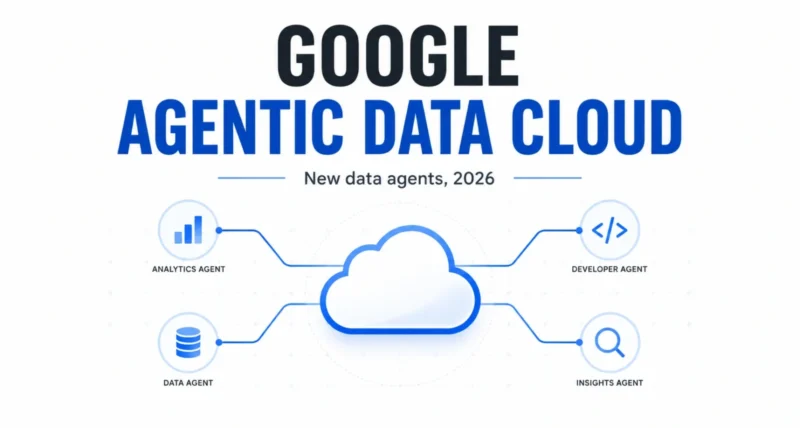
AI agents are only as smart as the data they can reach. Most generic AI tools cannot see inside your company’s databases, so they guess, and guesses are dangerous in business. Google’s latest update aims to fix that by giving agents direct, governed access to enterprise data across its Agentic Data Cloud.
| Quick Answer Google announced a wave of new data agents and tools across its Agentic Data Cloud. They let analysts, data scientists, database admins, and developers use natural language and AI agents to query, build, and manage data, grounded in real enterprise data with near-100% accuracy. |
What Is the Agentic Data Cloud
The Agentic Data Cloud is Google’s AI-native system that connects both operational and analytical data. In plain terms, it lets AI agents work directly on a company’s live data instead of guessing from generic knowledge.
Google says this approach grounds an agent’s reasoning in real-time enterprise data with near-100% accuracy, backed by unified governance. That accuracy and control are the whole point. An AI agent giving wrong numbers to a business is worse than no agent at all.
| Why It Matters Traditional data setups leave AI agents without context and without proper access controls. That leads to inaccurate answers and security gaps. Grounding agents in governed enterprise data is what turns a flashy demo into something a business can actually trust. |
Who These New Agents Are For
Google built this update around real job roles rather than abstract features. Each group gets tools aimed at the work they do every day.
| Role | What They Get |
| Business analysts | Conversational Analytics to ask data questions in plain language |
| Data scientists and engineers | Agents that automate pipelines, modeling, and documentation |
| Database admins | Agents that monitor, troubleshoot, and recommend databases |
| Developers | Tools and MCP servers to plug agents into the open ecosystem |
Conversational Analytics: Talk to Your Data
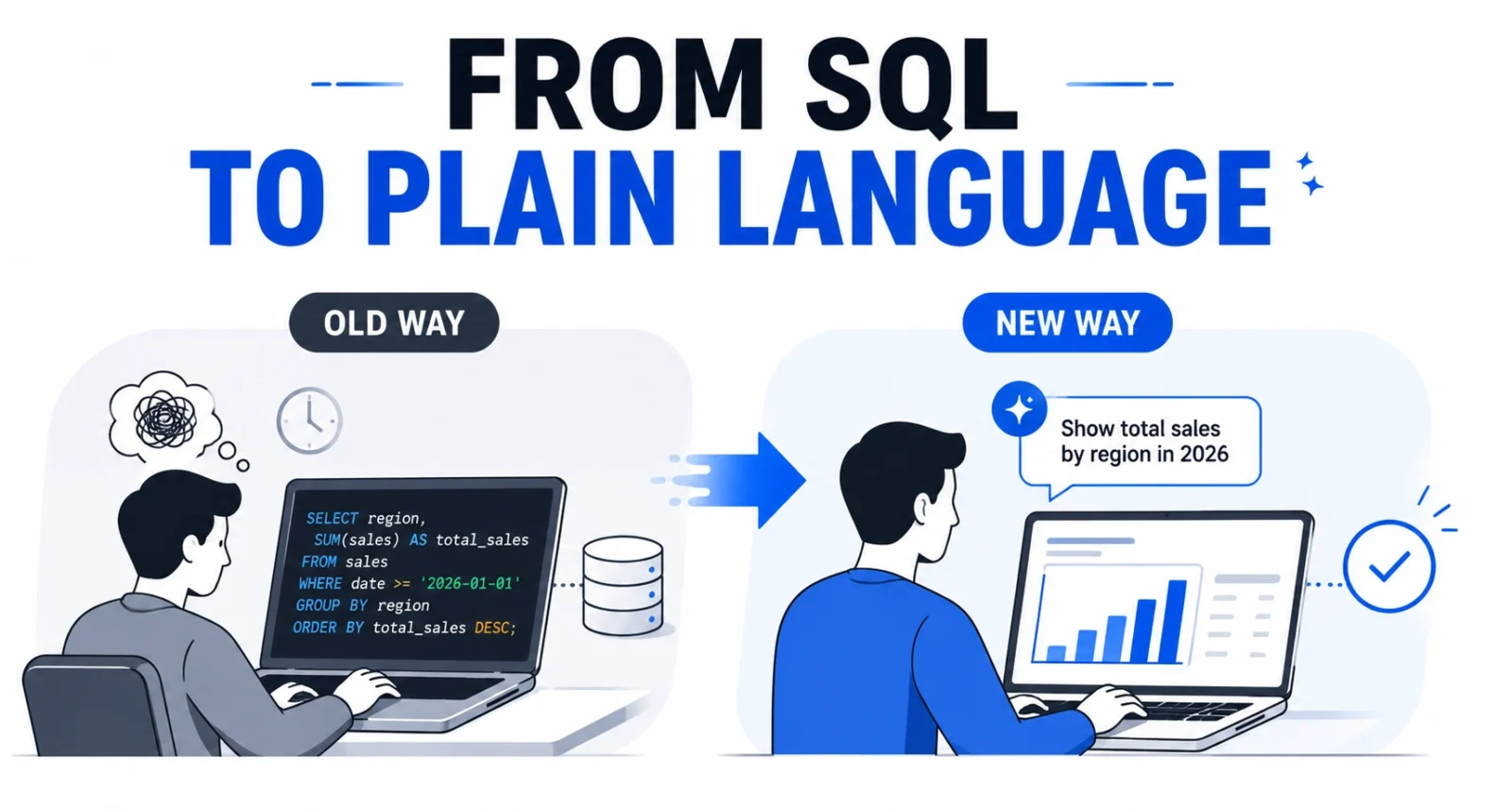
The first big theme is letting people ask questions in plain language instead of writing SQL. Google expanded Conversational Analytics across its data products.
- In BigQuery, an AI reasoning engine now sits inside BigQuery Studio. Teams can go beyond manual SQL and even automate root-cause analysis.
- In Lakehouse, you can query data spread across AWS, Azure, and Google Cloud in natural language, without moving any data.
- In AlloyDB, Spanner, and Cloud SQL, you can have a conversation with your operational database to get real-time insights.
- In Looker, embedded Conversational Analytics is now generally available, so you can drop agents straight into your own apps.
The New Data Agents at a Glance
The heart of this release is a set of purpose-built agents that handle specific data jobs. Here is what each one does, in plain terms.
| Agent | What It Does |
| Data Engineering Agent | Builds and fixes data pipelines from plain-language requirements (now GA) |
| Data Science Agent | Suggests features, writes notebook code, and documents models (preview) |
| Database Observability Agent | Monitors database health and flags issues before they escalate (preview) |
| Database Onboarding Agent | Recommends the right database and guides setup (preview) |
| Looker Dashboard Agent | Lets you ask questions inside a dashboard and summarizes key insights (preview) |
| Data Insights Agent | Pulls answers across BigQuery, Snowflake, Docs, Sheets, Jira, and more (preview) |
| Deep Research Agent | Builds full research reports with citations from internal and public data (preview) |
| The Standout The Data Engineering Agent is the most ready for prime time, since it is generally available. It turns natural language into optimized SQL or Python, fixes broken pipelines on its own, and suggests schema improvements. That removes a lot of manual grind for data teams. |
Tools for Developers Building Agents
The third theme targets developers who build their own agents. Google leaned into open standards so these tools fit into the wider agentic ecosystem rather than locking you in.
- Data Agent Kit brings a standard set of agent skills right into your IDE or command line.
- Managed MCP Servers for Databases are now generally available, so Google hosts and secures the connection between AI models and your data.
- MCP Toolbox for Databases 1.0 hit a stability milestone, making it ready for production apps.
- QueryData turns natural language into database queries with near-100% accuracy for Cloud SQL, AlloyDB, and Spanner.
| Worth Knowing MCP, the Model Context Protocol, is an open standard for connecting AI models to tools and data. By offering managed MCP servers, Google removes the headache of hosting and securing that connection yourself. That setup is often the hardest part of agent development. |
What This Means for Businesses
Taken together, this release pushes data work from reactive to proactive. Instead of analysts writing queries and waiting, agents can now act on their own. They surface issues, build pipelines, and answer questions directly.
The bigger story is trust. Companies hesitate to deploy AI on their data because they fear wrong answers and leaked information. By grounding agents in governed enterprise data, Google goes straight at that fear. Many of these features are still in preview, so teams should test carefully before relying on them in production.
Google’s data agent update is a serious push to make enterprise AI both useful and trustworthy. The headline is simple. Agents can now reason over your real data, in plain language, with governance built in. The work now is for teams to test these tools, start with the generally available ones, and find where agents genuinely save time.
Read More From Google Cloud
Google’s full Agentic Data Cloud announcement (official Google Cloud blog)
Data Engineering Agent documentation (official setup and usage docs)
Frequently Asked Questions
What Is the Agentic Data Cloud
It is Google’s AI-native system that lets AI agents work directly on a company’s operational and analytical data, grounded in real enterprise data with strong governance.
What Are Data Agents
Data agents are AI agents built for specific data jobs, such as building pipelines, monitoring databases, or answering business questions in plain language.
What Is Conversational Analytics
It is a feature that lets people ask questions of their data in everyday language instead of writing SQL, available across BigQuery, Looker, Lakehouse, and more.
Are These Data Agents Available Now
Some are generally available, like the Data Engineering Agent and Managed MCP Servers, while many others are in preview for select customers.
What Is MCP in This Context
MCP, the Model Context Protocol, is an open standard for connecting AI models to data and tools. Google now offers managed MCP servers to simplify that setup.
Who Should Care About This Update
Business analysts, data scientists, engineers, database admins, and developers who work with data on Google Cloud will benefit most.

