It usually starts innocently. You pick up your phone to check one thing, and twenty minutes later you are deep in a feed of bad news, thumb aching, heart a little heavier, wondering where the time went. If that sounds familiar, you are far from alone, and it is not a failure of willpower. Learning how to stop doomscrolling is really about understanding why your brain does it, then gently changing the setup around you. This guide walks through the why and the how, with simple, science-backed steps you can start tonight. Let us take back your time, and a bit of your calm.
| The Short Answer To stop doomscrolling, start by noticing how it actually makes you feel, then make the habit harder to fall into. Move your phone out of reach, turn off news notifications, and set specific times to check updates instead of scrolling all day. Keep your phone out of the bedroom so it cannot steal your sleep, and line up a simple swap, like a book or a walk, for those empty moments. It is not about willpower. It is about changing your environment so the healthier choice becomes the easy one. |
What Is Doomscrolling (and Why It Feels So Hard to Stop)?
Doomscrolling is the habit of endlessly scrolling through negative or distressing news online, usually on your phone, long after it stops being useful. The word took off during the 2020 pandemic. The behavior has only grown since, as feeds became our main source of news.
So why is it so sticky? A few forces work against you at once.
| Why It Happens | What Is Going On |
| Negativity bias | Your brain is wired to watch for threats, so bad news grabs it harder |
| Uncertainty | When life feels shaky, scrolling feels like getting a handle on things |
| Slot-machine design | Feeds give unpredictable rewards, which keeps you tapping for the next hit |
| A low-mood loop | Feeling down nudges you to seek out news that matches the feeling |
As Gregory Berlin, a psychologist with Yale New Haven Health, puts it, this is “not an issue of willpower.” Your brain is doing what it evolved to do, and social apps are carefully built to keep you tapping. Once you know that, you can stop blaming yourself and start changing the setup instead. If you have wrestled with other sticky habits, our piece on whether procrastination is a habit or something deeper explores the same kind of loop.
What Doomscrolling Does to You
Staying informed is healthy. Drowning in bad news is not. Research consistently links heavy doomscrolling to higher anxiety, low mood, and disrupted sleep, along with a real dip in overall well-being.
According to Harvard Health, the effects can even be physical: headaches, muscle tension, low appetite, and hours spent sitting still. Experts there describe an overstimulated state they nickname popcorn brain. Surveys show how common the habit is, with roughly a third of US adults saying they doomscroll regularly, and closer to half of Gen Z.
One honest note keeps this in perspective. Most of this research shows strong links, not definitive proof of cause, and claims that doomscrolling permanently rewires or damages your brain are overblown. The real, documented downsides are reason enough to cut back, with no exaggeration needed.
How to Stop Doomscrolling: 8 Steps That Actually Work
Here is the good news. The same brain that built the habit can help unbuild it, especially when you make small changes to your surroundings. Try these one at a time.
- Notice how it makes you feel. For a few days, just observe. Each time you scroll, ask yourself, do I feel calmer or more wound up? That simple awareness starts to loosen the automatic pull.
- Put your phone out of reach. Psychologists call this stimulus control. Leave your phone across the room or in another room, so reaching for it takes real effort. Friction beats willpower.
- Set news boundaries. Cleveland Clinic psychologist Susan Albers suggests localizing the habit, which means you decide when, where, and how long you check the news, instead of all day and everywhere. Her tips are worth a read on Cleveland Clinic.
- Turn off the notifications. Breaking-news alerts are designed to yank you back in. Keep alerts from real people, and switch off the ones from apps and news feeds.
- Use your phone’s own limits. Set a daily time cap on your news and social apps, or schedule downtime so the feeds lock in the evening. Let the tech work for you.
- Curate your feed. Unfollow or mute accounts that leave you anxious, and follow ones that inform or lift you. Your feed is not fixed, and you get to shape it.
- Have a swap ready. An empty moment with no plan defaults straight back to the scroll. Decide in advance what you will do instead: read a saved article, play a quick puzzle, take a short walk, or message a friend.
- Protect your bedtime. This one matters most, so it gets its own section next.
The 1 A.M. Problem: Doomscrolling and Sleep
Nighttime is when doomscrolling hits hardest. Your brain is tired, your guard is down, and one more headline turns into an hour. It is also when scrolling does the most damage, because it steals the sleep you need to feel steady the next day.
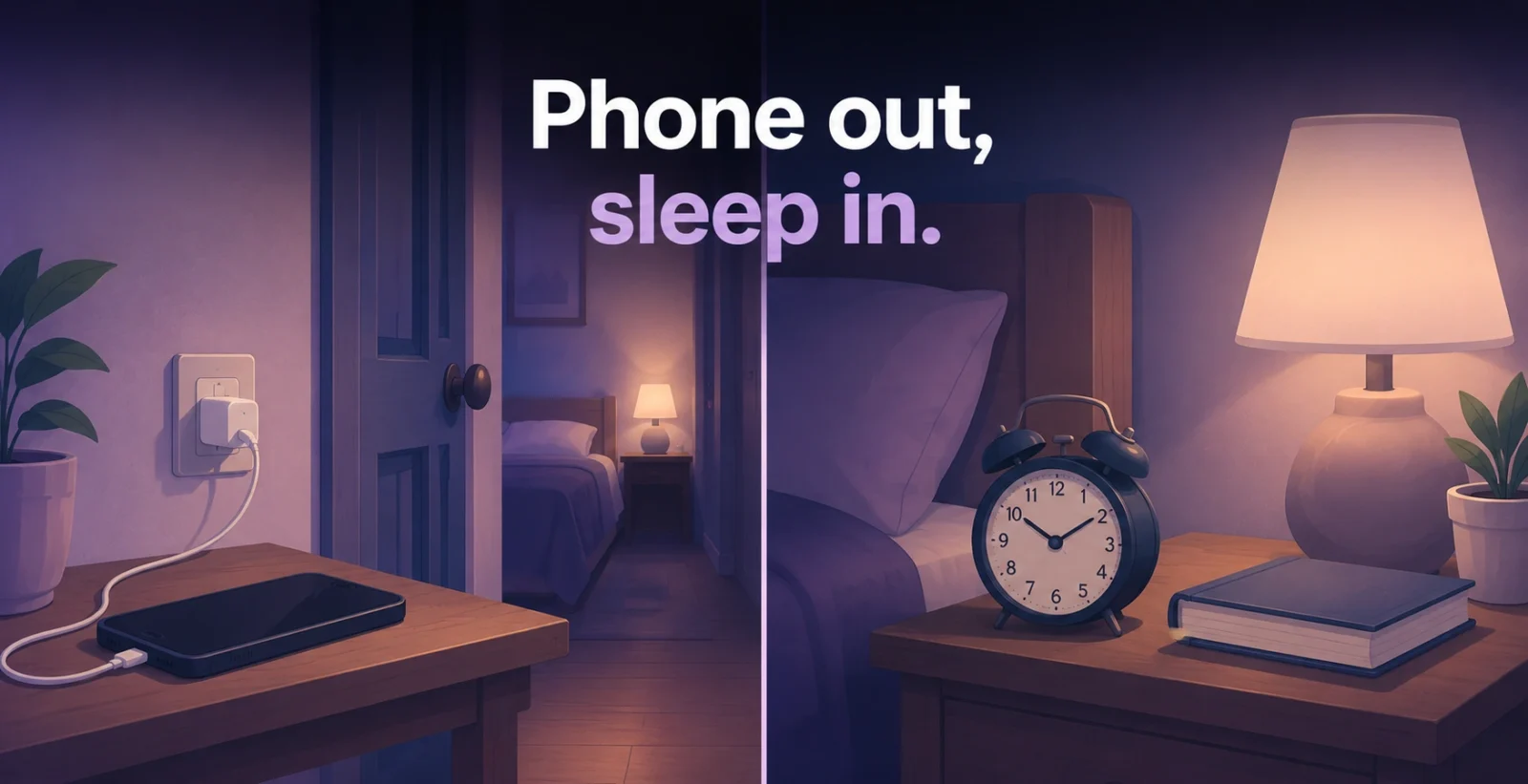
The fix is refreshingly simple, and it is about your environment, not your discipline. Charge your phone outside the bedroom and use a cheap alarm clock instead. If the phone is not within arm’s reach at 1 a.m., the scroll simply cannot happen. Swap the pre-sleep feed for something that does not update, like a book, a podcast, or a few slow breaths. Journaling before bed works beautifully too, and our guide on how to start journaling makes it easy to begin.
How to Stay Informed Without the Doom
You might be thinking, but I need to know what is happening in the world. That is fair, and you can, without the spiral. The trick is to be intentional instead of endless.
- Pick one or two trusted sources instead of a dozen competing feeds.
- Read, do not scroll. Choose a set time, catch up on what matters, and close the app.
- Balance the heavy with the hopeful, including some good news and stories you can actually act on.
Staying informed and protecting your peace are not opposites. With a few boundaries, you can comfortably do both.
A Simple 7-Day Plan to Break the Habit
You do not need to overhaul everything today. Change one small thing at a time and let it build.
| Day | One Small Change |
| Day 1 | Just notice. Each time you scroll, ask, do I feel better or worse? |
| Day 2 | Turn off news and breaking-news notifications |
| Day 3 | Move your phone charger out of the bedroom |
| Day 4 | Set a daily app or screen-time limit |
| Day 5 | Pick two set times to check the news, and stick to them |
| Day 6 | Choose a swap: a book, a walk, a puzzle, or a friend to message |
| Day 7 | Unfollow or mute three accounts that leave you anxious |
Miss a day? No guilt, just pick back up. Small, kind, consistent steps beat one dramatic detox that never lasts.
When to Get Extra Support
Sometimes the scroll is a symptom, not the whole story. If news anxiety keeps you up most nights, or if it is tangled up with ongoing anxiety or low mood, it is worth reaching out. A doctor or mental health professional can help, and approaches like cognitive behavioral therapy are very effective at untangling habits like this. Asking for support is a sign of strength, and you do not have to sort it out alone.
Doomscrolling is not a personal weakness. It is a very human habit, encouraged by how our brains work and how apps are built. That is actually good news, because it means you can change it. Notice how it makes you feel, add a little friction, set gentle boundaries, and protect your sleep, and the pull starts to fade.
You do not have to quit the internet or miss the world. You just get to enjoy your time again, one calmer moment at a time. Pick one step from this guide and start tonight.
Frequently Asked Questions
What is doomscrolling?
Doomscrolling is compulsively scrolling through negative or distressing online news and content, usually on a phone, well past the point where it is useful. The term became popular during the 2020 pandemic, and it is linked to more anxiety, low mood, and poorer sleep.
Why is doomscrolling so addictive?
Three things combine. Your brain is wired to notice threats, uncertain times make you crave information, and social feeds are designed like slot machines, with unpredictable rewards that keep you tapping. That mix makes it feel almost automatic, which is why it is not simply a willpower problem.
Is doomscrolling bad for you?
Research consistently links heavy doomscrolling to higher anxiety, low mood, disrupted sleep, and lower well-being, plus physical effects like headaches and tension. These are strong associations rather than proof of cause, but the documented downsides are real enough to make cutting back worthwhile.
How do I stop doomscrolling at night?
Keep your phone out of the bedroom and use a separate alarm clock, so late-night scrolling is not even an option. Set your apps to lock in the evening, and wind down with something that does not update, like a book, a podcast, or a few minutes of journaling.
Does deleting social media apps help?
It can, because it adds friction. Even moving apps off your home screen, logging out, or setting time limits makes the scroll harder to fall into. You do not have to quit entirely, though. Shaping your feed and setting boundaries often works just as well.
How long does it take to break the habit?
There is no fixed number, since it depends on the person and the habit. Many people feel a difference within a week or two of small, consistent changes. Progress matters more than perfection, so if you slip, simply start again the next day.