
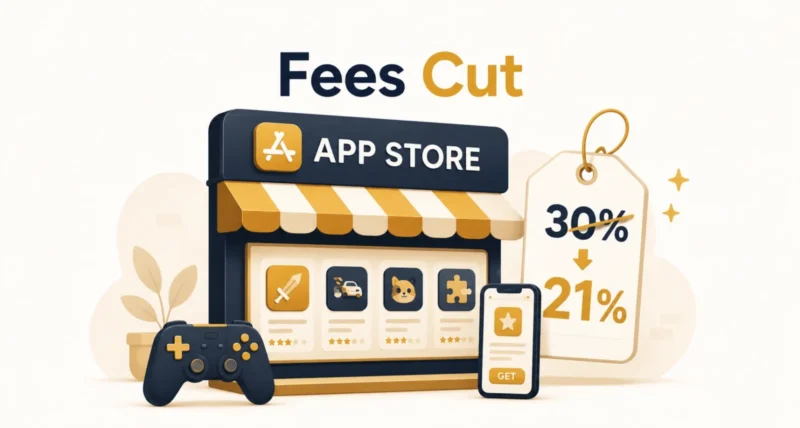
It started with a video game. In 2020, Epic Games slipped a cheaper payment button into Fortnite, dared Google to react, and got the game yanked from the Play Store within hours. That single act of defiance lit a five-year legal fire. On June 24, 2026, it finally paid off for everyone. The Google Play Store fee change is here, cutting the famous 30 percent cut, opening the door to other payment options, and quietly reshaping how Android apps make money. Here is the full story, and what it means for you.
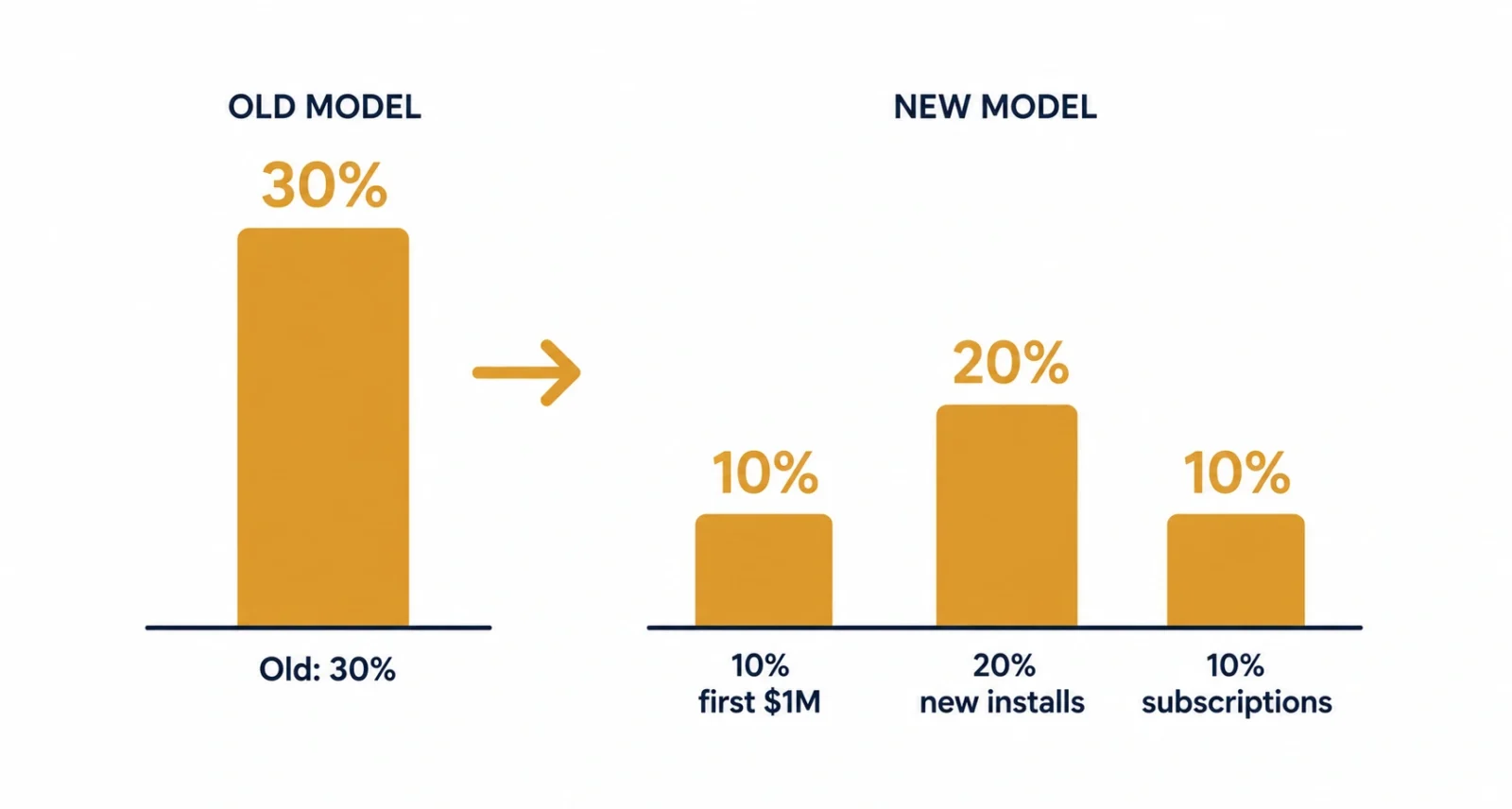
| Quick Answer Google is lowering Play Store fees and allowing alternative payment systems, starting June 30, 2026, in the US, UK, and European Economic Area. The old flat 30 percent commission is gone. Developers now pay a 10 percent service fee on their first $1 million each year, then 20 percent on new installs and up to 25 percent on older ones, with subscriptions at 10 percent. A separate 5 percent fee applies only if they use Google’s billing. The changes stem from Epic Games’ antitrust win and roll out worldwide by September 2027. |
Key Takeaways
- The Google Play Store fee change ends the flat 30 percent commission, starting June 30, 2026.
- Developers pay just 10 percent on their first $1 million in annual earnings.
- Above that, fees are 20 percent on new installs and up to 25 percent on older ones.
- Apps can now use other payment systems or send users to the web to pay.
- It all stems from Epic Games’ antitrust win, and Fortnite is returning to the Play Store.
The Backstory: How We Got Here
For more than a decade, the rule was simple and harsh. Sell anything digital in an app, and the store took 30 percent. Apple did it, Google did it, and developers grumbled but paid, because there was nowhere else to go.
Epic Games decided to break that. Its 2020 Fortnite stunt was a deliberate trap, and Google walked into it by pulling the game. Epic sued. In December 2023, a jury agreed that Google had built an illegal monopoly over Android apps and payments. After appeals, the two sides reached a settlement in early 2026, and this fee change is the result.
| Worth Knowing This is not Google being generous. The Google Play Store fee change is the direct outcome of losing an antitrust fight. As part of the deal, Fortnite returns to the Play Store, and Epic and Google have ended their disputes worldwide. |
What the Google Play Store Fee Change Actually Does
Three big things shift at once, and together they rewrite Android’s economics. As MacRumors reported, the update touches fees, payment choice, and competition.
- Lower fees. The flat 30 percent is replaced by a tiered system that is far cheaper for most developers.
- Payment choice. Apps can use their own billing system or link users out to a website to pay.
- Open competition. Rival app stores get an easier, officially supported path onto Android phones.
That last point matters more than it sounds. For years, installing another app store meant scary warnings and hidden settings. A smoother path could finally give the Play Store real competition.
The New Fee Structure, Explained
Google split its old single cut into two parts: a service fee for listing and distribution, and a separate billing fee only if you use Google’s payment system. As Google laid out on its Android Developers Blog, here is the simple version.
| Situation | New Fee |
| First $1 million in annual earnings | 10 percent service fee |
| New installs, over $1 million | 20 percent service fee |
| Existing installs, over $1 million | Up to 25 percent service fee |
| Auto-renewing subscriptions | 10 percent service fee |
| Using Google Play billing | Plus 5 percent billing fee |
| Linking out to the web to pay | No 5 percent billing fee |
Good to Know
Qualifying apps in Google’s upcoming Games Level Up and Apps Experience programs can pay even less, with service fees as low as 10 to 15 percent. Those programs open to developers in September.
A Real Example: The $10 Purchase
Numbers on a chart are abstract, so picture a real sale. You buy a $10 item inside an Android game. Here is how the developer’s cut changes.
| Scenario | Google’s Cut | Developer Keeps |
| Old rule (30 percent) | $3.00 | $7.00 |
| New, standard 20 percent | $2.00 | $8.00 |
| New, with Google billing (25 percent total) | $2.50 | $7.50 |
| A $9.99 monthly subscription, old | About $3.00 | About $7.00 |
| The same subscription, new 10 percent | About $1.00 | About $9.00 |
For a small developer under the $1 million mark, the math is even kinder, since their rate drops to just 10 percent. That extra money can fund updates, lower prices, or simply keep a small studio alive.
When and Where It Rolls Out
The change does not hit everywhere at once. It follows a staggered schedule across the next 18 months.
- June 30, 2026. Live first in the United States, the United Kingdom, and the European Economic Area.
- By end of 2026. Expands to Australia, then Japan and South Korea.
- By September 2027. Rolls out to the rest of the world.
| Worth Knowing The 5 percent billing fee is set for the first markets, but Google notes it could differ by region. So exact numbers may vary as the rollout reaches your country. |
What It Means for You
You are not a developer, so why care? Because this quietly affects your apps, your prices, and your choices. Here is the practical impact.
- Possibly lower prices. When developers keep more, some pass savings on, especially on subscriptions that dropped from 30 to 10 percent.
- More payment options. You may see apps offering to take payment on their own website, sometimes a little cheaper.
- More app stores. Rival stores from companies like Epic and others become easier to install if you want them.
- Fortnite is back. The game that started it all is returning to the Play Store after a five-year absence.
If you like to get more from your phone, this is part of a broader opening up of Android. Our guide to the biggest new Android 17 features covers other recent changes worth knowing about.
How Does It Compare to Apple?
Google now has one worldwide policy lowering fees and allowing other payment options. Apple does not. Apple is fighting its own Epic Games battle in court, has appealed to the Supreme Court, and is applying a patchwork of different rules country by country rather than a single global change. For now, Android is the more open of the two big app platforms.
| Quick Take The two giants long charged near-identical fees. Google moving first, and worldwide, puts real pressure on Apple. Many expect this to shape how Apple’s own legal fight finally ends. |
The Google Play Store fee change is the quiet end of an era. A single act of defiance in a video game grew into an antitrust verdict that toppled the 30 percent rule that shaped mobile apps for over a decade.
For developers, it means keeping far more of what they earn. For you, it could mean lower prices, more payment choices, and a more open Android. The five-year fight is over, and the winner, in the end, may be everyone who uses a phone.
| Your Move Want more clear breakdowns of the tech shaping your phone? Browse our Technology section for practical, easy-to-follow guides. |
Frequently Asked Questions
What is the Google Play Store fee change?
It is a major update where Google lowers its app store fees and allows alternative payment systems. The old flat 30 percent commission is replaced by a tiered structure, starting June 30, 2026, as a result of Epic Games’ antitrust win.
How much does Google charge developers now?
Developers pay 10 percent on their first $1 million in annual earnings. Above that, fees are 20 percent on new installs and up to 25 percent on existing ones. Subscriptions are 10 percent, with a separate 5 percent fee only if they use Google billing.
Can Android apps use other payment systems now?
Yes. Developers can use their own billing system or link users out to a website to complete a purchase. If they avoid Google’s billing, they skip the extra 5 percent billing fee in the launch markets.
When does the Google Play Store fee change start?
It begins June 30, 2026, in the US, UK, and European Economic Area. It expands to Australia, Japan, and South Korea by the end of 2026, and to the rest of the world by September 2027.
Why is Google lowering Play Store fees?
The change results from Epic Games’ antitrust lawsuit. A jury found in 2023 that Google held an illegal monopoly over Android apps and payments, and a later settlement required Google to lower fees and open up.
Is Fortnite coming back to the Play Store?
Yes. As part of the settlement, Fortnite is returning to the Google Play Store worldwide, ending a roughly five-year absence that began when Google removed it in 2020.

