
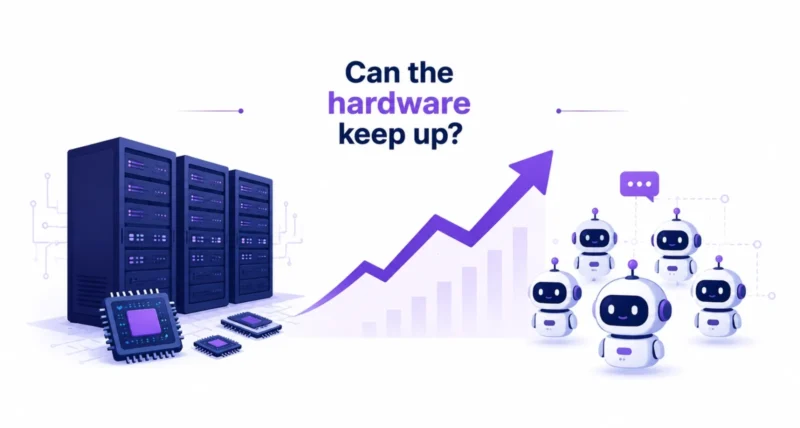
Artificial intelligence is changing fast. For years, AI mostly meant chatbots that answered our questions. Now a new kind of AI is here: agents that can actually do things on their own. They complete tasks and run workflows without being told each step. This shift is exciting, but it comes with a big problem. The powerful new AI needs powerful new computers to run on, and most companies are not ready. That is the headline of Google Cloud’s new State of AI Infrastructure report, which surveyed more than 1,400 senior tech leaders. Its biggest finding? A striking 83% of organizations say they need to upgrade their infrastructure to keep up. Here is what the report says, explained in simple terms.
| Key Takeaway AI is moving from simple chatbots to autonomous agents that take action, and that shift is straining the technology behind the scenes. In Google Cloud’s State of AI Infrastructure report, based on a survey of 1,400 tech leaders, 83% say they need to upgrade their infrastructure to run this new AI properly. The report points to five big pressures: rising costs, too many agents to manage, scattered data, where AI actually runs, and soaring energy use. The message is clear: yesterday’s setup was not built for AI that acts on its own. |
What Is ‘Agentic AI’ and Why Does It Matter?
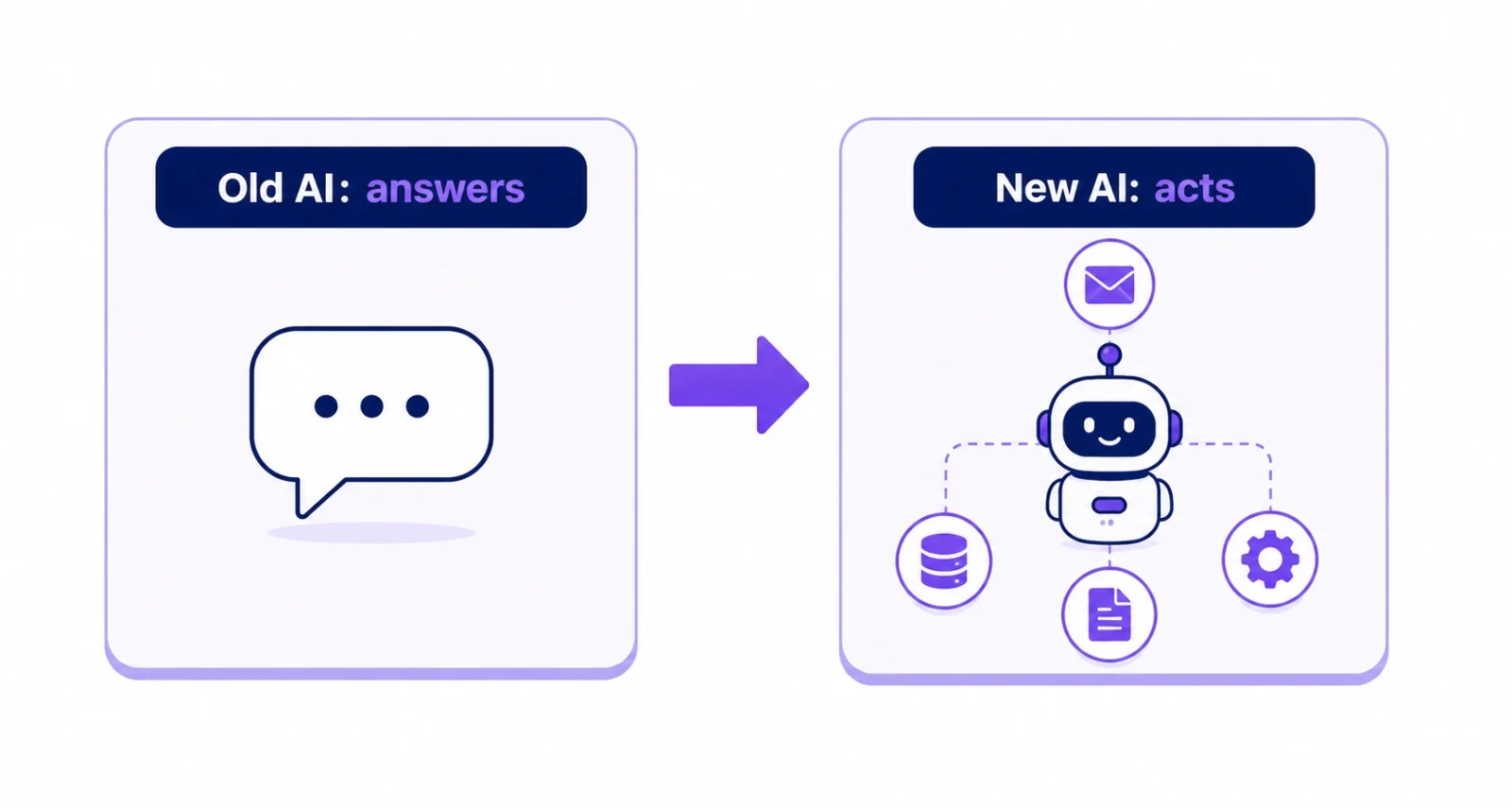
First, a quick explainer, because this is the heart of the story. Older AI is like a helpful assistant that answers when you ask. Agentic AI is different. An AI agent can take one instruction and then carry out a whole chain of actions by itself. That might mean reading emails, looking up data, and finishing tasks across different systems.
The catch is that a single request to an agent can trigger hundreds of smaller actions behind the scenes. That puts far more strain on a company’s computers, storage, and networks than a simple chatbot ever did. In short, the AI got more powerful, but the plumbing underneath did not keep up. That gap is exactly what the report measures.
The Big Number: 83% Need Infrastructure Upgrades
The report’s standout finding is simple and striking. Out of more than 1,400 senior IT leaders surveyed, 83% said their organization needs infrastructure upgrades to run production-ready agentic AI. Put simply, most companies want to use these powerful AI agents, but their current technology cannot handle the load. It is a bit like buying a race car and realizing your driveway cannot fit it. Google Cloud shared the results to help businesses understand the gap and plan for it.
The Key Findings, Explained Simply
Beyond the headline number, the report is full of eye-opening stats. Here they are at a glance.
| What the Report Found | The Number |
| Organizations that need infrastructure upgrades | 83% |
| Leaders who feel a hidden “inference tax” on AI spending | 62% |
| Leaders who struggle with operational complexity | 81% |
| Leaders who say security and governance are the top challenge | 79% |
| Organizations now using a hybrid multicloud setup | 52% |
| Organizations that rank edge computing as important | 90% |
| Leaders who factor energy use into hardware choices | 91% |
Let us break down what each of these actually means for everyday tech.
The Hidden Cost: The ‘Inference Tax’
Running AI agents is expensive, often in ways companies do not expect. The report calls this the inference tax. It comes from things like moving data around, storing huge amounts of it, and paying for specialized hardware that sits idle. In the survey, 62% of leaders said they feel this hidden cost, and 81% said the sheer complexity of managing AI adds to the bill. The fix, the report says, is to match the right kind of computer chip to each job instead of forcing everything onto one. Google points to its own chips as an example, like the new TPU 8t for heavy AI training and the TPU 8i for fast, real-time responses.
Too Many Agents: The ‘Agent Sprawl’ Problem
Here is a problem that sounds futuristic but is very real. As companies add more AI agents, they end up with thousands of them running across different tools. It becomes hard to track what they are all doing. The report calls this agent sprawl. Unsurprisingly, 79% of leaders named security and governance as their biggest challenge in scaling AI. The answer is to manage every agent from one central place. That means clear rules, a full record of every action, and a human sign-off for big decisions. Notably, 78% of organizations now get their AI tools directly from their main cloud provider. That is a jump of 30 points from 2025, largely to keep all of this under control.
Scattered Data and Where AI Runs
Two more findings go hand in hand. First, AI agents constantly dig through company data to do their work. If that data is scattered across disconnected systems, the AI is basically working blind. Companies are fixing this by bringing their data together into one connected layer the AI can read easily. Second, the report looks at where AI actually runs. More than half of organizations, 52%, now use a mix of different clouds. A huge 90% also say running AI at the edge, closer to where it happens, is important. Doing that cuts delays, keeps things working even if the internet drops, and saves money.
The Energy Wall
Perhaps the most surprising finding is about electricity. AI uses enormous amounts of power, and it is becoming a serious limit on growth. In the survey, 91% of leaders now consider power use when choosing their hardware. In some places, you simply cannot get more electricity, and new rules are tightening the screws. Germany, for example, now requires new data centers to hit strict efficiency targets, and Ireland asks large ones to generate their own power. The report’s advice is to get more work out of every watt, which is why energy-efficient chips matter. Google says its new TPU 8t delivers nearly three times the performance of the previous version while using up to half the energy.
What It All Means for 2026
Pulling it together, the report’s message is that companies cannot run tomorrow’s AI on yesterday’s technology. The businesses set to thrive in 2026 are building one unified, modern foundation. It is affordable to run, works well at the edge, handles autonomous agents, and stays secure from the start. Google’s own answer is a fully integrated system it calls the AI Hypercomputer. In it, the chips, storage, networking, and software all work together by design. Looking further ahead, this same technology is starting to power physical AI. Think robots that practice tasks millions of times in virtual simulations before doing them for real. If you are curious about the AI agents driving all of this, our guide to managed agents in the Gemini API is a good next read.
The State of AI Infrastructure report sends a clear signal: the age of AI agents is here, and the technology behind the scenes has to catch up. With 83% of companies saying they need upgrades, the race is on to build faster, smarter, and more efficient foundations for AI.
For everyday users, it is a peek behind the curtain at the huge effort needed to make helpful AI work at scale. And for businesses, it is a roadmap for what to build next.
Frequently Asked Questions
What is the State of AI Infrastructure report?
It is a research report from Google Cloud, published in July 2026, based on a survey of more than 1,400 senior IT leaders. It looks at how ready companies are to run agentic AI, and its headline finding is that 83% say they need infrastructure upgrades.
What is agentic AI?
Agentic AI is AI that can act on its own, not just answer questions. An AI agent can take an instruction and carry out a chain of tasks by itself. That includes looking up data, sending messages, and completing a workflow across systems.
What is the “inference tax”?
The inference tax is the report’s name for the hidden costs of running AI at scale. It includes fees for moving and storing data and money wasted on specialized hardware that sits idle. In the survey, 62% of leaders said they feel it.
Why do companies need to upgrade their infrastructure for AI?
Because AI agents place far heavier demands on computers, storage, and networks than older chatbots did. One request can trigger hundreds of actions, so older systems struggle with the cost, speed, and scale. That is why 83% of organizations say upgrades are needed.
What is the AI Hypercomputer?
It is Google Cloud’s name for an integrated system. In it, the chips, storage, networking, and software all work together by design. This aims to run demanding AI more efficiently than piecing together separate parts.
How many people did the report survey?
It draws on responses from more than 1,400 senior IT leaders across many organizations. That scale is what gives its findings, like the 83% figure, their weight.

