
If you have seen headlines about an “explosive diarrhea” parasite this week, you are not alone. The cyclospora outbreak spreading across the US has become one of the biggest food safety stories of the year, and it is easy to feel uneasy at the produce aisle. Here is the calm, clear version. Cyclospora is a tiny parasite that spreads through contaminated food, mostly fresh produce, and while it can make you miserable for weeks, it rarely turns dangerous and doctors can treat it. This guide walks through what it is, the foods to watch, the symptoms, and exactly when to see a doctor.
| The Short Answer A cyclospora outbreak has sickened thousands across the US since May 2026. The CDC has confirmed 1,645 domestic cases and is reviewing more than 5,100 additional reports, roughly four times the total at this point last year. Cyclospora is a microscopic parasite behind an intestinal illness called cyclosporiasis, usually caught from contaminated fresh produce. The main symptom is frequent, watery diarrhea, often with fatigue, nausea, and loss of appetite, starting about a week after exposure. It rarely turns life-threatening, and doctors treat it with antibiotics. See a clinician if watery diarrhea lasts more than a few days. Washing produce helps but does not always remove the parasite, so cooking food when you can lowers the risk further. |
What Is Cyclospora?
Cyclospora is a parasite so small you can only see it under a microscope. It causes an intestinal illness called cyclosporiasis. Once it gets into your body through contaminated food or water, it settles in the intestines. From there it can cause symptoms that drag on for weeks if you do not treat them.
One reassuring detail sets it apart from many stomach bugs. Cyclospora does not usually pass directly from person to person. After it leaves the body, the parasite needs several days to weeks out in the environment before it can infect anyone else, so you cannot simply catch it from a sick family member the way you might a norovirus.
It is also not new. As the CDC notes, cases climb every spring and summer, with a defined season running from May through August. What makes 2026 stand out is the sheer number of people getting sick.
How Big Is the Cyclospora Outbreak?
The numbers are high, but they need context, so here is the picture as health officials describe it.
| The Outbreak by the Numbers | Figure |
| Confirmed US cases since May 1 | 1,645 |
| Additional reports under review | More than 5,100 |
| Cases at this time last year | 249, about four times fewer |
| States reporting cases | 34 |
| Hospitalized | 141, or 9% |
| Deaths | None reported |
| Hardest-hit state | Michigan, by a wide margin |
A few things stand out. First, no one has died, and hospitalizations sit at about 9%, so the illness is unpleasant rather than deadly for most people. Second, officials are not treating this as a national emergency yet. And third, the CDC’s acting parasitic diseases branch chief has said there is no sign the parasite has changed to become more infectious. Michigan looks like the epicenter partly because the state has chased and reported cases aggressively. That focus can make one region look worse than others.
Cyclospora Symptoms to Watch For
Symptoms usually show up about a week after you eat contaminated food, though they can appear anywhere from two days to two weeks later. The tricky part is that lag. By the time you feel sick, it is genuinely hard to remember what you ate.
| Common Symptoms | Less Common Symptoms |
| Frequent, watery diarrhea | Low-grade fever |
| Loss of appetite and weight loss | Vomiting |
| Stomach cramps, bloating, and gas | Body aches and headache |
| Nausea | Flu-like feelings |
| Extreme tiredness that can linger | Sometimes no symptoms at all |
There is one more pattern worth knowing. Cyclosporiasis often follows a stop-start course. The diarrhea can ease off, then come back, and the fatigue can hang around even after everything else clears. Without treatment, the whole thing can last from a few days to a month or more.
What Foods Are Linked to Cyclospora?
This is the question everyone wants answered, and the honest reply is that officials have not pinned down the source of the current outbreak. The FDA is tracing several types of fresh produce back through the supply chain. Michigan’s early investigation points toward lettuce and salad greens, but nothing is confirmed, and other foods are still on the table.
What we do have is history. Past outbreaks have repeatedly involved the same handful of fresh, raw foods.
| Foods Linked in Past Outbreaks | Why They Show Up |
| Lettuce and bagged salad mixes | The current prime suspect, though not confirmed |
| Fresh herbs such as cilantro and basil | Almost always eaten raw |
| Berries, especially raspberries | Bumpy surfaces are hard to clean |
| Snap peas and green onions | Frequent sources in earlier years |
| Pre-cut veggie trays and fruit mixes | More handling means more chances to contaminate |
You may also have seen news that Al Jazeera and others reported, that Taco Bell voluntarily and temporarily pulled a few ingredients such as lettuce and cilantro from some locations as a precaution. Officials have not confirmed any link to Taco Bell. The company says it is simply following public health guidance while the investigation continues.
What Is Safe to Eat, and What to Be Careful With
Here is the good news, and the part most worth sharing. You do not need to swear off fruits and vegetables. Federal officials are not telling people to avoid any single food, and produce remains one of the healthiest parts of your diet. The goal is smarter handling, not fear.
The single most useful fact, reported by CNN, is that heat kills the parasite. Cooking produce to an internal temperature of 158 degrees Fahrenheit or higher destroys cyclospora. That makes cooked vegetables a lower-risk choice than raw ones. No frozen produce, cooked food, or peeled fruit has turned up as a source in this or past outbreaks either.
| Lower Risk | Worth Extra Care | ||
| Cooked vegetables, since heat kills it | Raw leafy greens and pre-made salads | ||
| Frozen produce, none linked to date | Pre-chopped and pre-bagged produce | ||
| Peeled fruit | Fresh herbs eaten raw | ||
| Whole produce you cut yourself | Pre-made vegetable and fruit trays | ||
| Worth Knowing If you live in one of the hardest-hit states, such as Michigan, Ohio, West Virginia, or Kentucky, some food safety experts suggest going easy on lettuce and salad greens until officials identify the source. A practical tip they repeat often: skip the pre-chopped, pre-bagged options. Buy whole heads of lettuce or whole produce and cut them yourself, since less handling means fewer chances for contamination. | |||
How to Lower Your Risk in the Kitchen
Washing does not remove cyclospora every time, but good habits still cut your risk and clear away other germs. These steps take almost no effort.
- Wash your hands with soap and water before and after handling fresh produce, and after using the bathroom.
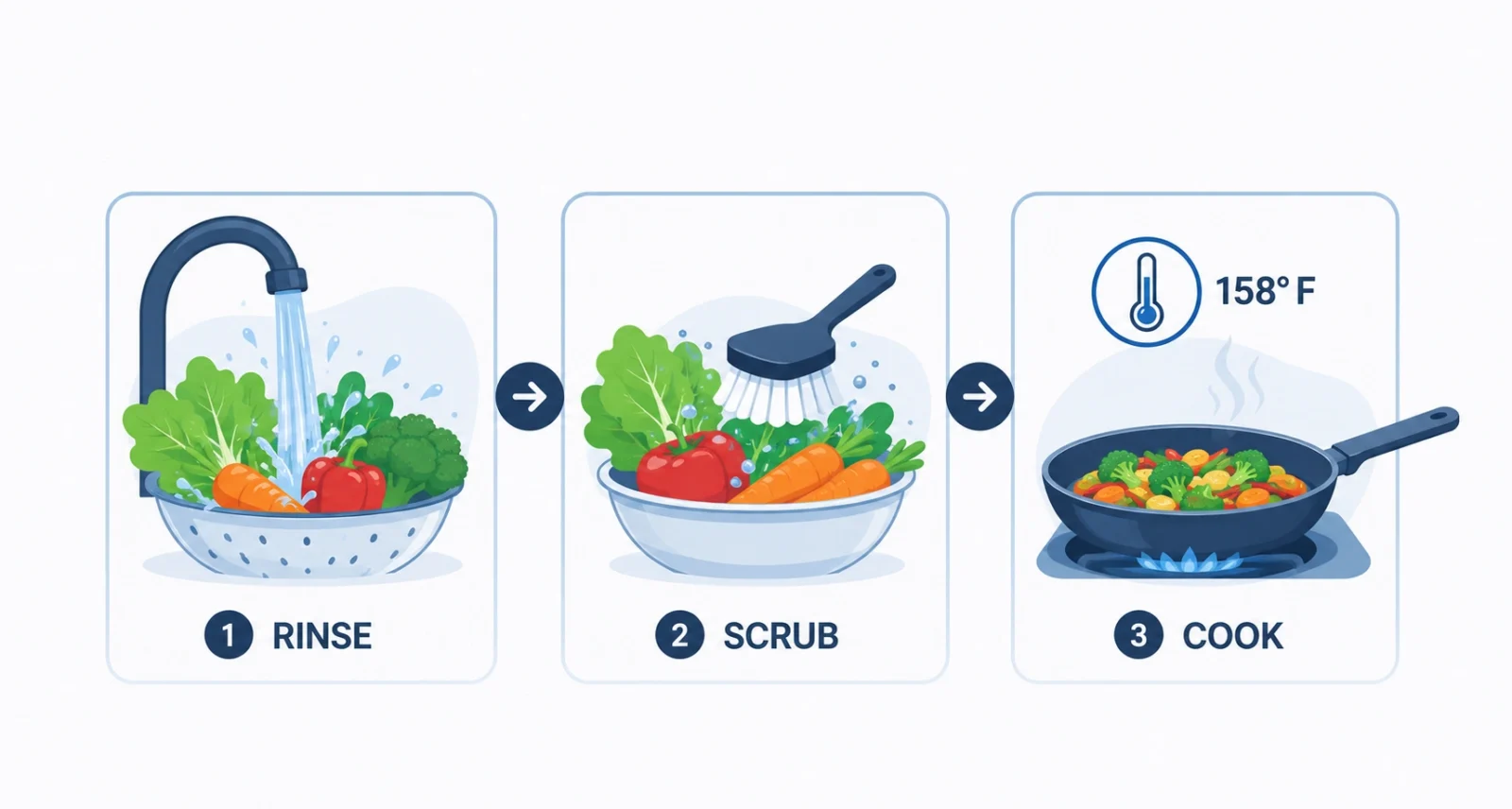
- Rinse all fresh produce under clean running water before eating, cutting, or cooking, even items labeled pre-washed.
- Scrub firm produce like melons, cucumbers, and squash with a clean produce brush. Scrub melons before you cut them, so the knife does not drag germs inside.
- Cook produce when it makes sense. Reaching 158 degrees Fahrenheit kills the parasite, so cooked is safer than raw during an outbreak.
- Refrigerate cut, peeled, or cooked fruits and vegetables within two hours to keep them safe.
- Keep raw produce away from ready-to-eat foods and from raw meat, poultry, and seafood to avoid cross-contamination.
When to See a Doctor, and How It Is Treated
Most healthy people recover on their own, but you should not just wait it out if things drag on. See a clinician if you have watery diarrhea that lasts more than a few days, especially during this outbreak. Get help sooner if you cannot keep fluids down, if you notice signs of dehydration, or if you have a weakened immune system.
Diagnosis takes a stool test, and there is a catch. The parasite is not always present in large enough amounts to detect. A doctor may ask for several samples collected on different days. Labs use specialized methods, including microscopy and PCR, rather than a routine test.
For treatment, doctors typically prescribe a specific antibiotic combination called trimethoprim-sulfamethoxazole, sold under brand names such as Bactrim and Septra. The course usually runs about 7 to 10 days. People with weakened immune systems may need longer. Only a clinician can prescribe it and judge what is right for you. It contains a sulfa drug and is not suitable for everyone, including some people with allergies or during pregnancy. While you recover, focus on fluids, and if you are given antibiotics, finish the full course even if you feel better first.
| Do This First If you have frequent diarrhea, replacing lost fluids matters most. Sip water, broth, or electrolyte drinks steadily, and go easy on alcohol and caffeine, which can worsen dehydration. If your appetite is low, small amounts of food more often can be easier to manage than a full meal. |
The cyclospora outbreak is a genuine reason to handle fresh produce carefully this summer, but not a reason to panic. The illness is rarely dangerous, most people recover, and doctors can treat it. Wash your produce, cook it when you can, be a little cautious with raw leafy greens if you are in a hard-hit state, and keep an eye on official updates as investigators track down the source.
If your symptoms are severe or drag on for more than a few days, see a doctor rather than waiting it out. For more clear, practical health explainers, browse our Health and Wellness section.
Frequently Asked Questions
What is cyclospora?
Cyclospora is a microscopic parasite that causes an intestinal illness called cyclosporiasis. People catch it by eating food or drinking water contaminated with the parasite, most often fresh produce. It does not usually spread directly from person to person, because it needs days to weeks in the environment before it can infect someone new.
What are the symptoms of cyclospora?
The main symptom is frequent, watery diarrhea. It often comes with loss of appetite, weight loss, stomach cramps, bloating, nausea, and marked tiredness. A low-grade fever, vomiting, or body aches can show up too. Symptoms usually start about a week after exposure and can stop and start, sometimes lasting a month or more without treatment.
What foods cause cyclospora?
Fresh produce eaten raw is the usual culprit. Past outbreaks have involved lettuce and bagged salads, herbs like cilantro and basil, raspberries, snap peas, green onions, and pre-cut veggie or fruit trays. Officials have not confirmed the source of the current outbreak, though early signals in Michigan point toward lettuce and salad greens.
Is the cyclospora outbreak dangerous?
For most people, it is miserable rather than dangerous. In the current outbreak about 9% of confirmed cases needed hospital care, and no deaths have been reported. It can be more serious for people with weakened immune systems, so they should seek care promptly. Anyone with severe or prolonged symptoms should see a doctor.
Does washing produce remove cyclospora?
Not reliably. Washing helps and clears away dirt and other germs, but it does not always remove cyclospora, even from items labeled pre-washed. That is why cooking matters. Heating produce to 158 degrees Fahrenheit kills the parasite, so cooked food is a lower-risk option than raw during an outbreak.
How is cyclospora treated?
Doctors usually treat it with a prescription antibiotic combination, trimethoprim-sulfamethoxazole, over about 7 to 10 days, with a longer course for some people with weakened immune systems. Many healthy people recover without medication, but treatment shortens the illness and prevents relapse. Staying well hydrated is important throughout. A clinician should decide on any treatment.