
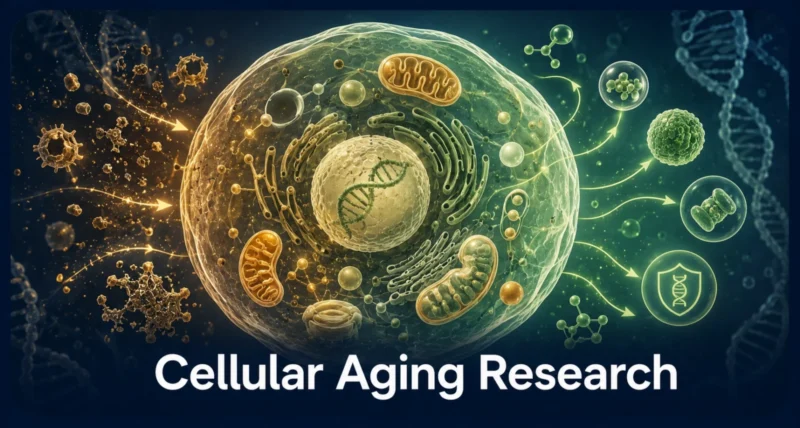
Cellular aging research in 2026 has moved from theory to active human clinical trials, with cellular senescence emerging as the most actionable target. Scientists now address six damage mechanisms: senescence, mitochondrial dysfunction, DNA damage, telomere attrition, proteostasis loss, and autophagy decline. Corresponding strategies include senolytics, senomorphics, epigenetic reprogramming, mitochondrial repair, autophagy enhancement, and stem cell rejuvenation.
Key 2026 milestones include the first human senolytics trial (dasatinib plus quercetin) for idiopathic pulmonary fibrosis showing meaningful mobility gains, Retro Biosciences launching ER-100 epigenetic reprogramming trials, and a March npj Aging paper marking the shift from broad senolysis to precision reprogramming. Leading institutions include Mayo Clinic, Stanford, Harvard, Albert Einstein, and UCLA. Rubedo, Altos Labs, Unity Biotechnology, NewLimit, BioAge, and OneSkin lead commercial development.
The honest reality: no cellular aging therapy holds FDA approval, side effects like thrombocytopenia persist, and proven lifestyle practices still deliver the most reliable cellular health benefits.
Key Takeaways
Cellular aging research has moved from theoretical to clinical reality with the first-in-human senolytic trials showing dasatinib plus quercetin combination produces clinically-meaningful mobility improvements in idiopathic pulmonary fibrosis patients, while first-ever human trials of epigenetic reprogramming therapy (ER-100 by Retro Biosciences) began in early 2026, marking the transition from preclinical research to active clinical intervention
Six major cellular damage mechanisms drive aging at the molecular level: cellular senescence (zombie cells producing SASP inflammation), mitochondrial dysfunction (cellular energy production decline), DNA damage accumulation (from oxidative stress and replication errors), telomere attrition (protective chromosome cap shortening), proteostasis loss (damaged protein accumulation), and autophagy decline (cellular cleanup system failure), each providing distinct therapeutic targets
Six targeting strategies are in active research and clinical development: senolytics (selective killing of senescent cells using D+Q, navitoclax, fisetin), senomorphics (reprogramming senescent cells), epigenetic reprogramming (Yamanaka factors restoring youthful gene expression), mitochondrial repair compounds (MitoQ, urolithin A, NAD+ precursors), autophagy enhancement (spermidine, rapamycin), and stem cell rejuvenation therapies
Major research institutions driving cellular aging research include Mayo Clinic with James Kirkland and Tamar Tchkonia pioneering senolytics, Stanford with Anne Brunet on aging genetics, Harvard with David Sinclair on epigenetic reprogramming, Albert Einstein with Nir Barzilai leading the TAME metformin trial, UCLA with Steve Horvath on epigenetic clocks, and growing commercial sector with companies including Rubedo, Retro Biosciences, Unity Biotechnology, Altos Labs, NewLimit, BioAge Labs, and others
Despite genuine progress, no cellular aging intervention has FDA approval for anti-aging use as of May 2026, with first-generation senolytics showing notable drawbacks, including thrombocytopenia (dose-limiting toxicity from navitoclax), variable therapeutic efficacy, emerging resistance mechanisms, and most evidence still from preclinical models or small early-phase trials, making realistic expectations essential alongside genuine optimism
What Cellular Aging Actually Is
Before exploring targeting strategies, understanding what happens at the cellular level provides an essential foundation.
The Cell Through Time
A young cell typically: – Divides reliably when needed – Produces energy efficiently through mitochondria – Maintains accurate DNA replication – Cleans up damaged proteins through autophagy – Communicates appropriately with neighboring cells – Responds correctly to environmental signals.
An aged cell typically: – Accumulates DNA damage – Has dysfunctional mitochondria producing less energy and more reactive oxygen species – May enter senescence (permanent growth arrest) – Has reduced autophagy capacity – Has shortened telomeres (chromosome protective caps) – Has dysregulated communication patterns – Produces inflammatory signals.
The shift from young to aged isn’t binary but accumulates gradually. Some cells age faster than others. Different cell types age differently.
Why Cellular Aging Matters
Cellular aging connects to organismal aging through several mechanisms:
Tissue dysfunction. Aged cells perform tissue functions less well. Skin cells produce poorer skin as they age. Neurons function less efficiently over time. Immune cells fight pathogens less effectively in older tissue.
Inflammation. Aged cells, particularly senescent ones, produce inflammatory signals that affect surrounding tissue. Chronic low-grade inflammation (“inflammaging”) drives many age-related diseases.
Cancer risk. Cellular aging mechanisms interact with cancer risk in complex ways. Senescence originally evolved as cancer prevention, but accumulated senescent cells may promote cancer.
Organ decline. Tissues containing many aged cells perform organ functions less well, contributing to age-related organ dysfunction.
Disease susceptibility. Aged cellular function increases susceptibility to multiple chronic diseases, including cardiovascular disease, neurodegeneration, diabetes, and others.
Understanding cellular aging at the molecular level enables targeted interventions rather than vague “anti-aging” approaches.
The Geroscience Hypothesis
The geroscience hypothesis underlies modern cellular aging research: targeting fundamental aging mechanisms has the potential to prevent or reduce the severity of multiple age-related diseases simultaneously.
The traditional medical approach. Treat each disease separately as it appears (heart disease, diabetes, dementia, etc.).
The geroscience alternative. Target the cellular aging processes that drive multiple diseases at once.
Why this matters. If cellular aging drives 10 different age-related diseases, addressing the cellular aging itself could potentially prevent or delay all 10 simultaneously rather than treating each disease individually after it appears.
This hypothesis is what motivates major cellular aging research. The TAME (Targeting Aging with Metformin) trial, led by Nir Barzilai, specifically tests whether targeting cellular aging mechanisms delays multiple age-related conditions.
The Challenge of Studying Cellular Aging
Cellular aging is complex:
Multiple mechanisms. Six or more distinct cellular damage types occur simultaneously.
Interconnected systems. Damage to one cellular system affects others.
Individual variation. Different people accumulate different cellular damage patterns.
Slow progression. Cellular aging changes occur over decades, making the study difficult.
Tissue-specific differences. Skin, liver, brain, and immune cells age differently.
These complexities mean cellular aging research requires sophisticated approaches combining multiple disciplines: cell biology, molecular biology, computational modeling, clinical research, and longitudinal studies.
The 6 Major Cellular Damage Mechanisms
Aging at the cellular level involves multiple specific damage types. Six major mechanisms account for most cellular aging effects.
Mechanism 1: Cellular Senescence (Zombie Cells)
What happens. Cells enter permanent growth arrest in response to various stresses (DNA damage, telomere dysfunction, oncogene activation, oxidative stress). These cells cannot divide, but don’t die either.
Why it matters: Senescent cells produce the Senescence-Associated Secretory Phenotype (SASP), a mix of inflammatory cytokines, growth factors, and other molecules that affect surrounding tissue.
The “zombie cell” framing. Senescent cells resist normal cell death pathways through Senescent Cell Anti-Apoptotic Pathways (SCAPs), continuing to live while causing harm.
The original evolutionary purpose. Senescence likely evolved to prevent damaged cells from becoming cancerous. The problem: it’s too good at preventing death. Cells that should die remain alive, causing inflammation.
Connection to disease. Senescent cells linked to: – Idiopathic pulmonary fibrosis – Osteoarthritis – Alzheimer’s disease – Atherosclerosis – Diabetic kidney disease – Many other age-related conditions
Therapeutic relevance. Cellular senescence is the most actively targeted cellular aging mechanism in 2026.
Mechanism 2: Mitochondrial Dysfunction
What happens. Mitochondria (the cellular energy producers) accumulate DNA damage, produce less ATP, generate more reactive oxygen species, and function less efficiently with age.
Why it matters: reduced cellular energy production affects virtually every cellular process. Increased oxidative stress causes additional damage.
The double impact. Mitochondrial dysfunction is both a cause and consequence of cellular aging. Damaged mitochondria produce damaging molecules. Those molecules damage more mitochondria.
Connection to disease. Mitochondrial dysfunction linked to: – Heart failure – Neurodegenerative diseases – Type 2 diabetes – Sarcopenia (muscle wasting) – Many metabolic disorders
Mechanism 3: DNA Damage Accumulation
What happens. DNA damage from various sources (UV radiation, oxidative stress, replication errors, environmental toxins) accumulates over time. DNA repair mechanisms decline.
Why it matters: damaged DNA leads to faulty proteins, dysregulated gene expression, and potential cancer.
The repair system is declining. Young cells repair DNA damage effectively. Older cells repair less efficiently. Accumulated damage compounds the problem.
Connection to disease. DNA damage linked to: – Cancer – Premature aging syndromes – Various cellular dysfunctions – Neurodegeneration
Mechanism 4: Telomere Attrition
What happens. Telomeres are protective caps at the ends of chromosomes. They shorten with each cell division. When too short, cells either enter senescence or die.
Why it matters. Telomere shortening limits cell division capacity. Stem cells and other dividing cells become depleted as telomeres shorten.
The clock analogy. Telomeres function as a cellular replicative clock. Cells can divide only so many times before telomeres become critically short.
Connection to disease. Telomere dysfunction linked to: – Premature aging syndromes – Immune system decline – Various tissue dysfunctions – Potentially cardiovascular disease
Mechanism 5: Proteostasis Loss (Protein Quality Control Decline)
What happens. Cellular systems that make, fold, and dispose of proteins become less efficient. Damaged or misfolded proteins accumulate.
Why it matters: Properly functioning proteins are essential for cellular life. Damaged proteins disrupt cellular function.
The accumulation problem. Aggregated misfolded proteins are characteristic of various age-related diseases.
Connection to disease. Proteostasis loss linked to: – Alzheimer’s disease (amyloid plaques, tau tangles) – Parkinson’s disease (alpha-synuclein aggregates) – Huntington’s disease (huntingtin aggregates) – Other protein aggregation diseases
Mechanism 6: Autophagy Decline (Cellular Cleanup Failure)
What happens. Autophagy is the cellular process for cleaning up damaged components (proteins, organelles). This system becomes less efficient with age.
Why it matters: Without effective autophagy, damaged components accumulate, contributing to cellular dysfunction.
The cleaning service analogy. Autophagy is the cell’s cleaning service. When the service falters, debris accumulates.
Connection to disease. Autophagy decline linked to: – Neurodegeneration – Muscle loss – Various cellular dysfunctions – Reduced response to caloric restriction benefits.
How These Mechanisms Interconnect
These six mechanisms aren’t independent. They interact in complex ways:
1. DNA damage can trigger senescence
2. Mitochondrial dysfunction produces reactive oxygen species that damage DNA
3. Telomere attrition causes senescence
4. Proteostasis loss creates protein damage that further impairs proteostasis
5. Reduced autophagy fails to clear damaged mitochondria
The interconnections matter for therapy. Addressing one mechanism may help address others. Comprehensive approaches addressing multiple mechanisms may work better than single-target interventions.
The 6 Major Cellular Targeting Strategies
For each damage mechanism, researchers are developing targeting strategies. Six major approaches dominate the 2026 research landscape.
Strategy 1: Senolytics (Selective Senescent Cell Killing)
The approach. Drugs that selectively kill senescent cells by exploiting their dependence on anti-apoptotic pathways (SCAPs).
How it works. Senolytic drugs disable the survival mechanisms unique to senescent cells, triggering programmed cell death in zombie cells while sparing healthy ones.
First-generation senolytics:
Dasatinib + Quercetin (D+Q). Dasatinib is a kinase inhibitor originally for leukemia. Quercetin is a flavonoid found in foods. Combination proven effective in first-in-human trial for IPF.
Navitoclax (ABT-263). BCL-2 inhibitor. Effective senolytic but causes dose-dependent thrombocytopenia (low platelets).
Fisetin. Natural flavonoid with senolytic properties. Available as a supplement, but limited human evidence.
The first-in-human clinical trial: The first clinical feasibility study of senolytics in IPF patients showed that dasatinib plus quercetin may alleviate physical dysfunction, with clinically meaningful improvements in mobility (p<0.05).
Next-generation approaches. – CAR-T cell therapies targeting senescent cell markers – Antibody-drug conjugates targeting senescent cells – Vaccines against senescent cells – More selective small molecules
Current state. Multiple senolytic clinical trials are underway for various conditions, including IPF, osteoarthritis, diabetic kidney disease, and frailty.
Limitations. Side effects (thrombocytopenia), variable efficacy, and emerging resistance mechanisms.
Strategy 2: Senomorphics (Senescent Cell Modulation)
The approach. Drugs that reprogram senescent cells to be less harmful without killing them. Reduce SASP while leaving cells alive.
How it works. Modulate the inflammatory secretory phenotype rather than triggering cell death.
Examples. – Rapamycin (mTOR inhibitor) reduces SASP – Metformin may have senomorphic effects – Other anti-inflammatory compounds
Advantages over senolytics. Avoids potential gaps caused by the loss of senescent cell functions. Some cells may serve transient beneficial roles.
Disadvantages. Cells remain alive and require continuous administration. Senolytics may be effective with intermittent dosing.
Current state. Multiple senomorphic agents are in research, and some are in clinical use for other purposes (rapamycin, metformin).
Strategy 3: Epigenetic Reprogramming (Cellular Age Reset)
The approach. Use Yamanaka factors (specific proteins) to partially reprogram aged cells toward youthful gene expression, without fully converting them into stem cells.
The biology. Yamanaka factors (Oct4, Sox2, Klf4, c-Myc) can reset epigenetic markers. Partial reprogramming preserves cell identity while restoring youthful function.
The 2026 milestone. Retro Biosciences’ partial epigenetic reprogramming therapy, ER-100, began its first-ever human clinical trials in early 2026.
Potential applications. – Reversing biological age – Restoring stem cell function – Repairing damaged tissue – Treating various age-related conditions
Major research efforts. – Altos Labs (significant funding for reprogramming research) – NewLimit (cellular reprogramming) – Retro Biosciences (ER-100 trials) – Various academic labs
Current state. First human trials beginning in 2026. Safety, efficacy, and long-term effects to be established.
The promise and peril. Potentially the most powerful approach. Also, the least proven and highest risk. First trials will determine whether the promise translates to humans.
Strategy 4: Mitochondrial Targeting
The approach. Compounds that support, repair, or enhance mitochondrial function.
Major approaches:
MitoQ. Targeted antioxidant accumulating in mitochondria. Some clinical research.
Urolithin A. Compound derived from pomegranate. Improves mitochondrial autophagy (mitophagy). Some clinical trials.
NAD+ Precursors (NMN, NR). Boost NAD+ levels, which support mitochondrial function and sirtuin activity. Active research and consumer market.
Coenzyme Q10. Long-used supplement supporting mitochondrial electron transport.
Cellular Reprogramming. Restoring mitochondrial function through epigenetic approaches.
Current state. Active research with some compounds available as supplements. Clinical benefit in healthy adults remains poorly established.
Strategy 5: Autophagy Enhancement
The approach. Compounds and interventions that enhance the cellular cleanup process.
Major approaches:
Caloric Restriction. Most robustly proven aging intervention across species. Activates autophagy.
Rapamycin is an mTOR inhibitor that activates autophagy. Used in research and some clinical applications.
Spermidine. Polyamine is found in foods. Activates autophagy.
Fasting Protocols. Intermittent fasting and time-restricted eating activate autophagy.
Exercise. Regular physical activity supports autophagy.
Current state. Lifestyle interventions (caloric restriction, exercise, fasting) have the strongest evidence. Pharmaceutical approaches are under active research.
Strategy 6: Stem Cell Rejuvenation
The approach. Restoring or replacing aged stem cell populations to support tissue regeneration.
Major directions:
Cell reprogramming. Using Yamanaka factors to rejuvenate stem cell function.
Stem cell transplantation. Adding young stem cells. Various approaches in research.
Niche modulation. Improving the stem cell microenvironment.
Senolytic clearance. Removing senescent stem cells to allow the remaining ones to function better.
Current state. Experimental for general aging applications. Some specific stem cell therapies have been approved for specific conditions.
How Strategies Interconnect
Different strategies often complement each other: – Senolytics + epigenetic reprogramming may work better together than alone – Mitochondrial support helps cells respond to other interventions – Autophagy enhancement supports overall cellular health.
Comprehensive approaches addressing multiple mechanisms simultaneously may prove more effective than single-target interventions.

10 Leading Researchers in Cellular Aging
Understanding who’s driving the research helps evaluate the field and follow developments.
1. James L. Kirkland (Mayo Clinic)
Focus. Senolytics pioneer. Cellular senescence in age-related diseases.
Major contributions. Co-developed first-generation senolytic concepts. Led first-in-human senolytic trials for IPF, showing clinically-meaningful mobility improvements.
Why notable. Established senolytics as a viable clinical approach. Multiple ongoing clinical trials.
2. Tamar Tchkonia (Mayo Clinic)
Focus. Cellular senescence biology and translation to clinical applications.
Major contributions. Co-pioneer of the senolytic field with Kirkland. Extensive research on senescent cell biology.
Why notable. Central to translating senescence research to clinical interventions.
3. Anne Brunet (Stanford University)
Focus. Genetics of aging in African killifish (a short-lived vertebrate model) and humans. Dietary restriction mechanisms.
Major contributions. Research shows dietary restriction is “one of the most robust interventions known to extend lifespan” across species.
Why notable. Bridges molecular biology with practical interventions like dietary restriction.
4. David Sinclair (Harvard University)
Focus. Sirtuins, NAD+ biology, and epigenetic reprogramming.
Major contributions. Author of “Lifespan: Why We Age and Why We Don’t Have To.” Research on NAD+ and sirtuins.
Why notable. High public profile brings cellular aging research to mainstream attention. Co-founder of multiple aging biotechs.
Note. Some Sinclair claims about specific interventions have sparked controversy over the evidence supporting them. His mainstream research contributions remain significant.
5. Nir Barzilai (Albert Einstein College of Medicine)
Focus. Metformin and aging. Centenarians and longevity genetics.
Major contributions. Leading the TAME (Targeting Aging with Metformin) clinical trial investigating whether metformin delays age-related diseases.
Why notable. The TAME trial may provide the first proof-of-concept in humans for geroscience.
6. Steve Horvath (UCLA)
Focus. Epigenetic clocks measuring biological age through DNA methylation patterns.
Major contributions. Developed the Horvath Clock and subsequent biological age measurement tools.
Why notable. Provides quantitative measures for evaluating cellular aging interventions. Essential infrastructure for the field.
7. Paul D. Robbins (Mayo Clinic)
Focus. Cellular senescence in aging and age-related diseases.
Major contributions. Senescence research, including SASP biology and senolytic development.
Why notable. Key researcher in the growing field of senolytics.
8. Laura J. Niedernhofer (University of Minnesota / Mayo Clinic)
Focus. Cellular senescence biology and DNA damage in aging.
Major contributions. Research on senescence drivers and consequences.
Why notable. Bridges DNA damage and senescence research.
9. Jamie N. Justice (Wake Forest School of Medicine)
Focus. Senescence clinical trials and aging interventions.
Major contributions. Co-led first-in-human senolytic trial for IPF, showing mobility benefits.
Why notable. Translates senolytic research to clinical practice.
10. Yi Zhu (Mayo Clinic)
Focus. Senolytic mechanisms and translation.
Major contributions. Senescent cell biology and therapeutic targeting.
Why notable. Part of Mayo Clinic senolytics group driving major advances.
Plus Other Notable Researchers
- Aubrey de Grey (SENS Research Foundation) – Engineering approach to reversing aging
- Daniela Bakula (University of Copenhagen) – ARDD meeting lead
- Alessandro Bitto (University of Washington) – Mitochondrial dysfunction research
- Brian Kennedy (National University of Singapore) – Geroscience research
- Vadim Gladyshev (Harvard) – Aging clocks and rejuvenation
- Manuel Serrano (IRB Barcelona) – Senescence biology
- João Pedro de Magalhães (University of Liverpool) – Aging biology and DrugAge database
What These Researchers Share
Despite different specific focuses, leading cellular aging researchers share characteristics:
- Rigorous experimental approaches
- Translational orientation (lab to clinic)
- International collaboration
- Mix of academic and commercial roles
- Active publication in peer-reviewed journals
- Realistic about evidence levels
The field benefits from this serious scientific foundation, distinguishing legitimate research from commercial hype.
10 Companies Targeting Cellular Aging
The commercial sector has expanded substantially. These companies represent major directions.
1. Altos Labs
Founded. 2022 with major funding.
Focus. Cellular reprogramming for rejuvenation.
Approach. Yamanaka factors and partial reprogramming.
Why notable. Massive funding ($3B+ in initial funding), top scientific advisors, including Nobel laureates.
2. Retro Biosciences
Focus. Partial epigenetic reprogramming.
Major development. ER-100, a partial epigenetic reprogramming therapy, began the first-ever human clinical trials in early 2026.
Why notable. First-mover in human trials of epigenetic reprogramming. Backed by Sam Altman.
3. Unity Biotechnology
Focus. Senolytics for age-related diseases.
Major programs. Various senolytic candidates are being developed for osteoarthritis and ophthalmology.
Why notable. Public company focused specifically on senescence-targeting therapeutics.
4. Rubedo Life Sciences
Focus. Therapies that selectively clear senescent cells.
Major development. Planning clinical trials for skin rejuvenation therapy in 2026.
Why notable. Innovative approaches to senolytic delivery.
5. NewLimit
Focus. Cellular reprogramming therapeutics.
Major development. ChatGPT-based model significantly improved reprogramming efficiency.
Why notable. Co-founded by Brian Armstrong (Coinbase) and Blake Byers. AI-augmented research approach.
6. BioAge Labs
Focus. Aging biomarkers and interventions.
Approach. Identifying aging biomarkers, then developing interventions.
Why notable. Data-driven discovery approach.
7. AgeX Therapeutics
Focus. Cellular rejuvenation through induced tissue regeneration.
Approach. Various cell-based therapeutic approaches.
Why notable. Long-standing, dedicated aging therapeutics company.
8. Loyal
Focus. Animal longevity (dogs) with human implications.
Approach. Drugs to extend canine lifespan.
Why notable. Animal data may translate to human applications. Easier regulatory pathway through veterinary medicine.
9. Genflow Biosciences
Focus. SIRT6 gene therapy for aging.
Approach. Gene therapy targeting longevity genes.
Why notable. Direct gene therapy approach to cellular aging.
10. OneSkin
Focus. Topical senolytics for skin aging.
Approach. Cosmetic and dermatological application of senescence research.
Why notable. First commercial topical senolytic product.
The Broader Landscape
Beyond these top companies: – Insilico Medicine – AI-driven discovery (their Phase IIa IPF drug targets senescence pathways) – Recursion Pharmaceuticals – Multiple programs including cellular health – Calico Life Sciences – Alphabet-backed aging research – Verve Therapeutics – Gene editing approach – Mitobridge (acquired) – Mitochondrial-targeted therapeutics – Various academic spinouts – Many smaller companies emerging
Investment Dynamics
The cellular aging commercial sector has attracted substantial investment: – Anti-aging market: $85 billion in 2025, projected $120 billion by 2030 – Major venture funding for AI-aging companies – Big pharma partnerships and acquisitions increasing – High-net-worth individuals (Bezos, Musk, Thiel) backing aging research – IPOs and public company emergence.
Commercial vs. Scientific Validity
Important distinction: commercial activity doesn’t equal scientific validation. Some companies have strong science. Others have stronger marketing than evidence. Evaluating each requires examining:
- Peer-reviewed publications
- Clinical trial status
- FDA interactions
- Independent validation
- Scientific advisory boards
- Long-term track records
The field includes both legitimate science and substantial hype. Both can occur in the same company.
Current Clinical Trial Status
Real human research distinguishes current science from speculation.
Senolytic Trials in Progress
Idiopathic Pulmonary Fibrosis. The first-in-human senolytic trial (D+Q) demonstrated clinically meaningful improvements in mobility (p<0.05). Follow-up studies are underway.
Osteoarthritis. Multiple senolytic trials evaluating different compounds.
Diabetic Kidney Disease. Senolytic trials testing effects on kidney function.
Frailty. Trials in elderly populations with frailty assessment.
Bone Health. Senolytics may affect osteoporosis pathways.
Skin Aging. Multiple companies are testing topical and systemic approaches.
Metformin and Aging
TAME (Targeting Aging with Metformin). A long-term clinical trial led by Nir Barzilai is testing whether metformin delays the onset of multiple age-related diseases. Major test of the geroscience hypothesis.
MILES (Metformin in Longevity Study). Evaluating metformin’s effects on aging biomarkers.
Rapamycin Trials
Various rapamycin trials examining its effects on immune function, aging biomarkers, and various conditions.
Epigenetic Reprogramming
ER-100 by Retro Biosciences. First-ever human trials of epigenetic reprogramming therapy beginning early 2026. Historic milestone.
NAD+ Precursor Trials
Multiple NMN and NR trials testing effects on various aging biomarkers. Results mixed.
Important Caveats
These trials share important characteristics:
Early phase. Most are Phase I or II, testing safety and dose more than efficacy.
Small populations. Many enroll dozens or low hundreds of participants, not the thousands required for definitive evidence.
Surrogate endpoints. Often measure biomarkers rather than disease outcomes.
Limited follow-up. Most haven’t followed participants long enough to assess aging effects.
Heterogeneous outcomes. Different trials use different measurements.
What Successful Trials Would Show
For cellular aging interventions to gain FDA approval for anti-aging use, trials would need to:
- Demonstrate clinical benefit (not just biomarker change)
- Show effects on age-related disease prevention or improvement
- Establish safety over extended periods
- Include diverse populations
- Use validated endpoints
The field is moving toward this rigor, but it isn’t there yet. Most current “anti-aging” claims exceed what trials have demonstrated.
Realistic Timeline Expectations
Near-term (2026-2028). Continued Phase II and Phase III trials. Possibly first approvals for specific conditions (not general anti-aging).
Medium-term (2028-2032). First specific approvals likely. Expansion of indications. Better safety data.
Long-term (2032+). Potentially approvals for broader aging-related applications if trials continue showing benefit.
Always. Lifestyle approaches with strong evidence remain the foundation for cellular heal
Honest Limitations and Open Questions
Real progress comes with real limitations. Honest assessment matters.
Limitation 1: First-Generation Senolytics Have Side Effects
Navitoclax causes dose-dependent thrombocytopenia (low platelet counts), limiting its clinical use. Other first-generation senolytics have various side effects.
The implication. Risk-benefit analysis is required for clinical use. Not suitable for a general “wellness” application.
Limitation 2: Variable Therapeutic Efficacy
Senolytic responses vary substantially between individuals and conditions. Not everyone benefits equally.
The reality. Personalized approaches are likely needed. Not “one size fits all” interventions.
Limitation 3: Resistance Mechanisms Emerging
Some senescent cells develop resistance to senolytics. Long-term effectiveness is uncertain.
The implication. Multi-drug approaches may be needed. Drug development becomes more complex.
Limitation 4: Limited Human Evidence
Most evidence comes from preclinical (cell culture, animal) studies. Human translation often disappoints.
The reality. Animal models predict imperfectly. Human responses may differ substantially from those of mice.
Limitation 5: Long-Term Safety Unknown
Cellular interventions have decades of potential consequences. Most data covers months to years, not decades.
The implication. Unknown long-term risks for sustained use.
Limitation 6: Off-Target Effects
Drugs targeting cellular aging mechanisms may affect other cellular processes. Off-target effects can cause problems.
Reality check. Rapamycin may suppress beneficial inflammation. Metformin’s full effects beyond glycemic control aren’t fully understood.
Limitation 7: Cost and Access
Cellular aging interventions are expensive. Costs may limit access even if therapies prove effective.
The implication. Health disparities may worsen if interventions only reach wealthy populations.
Limitation 8: Commercial Hype vs. Science
A substantial gap exists between marketing claims and scientific evidence in some products.
The reality. “Anti-aging” marketing often exceeds what science strictly supports.
Limitation 9: Aging Reversal vs. Slowing
Most current interventions aim to slow or compensate for the effects of aging. True reversal (making old cells young again) remains largely aspirational despite some research progress.
The implication. Don’t expect dramatic age reversal soon.
Limitation 10: Lifestyle Foundation Still Critical
No cellular intervention replaces the proven benefits of diet, exercise, sleep, stress management, and social connection.
The reality. Even effective cellular interventions work best alongside a healthy lifestyle. They don’t substitute for it.
Open Research Questions
Which mechanisms matter most? Not all cellular aging mechanisms may be equally important.
When to intervene? Optimal timing of interventions unclear (childhood, middle age, elderly?).
For whom? Personalization based on individual aging profiles is likely needed.
How to measure success? Aging biomarkers continue evolving. Best metrics unclear.
What about a combination? Multi-mechanism interventions may be more effective than single-target interventions.
These open questions ensure cellular aging research will remain active and evolving for decades.
What’s Coming Next (2026-2030)
The next several years will substantially reshape cellular aging research.
Near-Term (2026)
Epigenetic reprogramming results. First ER-100 trial data from Retro Biosciences expected through 2026.
Continued senolytic trials. Multiple Phase II and III readouts.
TAME trial progress. Long-term metformin study continues.
New senolytic compounds. Next-generation senolytics entering trials.
Medium-Term (2027-2028)
Potential first approvals. Cellular aging-related interventions are potentially receiving FDA approval for specific conditions.
CAR-T senolytics. Immunotherapy approaches to senescent cell clearance.
Combination therapies. Multi-mechanism approaches in trials.
Better biomarkers. Improved tools for measuring aging.
Longer-Term (2029-2030+)
Multiple specific approvals. If trials succeed, multiple cellular aging interventions for specific conditions will be developed.
Personalization. Aging profile-based intervention selection.
Combination standard. Multi-mechanism approaches are becoming standard.
Mainstream geroscience. Cellular aging is becoming a standard medical practice for the treatment of age-related diseases.
The Wildcards
Breakthrough. Unexpected discoveries could accelerate timelines.
Major failure. Significant setbacks could slow progress.
Regulatory shifts. The FDA’s approach to aging interventions is evolving.
Funding patterns. Capital availability affects pace.
Geopolitical factors. Research collaboration is affected by international relations.
Implications
For patients with age-related diseases, potentially better treatments are expected over the coming decades.
For healthy adults, established lifestyle interventions remain the primary recommendation. New interventions for specific situations.
Researchers face a continuing fertile field with substantial open questions.
Investors see a real opportunity, but with substantial uncertainty about specific companies and timelines.
Citizens benefit from developing scientific literacy about cellular aging to evaluate news, marketing, and policy discussions.
What People Get Wrong About Cellular Aging Research
Myth 1: Anti-aging therapies are already available. False. As of 2026, no FDA-approved anti-aging therapies exist. Available products are food supplements, off-label medications, or experimental interventions. Genuine anti-aging therapy remains a future goal.
Myth 2: Cellular aging research will give us immortality. False. Even successful cellular aging interventions extend healthy life rather than achieving immortality. Death from various causes remains the human condition.
Myth 3: All cellular aging research is the same. False. Six distinct mechanisms with six different targeting strategies. Each has different research progress, evidence levels, and applications.
Myth 4: Buying anti-aging supplements works. Mostly false. Most consumer “anti-aging” supplements lack strong evidence for healthy adults. Some have benefits for specific conditions. Many are marketing more than medicine.
Additional Misconceptions to Address
Myth 5: Cellular aging affects everyone equally. False. Genetic, lifestyle, and environmental factors substantially affect cellular aging. Individual variation is enormous.
Myth 6: Stopping cellular aging would be obviously good. Complicated. Cellular senescence evolved for cancer prevention. Stopping all senescence might increase cancer risk. Mechanisms exist for reasons beyond just causing aging.
Myth 7: Researchers will solve cellular aging in 5 years. False. Realistic timelines for major clinical applications are 10-30 years. Some specific applications might come sooner, but transformative changes take time.
Myth 8: Cellular aging research is unethical. Largely false. Mainstream cellular aging research focuses on reducing disease and extending healthy life. The goals align with broader medical research goals, not with science fiction immortality scenarios.
Practical Guidance for 2026
If you’ve read this far and want a practical understanding of cellular aging research in 2026, here are honest conclusions.
For most people. Established lifestyle practices (diet, exercise, sleep, stress management) provide the most reliable cellular health benefits available today. Don’t wait for breakthrough cellular aging therapies to take care of yourself well.
For people with age-related diseases. Discuss with physicians whether emerging interventions might be appropriate for your specific condition. Clinical trial participation may be an option.
For healthcare professionals. The Geroscience perspective is increasingly relevant. Understanding cellular aging mechanisms helps interpret emerging research and treatment options.
For scientists and researchers. Cellular aging research is one of the most exciting areas of biology today. Career opportunities are expanding substantially.
For investors. Real opportunity with substantial uncertainty. Many companies will fail to deliver. Patient capital and selective investment matter.
For technology professionals. AI applications in aging research (drug discovery, biomarker development, personalized medicine) are growing rapidly.
For everyone interested in aging. Developing scientific literacy about cellular aging helps evaluate news, marketing claims, and personal decisions.
The Bigger Picture
Cellular aging research is genuinely transforming our understanding of aging biology, but transforming clinical practice will take decades. The field is moving from theory to practice, but practical applications for healthy adults remain mostly in the future.
The Honest Answer for 2026
Real progress is happening with first human trials of multiple targeting strategies, but no approved interventions for general anti-aging exist, evidence-based lifestyle approaches remain the foundation, and substantial scientific and ethical questions remain open. Engage honestly with the science, maintain realistic expectations, and continue prioritizing proven approaches while watching for genuine breakthroughs.
Frequently Asked Questions
What is cellular aging research?
It is the scientific study of how aging happens at the cellular level through mechanisms like senescence, mitochondrial dysfunction, and DNA damage.
What are senolytics?
Senolytics are drugs that selectively kill senescent “zombie” cells to reduce age-related inflammation and tissue damage.
Can cellular aging be reversed?
Not fully in 2026, though partial reversal through epigenetic reprogramming entered first human trials with Retro Biosciences’ ER-100.
Which companies lead cellular aging research?
Altos Labs, Retro Biosciences, Unity Biotechnology, NewLimit, BioAge Labs, Rubedo, AgeX, Loyal, Genflow, and OneSkin lead the field.
Has any cellular aging therapy been FDA approved?
No therapy holds FDA approval for anti-aging use as of May 2026, though metformin and rapamycin see off-label use.
What is the safest cellular aging intervention?
Established lifestyle practices like exercise, Mediterranean diet, quality sleep, and stress management remain the safest and most evidence-based options.
Should I take supplements for cellular aging?
Most “anti-aging” supplements lack strong evidence for healthy adults, so consult a physician before adding them to your routine.

