
Here is a surprising truth about generative AI at work. At first, it may actually slow your team down. That is not a failure, it is a well-known pattern. Knowing about it is the secret to proving AI’s real value to your boss.
This guide explains how to measure the business value of generative AI, in plain language, using fresh findings from Google’s DORA research. You will learn the famous dip, why some companies win while others lose, and how to calculate your own return. Let us make it simple.
The Short Answer
In a hurry? Here is the whole idea in one view.
| Question | Quick Answer |
| Does AI pay off instantly | No. Expect a short dip first, called the J-curve, then real gains |
| Why do some teams fail | Usually a lack of organizational support, not the AI tool itself |
| How do I prove value | Build a simple ROI model covering both the visible costs and hidden ones |
| Is there a tool | Yes, DORA’s free interactive ROI calculator helps you estimate returns |
| Who is this for | Tech and finance leaders who need to justify AI spending |
1. Why Measuring AI Value Matters
Let us start with the real-world problem. Leaders are pouring money into AI, and someone always asks the hard question, is it worth it. As Google explains in its official Cloud blog post, proving clear business value is what keeps AI projects funded.
The advice comes from Google’s DORA research team, which studies what actually works in software teams. Their new report focuses on the return on investment, or ROI, of AI-assisted software development. It is refreshingly honest about the bumps along the way.
Quick Take: Measuring ROI is not just box-ticking. It is how you win the budget and trust to keep using AI, by showing leaders exactly where the value comes from.
2. The J-Curve: Why AI Slows You Down First
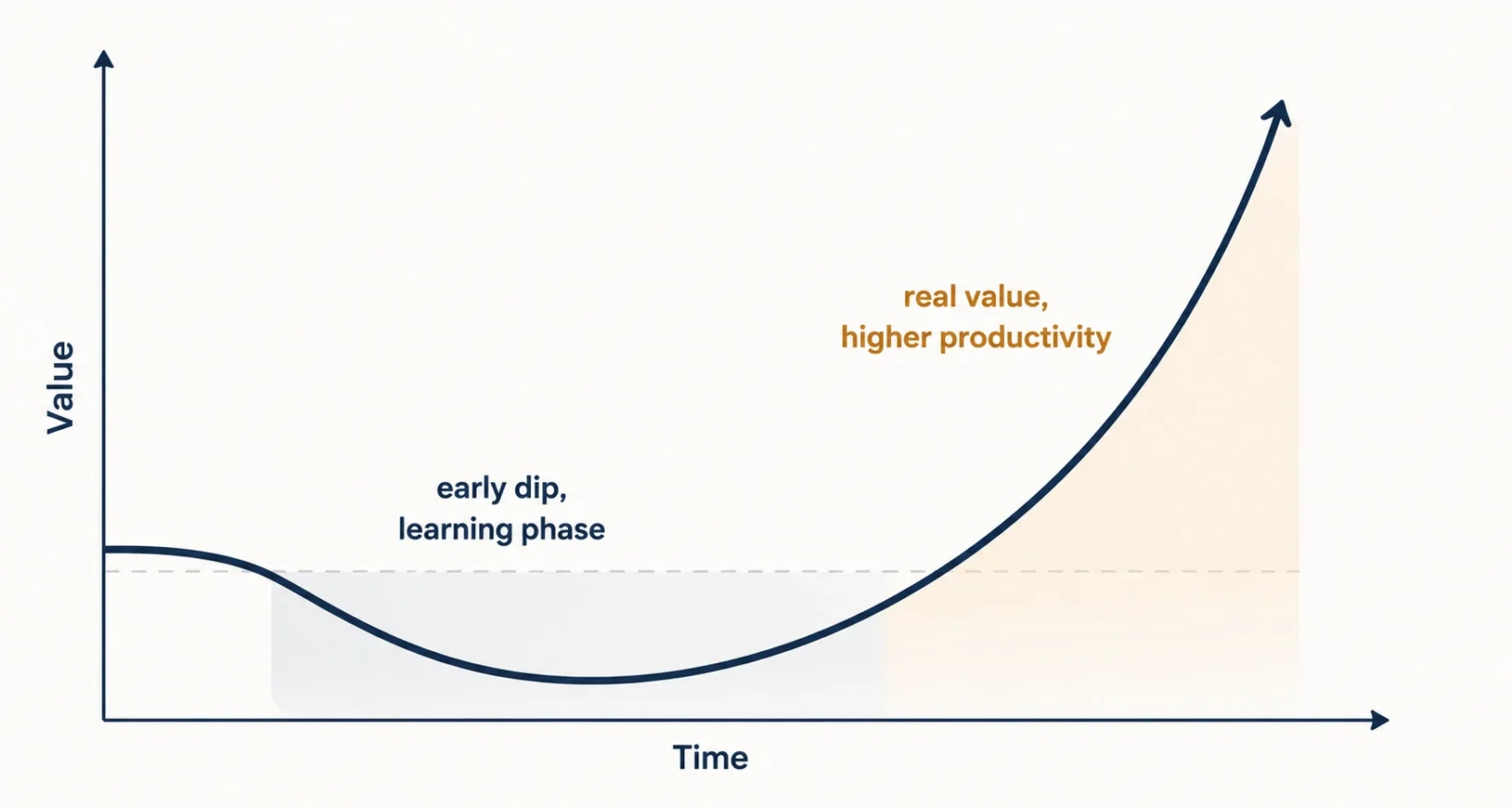
This is the big idea most people miss. When a team first adopts AI, productivity often dips before it soars. Plotted on a graph, that path looks like the letter J, a dip, then a strong climb.
The most important thing to know is this. That early dip is normal. It is a sign of a team learning, not a strategy failing. The DORA report points to three clear reasons it happens.
| 1 | The Learning Curve Teams need time away from regular work to adapt their habits and master AI, moving from simple prompts to smarter, context-aware systems. |
| 2 | The Verification Tax Because AI produces far more code, developers must spend extra time checking it for errors, made-up answers, and quality, before they trust it. |
| 3 | Pipeline Adaptation When code gets written faster, the later steps like testing and approvals turn into traffic jams, so those stages must be scaled up to keep pace. |
Why It Matters: If you budget for this dip in advance, you will not panic when it arrives. You can keep your AI project moving, knowing the slow start is an investment in future speed.
3. Why Some Companies Win and Others Lose
Here is a striking number. According to DORA’s State of AI-assisted software development report, about 90 percent of people surveyed now use AI at work. Yet the financial results are all over the map.
Some companies see clear value, while others get stung by surprise costs. So what separates the winners from the strugglers? It is rarely the AI tool itself.
The real difference is organizational support. When a project falls short, it is usually because the team was not set up to absorb the new technology. The right workflows, training, and processes were missing.
Worth Knowing: Nearly everyone is using AI now, so simply having it is no longer an advantage. The edge comes from preparing your people and processes to actually use it well.
4. How to Actually Calculate Your AI ROI
Now for the practical part. To build an honest financial picture, you start by looking at where AI truly adds value across the work your team does.
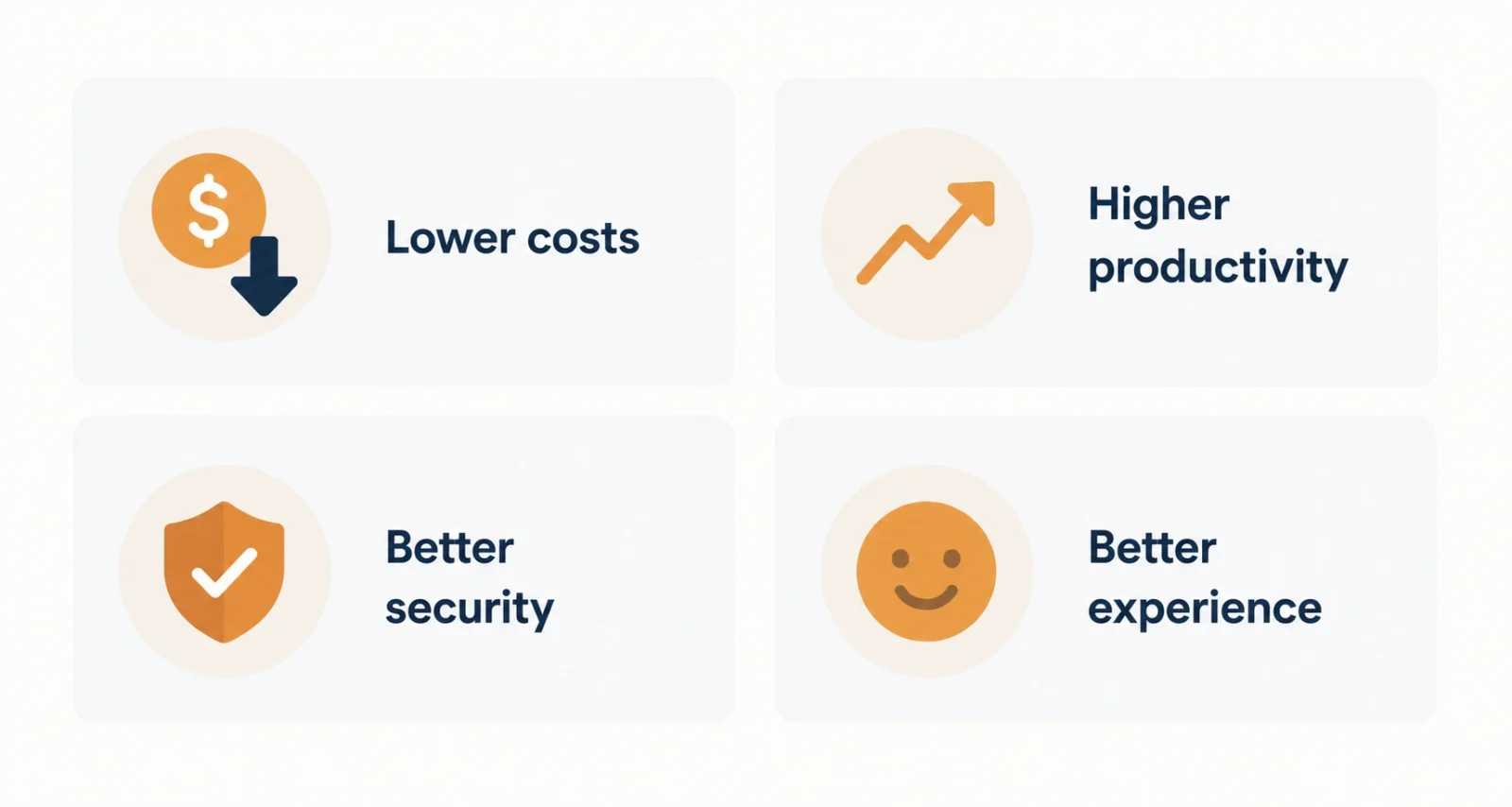
The DORA report highlights four main areas where AI pays off.
| Lower Costs By automating repetitive, time-consuming tasks so your team spends less effort on busywork. | Higher Productivity Teams ship work faster once they climb past the early dip and hit their stride. |
| Better Security AI helps catch issues earlier in the process, before they become costly problems. | Better Experience A smoother day for your developers, and a better product for your end users. |
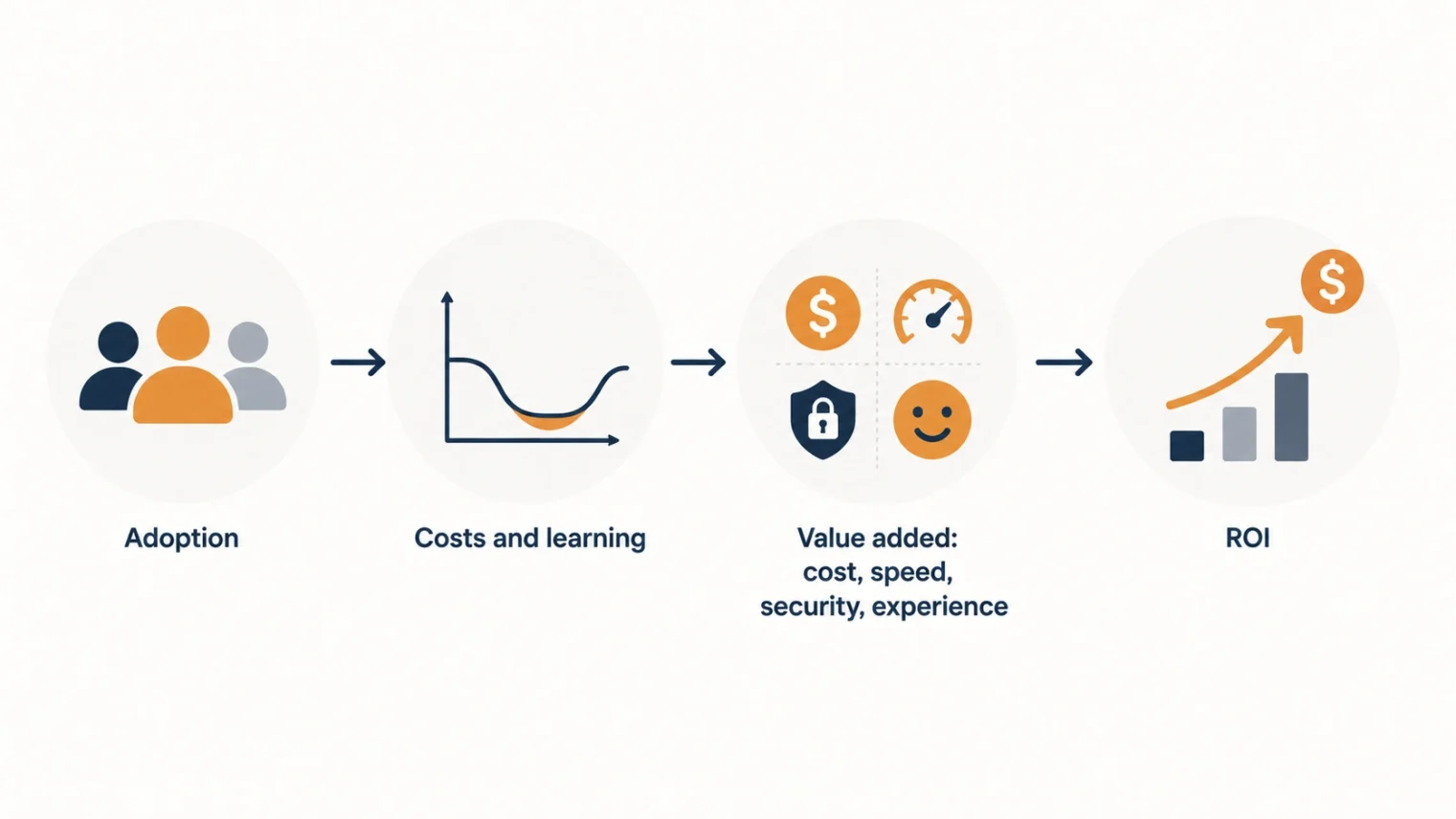
The key is to count more than the obvious costs, like tool subscriptions. You should also include the hidden ones, like the learning time from the J-curve. An honest model includes both.
The Simple Version: Add up what AI saves and earns you, then subtract both the visible and hidden costs. What is left is a real, defensible ROI you can show to any finance team.
5. Use the Free ROI Calculator, Step by Step
You do not have to build a model from scratch. Google’s DORA team offers a free, interactive ROI calculator, and here is how to make the most of it.
- Open DORA’s interactive ROI calculator in your browser.
- Enter your team’s basic details, like size and current tooling costs.
- Adjust the assumptions so they match your real situation, not just the defaults.
- Review the forecast, which shows both visible expenses and hidden realities.
- Use the resulting estimate to build a clear business case for your leaders.
Quick Tip: Play with the numbers honestly. A realistic estimate that includes the early dip is far more convincing to a finance team than a rosy one that ignores it.
6. Your Next Steps
Ready to turn this into action? Here is a simple path to follow.
- Download the full DORA report on the ROI of AI-assisted software development.
- Try the free interactive ROI calculator to estimate your own returns.
- Watch Google’s Cloud OnAir webinar on building your AI business case.
- Most of all, plan for the J-curve, so your team treats the early dip as expected.
Frequently Asked Questions
How Do You Measure the Business Value of Generative AI
You measure it with an ROI model that captures where AI adds value, like lower costs, higher productivity, better security, and a better experience. A good model counts both visible costs, such as subscriptions, and hidden ones, like the early learning dip.
What Is the J-Curve in AI Adoption
The J-curve describes how productivity often dips when a team first adopts AI, before rising to deliver real value. Plotted on a graph, that path looks like the letter J. Importantly, the early dip is normal and reflects learning, not a failing strategy, so leaders should budget for it.
Why Does AI Slow Teams Down at First
Three reasons. Teams need time to learn new workflows and habits. They must also spend extra effort verifying AI-generated code for quality and accuracy. On top of that, faster code creation can overwhelm later steps like testing and approvals until those are scaled up.
Why Do Some AI Projects Fail to Deliver Value
Most shortfalls come from a lack of organizational support rather than the AI tool. With about 90 percent of teams now using AI, the difference is preparation. Winners set up the right workflows, training, and processes to absorb the technology.
What Is the DORA ROI Report
It is research from Google’s DORA team on the return on investment of AI-assisted software development. It offers a practical framework to navigate early adoption challenges, model costs and benefits, and build a defensible business case for AI.
Is There a Tool to Calculate AI ROI
Yes. DORA offers a free, interactive ROI calculator. You enter your details and adjust the assumptions to match your reality. It then forecasts both visible expenses and hidden costs, helping you build a realistic estimate of your potential returns.
Where Does AI Add the Most Business Value
According to the report, AI adds value across four areas, reducing costs, boosting productivity, improving security, and delivering a better experience for both developers and users. Modeling these areas is the foundation of a realistic ROI estimate.
How Long Until AI Investments Pay Off
It varies, and the report stresses there is no instant payoff. Expect a temporary dip during early adoption, then gains as the team adapts. Budgeting for that learning phase is key to reaching the long-term speed and value AI can deliver.