There are over 10,000 mental health apps in the stores, and most of them are noise. Some are genuinely backed by clinical research. Many just slap the word “wellness” on a meditation timer and charge you $70 a year. A few have quietly been caught selling your most private data to advertisers.
So this list does two things differently. It groups the apps by what you actually need, and it tells you straight up which ones have real clinical evidence behind them and which are just popular. Free or paid, the price is labeled on every single one.
Important, read first: These apps support your mental health. They do not replace a therapist, a doctor, or emergency care. If you are in crisis or thinking about harming yourself, do not open an app. In the US, call or text 988 (Suicide and Crisis Lifeline) or text HOME to 741741. Outside the US, contact your local emergency number.
Here is the quick version. Pick by your need, not by the rankings.
| If you want… | Use this | Price |
| Guided meditation (beginner) | Headspace | Paid, free trial |
| Sleep stories | Calm | Paid, free trial |
| A huge free meditation library | Insight Timer | Free + optional paid |
| Anxiety help on a budget | MindShift CBT | Free |
| To stop a panic attack right now | Rootd | Free + optional paid |
| An AI chat that uses real CBT | Wysa | Free + optional paid |
| Fast, simple mood tracking | Daylio | Free + optional paid |
| Gentle self-care habits | Finch | Free + optional paid |
| A real licensed therapist | Talkspace | Paid, takes insurance |
| Free, private, trauma support | PTSD Coach | Free |
1. How It Is Picked (and What “Tested” Means)
Four things decided this list, in this order:
- Does real research back it? Apps built on cognitive behavioral therapy (CBT) or with peer-reviewed studies rank above apps that are simply pleasant.
- The specific need. A sleep app and a panic-attack app solve different problems. We matched each pick to one clear job.
- Mental health data is the most sensitive data you own. We checked each app against Mozilla’s Privacy Not Included research and flagged the offenders.
- Honest pricing. Free, freemium, or paid, with the real numbers. No app gets a pass for hiding its cost behind a trial.
All ten run on both iOS and Android. Prices are accurate as of June 2026 but change often, so confirm in your app store before you subscribe. Free trials usually auto-renew unless you cancel.
2. Best for Meditation and Sleep
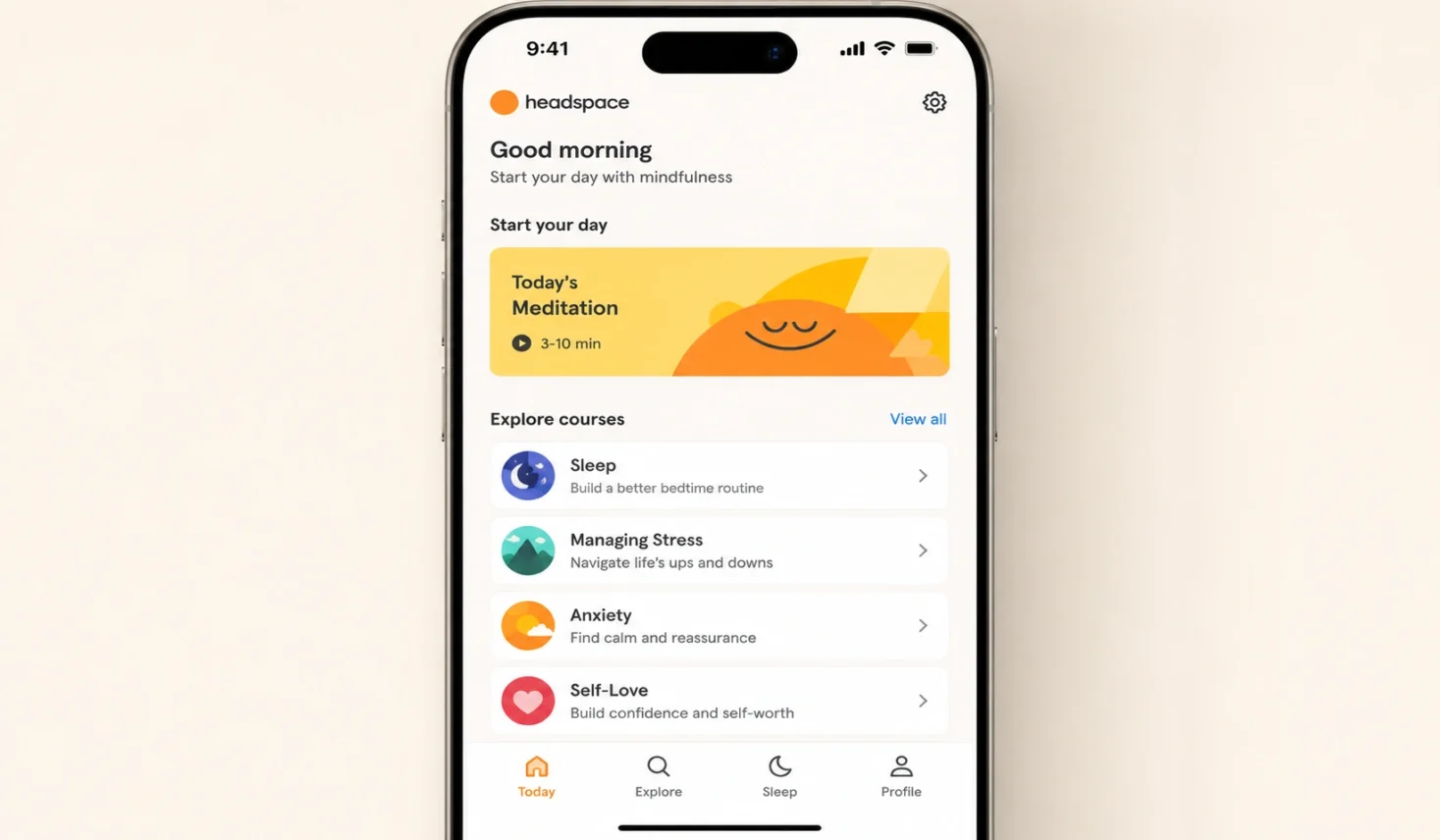
Headspace, Best for Meditation Beginners
Price: Paid. About $12.99/month or $69.99/year, with a 7 to 14 day free trial. Big student discount.
Platforms: iOS and Android.
Clinical backing: Strong. One of the most-studied apps, with 14 randomized controlled trials identified in a 2022 JMIR review.
Headspace is the friendliest on-ramp to meditation. The courses are structured and progressive, so you are guided step by step instead of dropped into silence. The research is real too. A 2022 systematic review in JMIR Mental Health found Headspace improved depression scores in 75 percent of the studies that measured it, though it also noted half the trials had a company conflict of interest. Translation: it works for many people, but read the evidence with open eyes.
Best for: total beginners who want their hand held. Weak spot: the free tier is thin, and Mozilla flagged its ad-related data sharing.
Calm, Best for Sleep
Price: Paid. About $69.99/year (roughly $16.99/month), with a 7-day trial. A pricey lifetime option exists.
Platforms: iOS and Android.
Clinical backing: Weak. The same 2022 JMIR review found only one RCT for Calm, in a nonclinical group.
Calm wins on sleep, full stop. The Sleep Stories (calm voices reading you to sleep, some by famous narrators) are the best in the business, and the soundscapes are gorgeous. Just know what you are buying. Calm is a premium relaxation product, not a clinically validated treatment. If your main goal is falling asleep and winding down, it earns its place. If you need help with anxiety or depression, start lower on this list.
Best for: sleep and relaxation. Weak spot: little independent evidence, and a Mozilla privacy flag.
Insight Timer, Best Free Meditation Library
Price: Free, with an optional Member Plus tier around $59.99/year (the cheapest premium of the big meditation apps).
Platforms: iOS and Android.
Clinical backing: Moderate. Content from psychologists and university teachers, but few app-specific trials.
Insight Timer gives away more than 250,000 free meditations, which is genuinely staggering. You can meditate for years and never pay. The catch is choice overload, so it suits people who already know what they want more than nervous beginners. Mozilla did flag its data collection, so keep your profile light.
Best for: experienced meditators and anyone on a budget. Weak spot: overwhelming for first-timers.
3. Best for Anxiety, Panic, and CBT Self-Help
MindShift CBT, Best Free Anxiety App
Price: Completely free. No subscription, built by a nonprofit.
Platforms: iOS and Android.
Clinical backing: Strong. Built on CBT by Anxiety Canada and recommended by clinicians.
This is the best-kept secret on the list. MindShift CBT is built by Anxiety Canada, a nonprofit, and it uses real cognitive behavioral therapy tools for worry, social anxiety, panic, and phobias. It costs nothing, has no ads, and does not sell your data. Therapists often suggest it as CBT homework between sessions. If you only try one anxiety app, make it this one.
Best for: anxiety, on any budget. Weak spot: plainer design than the glossy paid apps.
Rootd, Best for Panic Attacks in the Moment
Price: Free tier. Premium around $6.99/month, $59.99/year, or $179.99 lifetime, with a 7-day trial.
Platforms: iOS and Android.
Clinical backing: Moderate. CBT-based, clinician-endorsed, though peer-reviewed evidence is limited.
When a panic attack hits, you do not want to scroll a menu. Rootd has one giant button you press, and it walks you through the attack with breathing and grounding exercises until it passes. It was an Apple Editors’ Choice pick and holds around 4.8 stars on the App Store. Think of it as the fire extinguisher you keep on your phone, not a daily practice.
Best for: stopping a panic attack fast. Weak spot: Apple’s privacy label shows data can feed third-party ads.
Wysa, Best AI Chatbot (and Most Evidence-Backed AI)
Price: Freemium. Premium unlocks unlimited tools and human coaching.
Platforms: iOS and Android.
Clinical backing: Strong for an AI. FDA Breakthrough Device Designation and peer-reviewed JMIR studies; used by the UK’s NHS.
If you want to talk something out at 2 a.m. without judgment, Wysa is the AI to use. It is anonymous and it guides you through CBT-style exercises rather than just chatting. Crucially, it is the only mental health chatbot with serious clinical credentials: an FDA Breakthrough Device Designation and published research. Mozilla even gave it a rare Best Of privacy badge. It is not a therapist, and its effect is modest, but as 24/7 support between real sessions it is the strongest pick.
Best for: anonymous, around-the-clock CBT support. Weak spot: an AI cannot replace a human for serious issues.
A note on AI chatbots: AI mental health bots are improving fast, but they can miss context and should never be your only support for serious symptoms. Wysa earns its spot because it is built on real CBT and independently studied. Be cautious with newer, unproven chatbots that market themselves as "AI therapists" without any clinical evidence.
4. Best for Mood Tracking and Daily Habits
Daylio, Best Low-Effort Mood Tracker
Price: Free tier. Premium around $4.99/month or $35.99/year, with a 7-day trial.
Platforms: iOS and Android.
Clinical backing: None directly, but a privacy-friendly design therapists often recommend as a companion.
Daylio is for people who will never journal in full sentences. You tap your mood and a few activities, and it takes five seconds. Over weeks it shows you patterns, like how your mood dips on low-sleep days. It holds around 4.8 stars on both stores, stores data locally by default, and pairs perfectly with therapy. It tracks what you feel, not why, so use it alongside a real coping tool.
Best for: spotting mood patterns with almost no effort. Weak spot: tracking alone is not treatment.
Finch, Best for Gentle Self-Care Habits
Price: Generous free tier. Finch Plus around $39.99/year, with a 7-day trial.
Platforms: iOS and Android.
Clinical backing: Light. Uses CBT-style reflection but no independent trials.
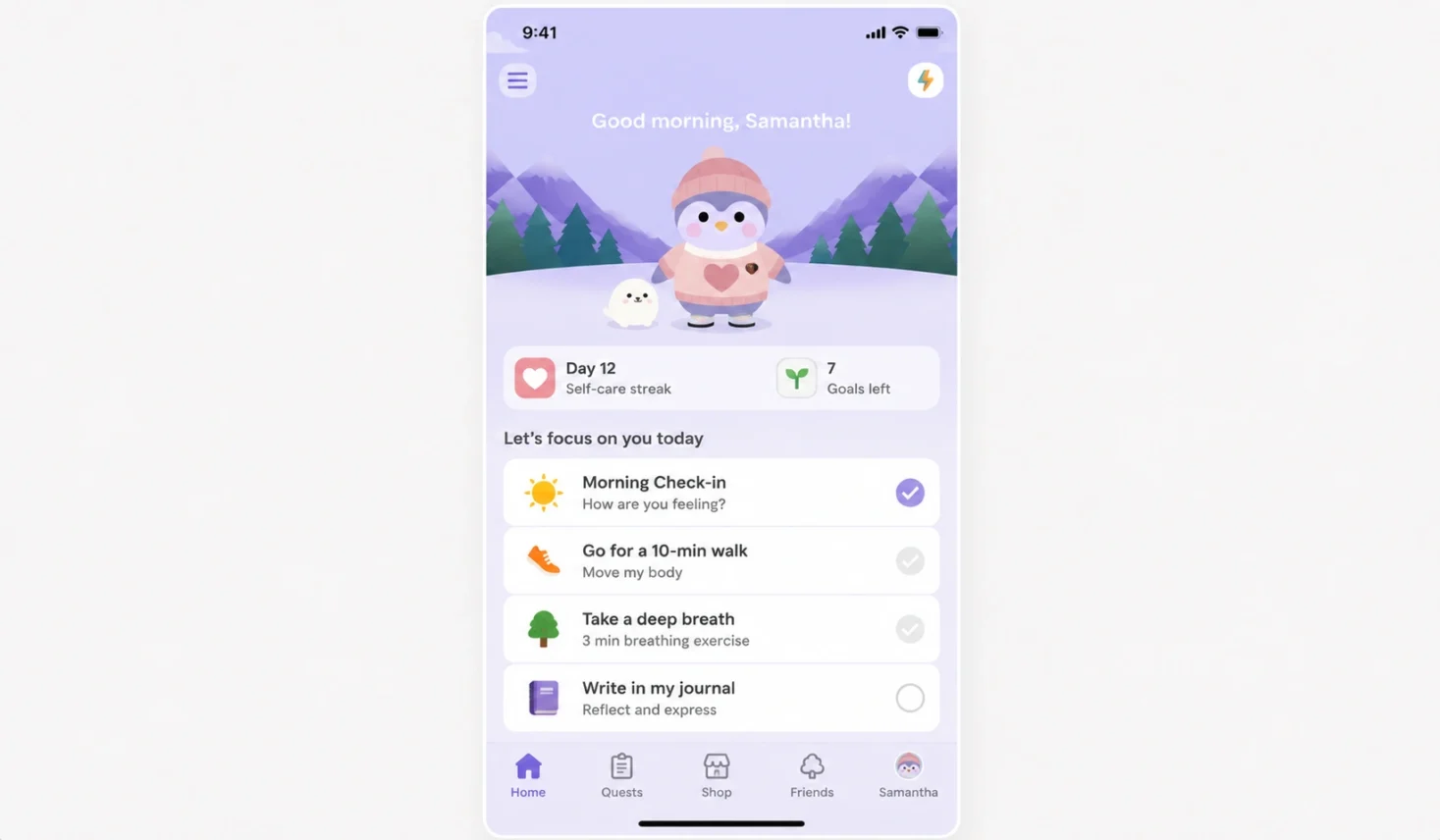
Finch turns self-care into looking after a cute virtual bird. You set small goals, breathe, reflect, and your pet grows. It sounds twee, and it is, but that gentle, non-judgmental loop is exactly why it clicks with people (especially younger users) who bounce off serious-looking apps. Mozilla rated its privacy as reasonable, with a mild caveat. It will not treat a clinical condition, but it builds momentum when you have none.
Best for: building self-care habits when motivation is low. Weak spot: the cuteness can wear thin, and it is not clinical.
5. Best for Real Therapy With a Human
Talkspace, Best for Therapy With Insurance
Price: Paid. Around $69 to $109 per week out of pocket; psychiatry $299 first visit, $175 follow-ups. In-network with many insurers (often a $15 copay), including Medicare.
Platforms: iOS, Android, and web.
Clinical backing: This is real therapy with licensed, credentialed clinicians, not app self-help.
When an app is not enough, Talkspace connects you to actual licensed therapists, and even psychiatrists who can prescribe. The big 2026 advantage is insurance: it is in-network with many major plans, which can drop your cost to a small copay. You message your therapist anytime and add live video sessions. One honest caveat: Mozilla criticized its privacy practices, so be mindful of what you share in the intake questionnaire.
Best for: people with insurance who want licensed therapy fast. Weak spot: out-of-pocket psychiatry is expensive; privacy concerns.
About BetterHelp (and why it is not on the main list): BetterHelp is the most advertised therapy app, and the therapy itself is legitimate. But in March 2023 the FTC ordered it to pay $7.8 million after charging that it shared customers' sensitive mental health data with Facebook, Snapchat, and others for advertising. The practices have since changed, but for a privacy-led list, Talkspace edges ahead. If you try BetterHelp, go in informed.
6. Best Free and Private (Built by Experts)
PTSD Coach and Mindfulness Coach, Best Free Evidence-Based Apps
Price: Free. No ads, no in-app purchases, no catch.
Platforms: iOS and Android.
Clinical backing: Strong. Built by the US Department of Veterans Affairs National Center for PTSD using validated tools.
Here is a genuinely free, genuinely evidence-based option that almost no listicle mentions. PTSD Coach is built by the US Department of Veterans Affairs, uses clinically validated assessments, and is open to everyone, not just veterans. Its companion, Mindfulness Coach, teaches a mindfulness practice the same way. Mozilla gave PTSD Coach a rare Best Of privacy badge because it collects no personal data. If privacy and evidence both matter to you, start here.
Best for: trauma, stress, and anyone wanting free, private, evidence-based tools. Weak spot: plain, utilitarian design.
7. Quick Comparison: Price vs Evidence vs Privacy
The whole list at a glance. Use it to weigh the trade-offs in one view.
| App | Best for | Price | Clinical evidence | Privacy |
| Headspace | Meditation (beginner) | Paid | Strong | Flagged |
| Calm | Sleep | Paid | Weak | Flagged |
| Insight Timer | Free meditation | Free + paid | Moderate | Flagged |
| MindShift CBT | Anxiety | Free | Strong | Good |
| Rootd | Panic attacks | Free + paid | Moderate | Mixed |
| Wysa | AI CBT chat | Free + paid | Strong (for AI) | Best Of |
| Daylio | Mood tracking | Free + paid | Companion tool | Good |
| Finch | Self-care habits | Free + paid | Light | Reasonable |
| Talkspace | Real therapy | Paid / insurance | Licensed therapists | Flagged |
| PTSD Coach | Trauma, free | Free | Strong | Best Of |
8. Apps to Skip in 2026 (Once Popular, Now Gone or Changed)
If you find these on an old “best of” list, move on.
- The well-regarded AI CBT chatbot shut down its consumer app on June 30, 2025. It no longer exists to download. Use Wysa instead.
- Once a top clinically-grounded CBT app, it was folded into an insurance product (AbleTo Self Care+) and is no longer a simple consumer download for most people.
- Any “AI therapist” with no evidence. A wave of chatbots now market themselves as therapy replacements with zero clinical backing. Stick to Wysa, which is actually studied.
One more honest caveat: Even FDA labels can oversell. The first prescription app for depression, Rejoyn, was cleared in 2024, but in its main trial the benefit was not statistically better than a fake app. "FDA-cleared" and "proven to work well" are not the same thing. Read claims carefully, and lean on the apps with independent, peer-reviewed studies.
9. How to Choose the Right One for You
Three quick questions narrow it down fast.
- What is the one problem? Sleep, anxiety, mood, or wanting a human. Name it, then pick from that group above. Do not download five apps.
- Free or paid? Try free first. MindShift CBT, PTSD Coach, and the free tiers of Insight Timer, Daylio, and Finch can carry you for weeks at zero cost.
- How sensitive is your data? If privacy is your priority, choose PTSD Coach, Wysa, or Daylio, and keep your profile minimal everywhere else.
The best app is simply the one you will open tomorrow. A free app you use beats a premium one you forget. Give any pick two weeks; if you have stopped opening it, switch without guilt.
Frequently Asked Questions
What is the best free mental health app in 2026?
For anxiety, MindShift CBT is the best free app, built on real CBT by the nonprofit Anxiety Canada. If you are dealing with trauma and stress, PTSD Coach from the US Department of Veterans Affairs is free, private, and evidence-based. Free meditation is covered best by Insight Timer, which offers over 250,000 sessions at no cost. All three are genuinely free, not just free trials.
Do mental health apps actually work?
Some do, for mild to moderate symptoms, when they are built on proven methods like CBT. Apps such as Wysa, MindShift CBT, and Headspace have peer-reviewed research behind them. Others are popular but have little independent evidence. No app can treat a serious mental illness on its own, and they work best alongside professional care, not instead of it.
Are mental health apps safe for my private data?
Not all of them. Mental health apps collect very sensitive information, and Mozilla’s research has flagged many for poor data practices. In 2023 the FTC fined BetterHelp $7.8 million for sharing user data with advertisers. The most privacy-friendly picks are PTSD Coach and Wysa. Always read what an app collects before sharing personal details.
Can a mental health app replace therapy?
No. Apps are a support tool, not a substitute for a licensed therapist or doctor. They are useful for daily habits, mood tracking, and mild to moderate stress and anxiety. If your symptoms interfere with daily life or are getting worse, see a professional. Apps like Talkspace can connect you to real licensed therapists, often through insurance.
Which mental health app is best for anxiety?
MindShift CBT is the best free choice for general anxiety, using cognitive behavioral therapy tools. For panic attacks specifically, Rootd gives you a one-press button that guides you through the attack. For anonymous around-the-clock support, Wysa uses CBT-based AI conversations. All three run on iOS and Android.
Are paid mental health apps worth it?
Sometimes. Pay for Headspace if you want structured guided meditation, or Talkspace if you want a licensed therapist (especially through insurance). But do not assume paid means better evidence: the free MindShift CBT and PTSD Coach have stronger clinical backing than some expensive apps. Try the free options first and only upgrade if you hit a real limit.
What should I do in a mental health emergency?
Do not rely on an app in a crisis. In the United States, call or text 988 to reach the Suicide and Crisis Lifeline, available 24/7, or text HOME to 741741 for the Crisis Text Line. If someone is in immediate danger, call 911 or your local emergency number. Outside the US, search for your country’s crisis helpline.