
Your AI assistant answers a question with total confidence. The only problem is that the answer is months out of date, because the model is reasoning from old training data. Microsoft wants to fix exactly that.
On June 2, 2026, at its Build conference, Microsoft launched Microsoft Web IQ, a suite of AI native grounding APIs built for AI agents instead of human searchers. It feeds AI tools fresh, ranked information from across the web, including pages, news, images, and videos, so their answers stay current and trustworthy. It already powers grounding inside Microsoft Copilot and ChatGPT.
The 20-second version: Microsoft Web IQ is a grounding API that connects AI agents to live web information. Instead of returning links like a normal search engine, it returns short, ranked passages an AI can use directly. Microsoft says it runs at 164ms p95 latency, nearly 2.5x faster than the best alternative, while using fewer tokens. It is in limited access by waitlist, and pricing is not announced yet.
1. What Microsoft Web IQ Actually Does
Think of it as a search engine that talks to machines instead of people. A normal search engine hands you a page of blue links to click. Web IQ hands an AI agent the exact passages it needs, already packaged as structured evidence.
Here is what it does once an app or agent calls it:
- Pulls fresh information from web pages, news, images, and videos
- Returns ranked, citation ready passages rather than full pages
- Orders results by relevance, freshness, and authority
- Sends a clean JSON payload with titles, URLs, snippets, timestamps, and source details
- Drops straight into a model’s context with no extra processing
Microsoft built it on Bing’s global index, which already serves more than a billion users. However, the company rebuilt the whole stack for AI, across indexing, retrieval, ranking, passage selection, and orchestration.
Why this matters: What makes a page rank well for a human is not the same as what makes a passage useful for an AI. By sending only the most relevant passages, Web IQ cuts the tokens a model has to read, which lowers cost and speeds up answers. Those savings compound across millions of queries.
2. Where It Already Works
This is the detail most people miss. Web IQ is not a future promise. Microsoft says it already powers grounding inside Microsoft Copilot and ChatGPT’s web responses, using the same infrastructure now offered to other developers.
It also operates at global scale, with coverage Microsoft describes as more than 100 languages and markets. So an AI agent can reason over current information no matter where its users are.
| Where it runs | Status at launch |
| Microsoft Copilot | Live (Web IQ powers its grounding) |
| ChatGPT web responses | Live (uses the same infrastructure) |
| Third party developers | Limited access, waitlist only |
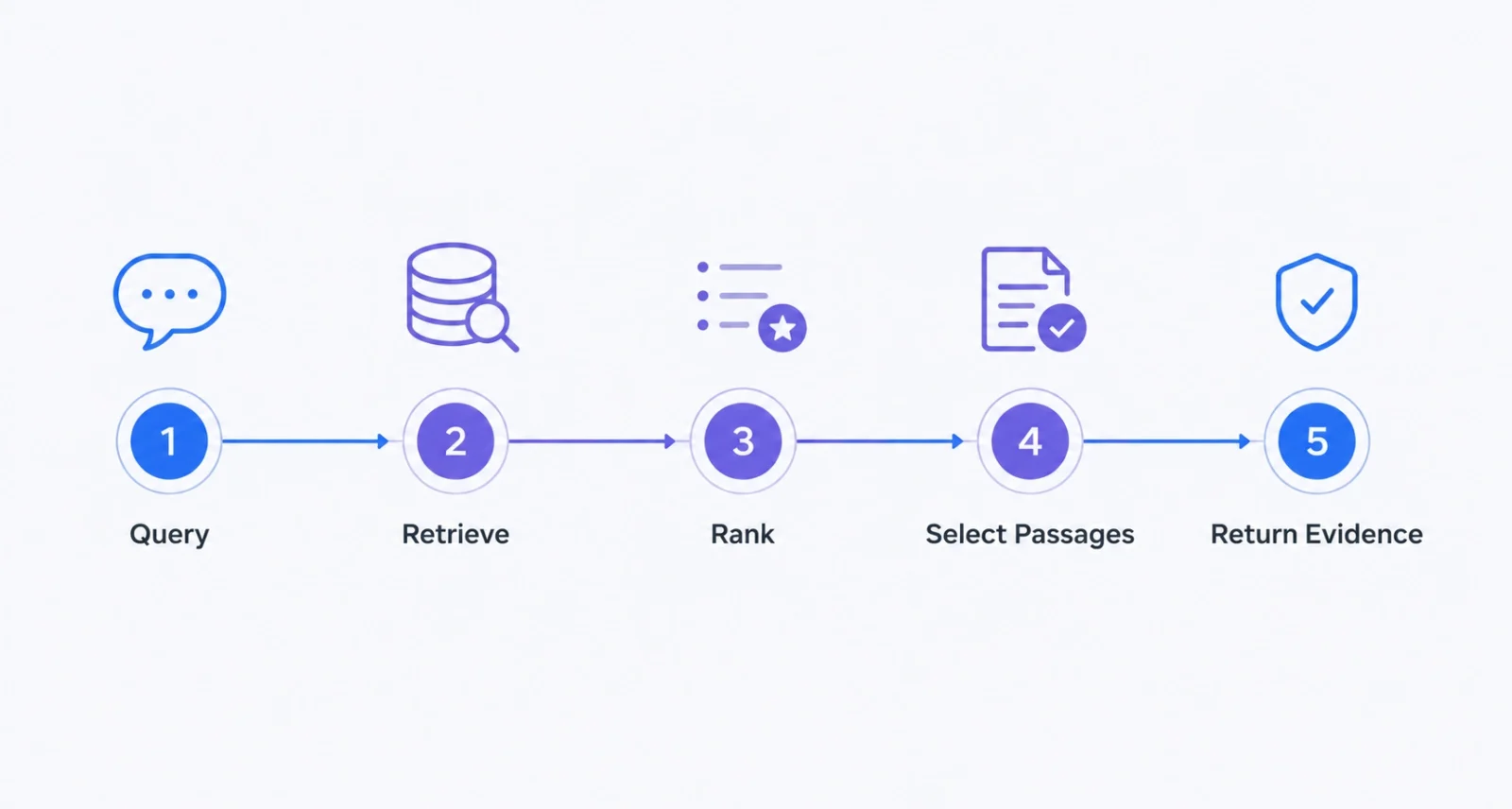
3. How It Works in Five Steps
You do not need to be an engineer to follow the flow. Here is the whole journey of a single query.
- An AI app or agent sends a question through REST, MCP, or an SDK.
- Web IQ searches Bing’s index plus licensed and structured data sources, not scraped search results.
- It ranks results by relevance, freshness, and authority.
- It selects only the most useful passages instead of whole pages.
- It returns structured evidence the model can use right away.
4. Web IQ vs Grounding With Bing
Microsoft already offered Grounding with Bing, so the obvious question is how this differs. The short answer: one is built for people, the other for AI agents.
| Feature | Microsoft Web IQ | Grounding with Bing |
| Built for | AI agents and multi step workflows | Traditional search experiences |
| Returns | Ranked passages and evidence | Web search links |
| Speed | 164ms p95, about 2.5x faster | Standard search speed |
| Access | Limited access, waitlist | Available to existing customers |
5. How to Get Access
Right now, Web IQ is in limited access. You cannot just sign up and start building today.
To request it, join the waitlist on the official Microsoft Web IQ page. Microsoft says it prioritizes organizations that work with Microsoft account teams and build production AI workloads at scale.
Pricing and general availability have not been announced. So for most people, the smart move is to track the rollout and plan ahead rather than build on it right away.
6. Why This Launch Is a Bigger Deal Than It Looks
Web IQ got less keynote time than flashier announcements, yet it may matter more. It signals that web search is quietly splitting into two lanes: one for humans clicking links, and one for AI agents pulling evidence.
As more apps hand tasks to AI agents, the quality of their answers depends entirely on the quality of their grounding. A tool that makes that grounding faster, cheaper, and more accurate sits right at the center of where AI is heading.
The honest caveat: Most of these performance figures come from Microsoft itself, measured against its own benchmarks. Independent testing is limited so far, since access is restricted. Treat the speed and quality claims as the vendor’s numbers until outside reviews confirm them, and watch for real world results as more developers get in.
7. Should You Care About Web IQ?
Quick gut check. Web IQ is worth following closely if you:
- Build AI agents or apps that need current, real world information
- Worry about AI making up facts or citing stale data
- Run high volume AI workloads where token cost and latency add up
- Want fine grained control over what your model retrieves
It matters less to you right now if you are a everyday user rather than a developer, since you benefit indirectly through tools like Copilot and ChatGPT. Either way, this is a shift worth understanding, because grounded AI is becoming the norm rather than the exception.
If you found this useful, see our guides on agentic AI and AI agents, Google AI Mode, and how AI search engines work.
Frequently Asked Questions
What is Microsoft Web IQ?
Microsoft Web IQ is a suite of AI native grounding APIs that connect AI agents to fresh web information, including pages, news, images, and videos. It returns ranked, citation ready passages instead of links, so AI tools can give more accurate, current answers.
When did Microsoft launch Web IQ?
Microsoft announced Web IQ at its Build 2026 conference, with the official blog post published on June 2, 2026. It launched in limited access for select enterprise customers building AI at scale.
Is Web IQ the same as Bing?
No. Web IQ is built on Bing’s index but rebuilt for AI agents. Bing serves human searchers with links, while Web IQ serves AI systems with structured passages, ranked by relevance, freshness, and authority.
Does Web IQ power ChatGPT and Copilot?
Yes. Microsoft says Web IQ already powers grounding inside Microsoft Copilot and ChatGPT’s web responses, using the same infrastructure now being offered to other developers in limited access.
How fast is Web IQ?
Microsoft reports a 164ms p95 latency, which it describes as nearly 2.5 times faster than the best alternative. That speed helps AI agents run multi step tasks without long delays between steps.
How much does Web IQ cost?
Microsoft has not announced pricing or general availability. Web IQ is currently available only through a waitlist for select enterprise customers, so there are no public price figures yet.

