You have seen the TikToks. Couples in their thirties shopping at Costco on a Tuesday afternoon, taking spontaneous weekend trips, eating out four nights a week, captioning everything with #DINK. The comment sections are split: half the viewers want this life, the other half are convinced these couples are going to die alone. So what is the DINK lifestyle actually about?
DINK is a 1980s acronym that has exploded back into the cultural conversation thanks to social media. It stands for Dual Income, No Kids, and it describes couples with two paychecks who do not have children, whether by choice or circumstance. The trend got a serious data boost in November 2025 when Pew Research published its first proper analysis of DINKs in the US, and the numbers are more nuanced than either side of the TikTok argument lets on.
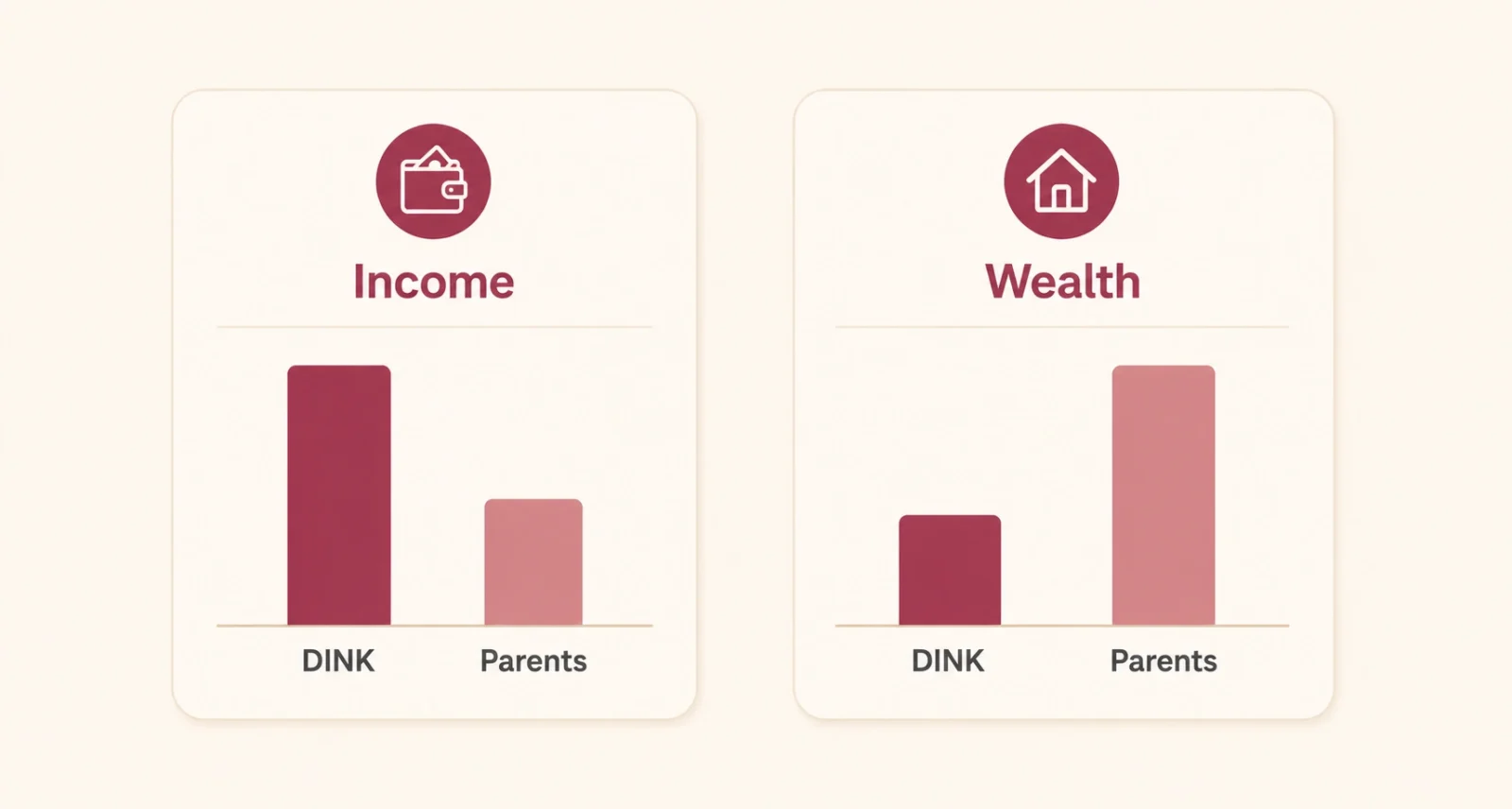
Here is the short version. DINKs earn meaningfully more than dual-income couples with kids (about $42,000 a year more on average, per Pew). But here is the surprise: DINKs actually have less total wealth than parents, mainly because they are less likely to own a home. The lifestyle has variations (DINKWAD with a dog, DINKWAC with a cat, SINK if you are solo), the social judgment is real, and there are honest tradeoffs in both directions. Below is the full guide with the real numbers, the cultural context, and a six-question framework to help you figure out where you stand.
1. What Is the DINK Lifestyle?
DINK stands for Dual Income, No Kids. The acronym is older than most people who use it today: it was coined in the late 1980s during the yuppie boom, when marketers needed a label for the young professional couples who were skipping parenthood, spending freely, and changing what middle-class life looked like.
The Pew Research Center analysis published in November 2025 defines a DINK couple as a married couple where at least one spouse is in their 30s or 40s, both spouses work, and neither has ever had children. That last point matters: the term applies to people who have not had kids at all, not parents whose kids have grown up and moved out (those are called Empty Nesters, a different category).
What changed in 2023 and beyond is the cultural framing. DINK used to be a quiet demographic label used by economists. Now it is a TikTok identity, with the hashtag racking up tens of millions of views as couples document their child-free lives in everything from morning routines to date-night Costco runs.
Quick clarification: DINK is not synonymous with childfree by choice. Some DINK couples are actively choosing not to have kids, some are still deciding, some want kids but cannot have them, and some are temporarily DINKs before becoming parents later. The label describes a life stage and financial structure, not necessarily a worldview.
2. The Numbers: How DINKs Actually Stack Up Financially
This is where most TikTok takes get the data wrong. The popular narrative is that DINKs are simply rolling in money compared to parents. The reality, according to the Pew analysis of 2023 Census data, is more interesting.
| Metric | DINKs | Dual-income couples with kids | What it means |
| Median household income | $193,900 | $151,900 | DINKs earn about $42,000 more per year on average |
| Median total wealth | $214,700 | $361,500 | Parents have ~$146,800 more in net worth |
| Home equity | $165,000 | $222,000 | Parents have significantly more equity tied up in homes |
| Both spouses employed full-time | 81% | 68% | DINKs more likely to be full dual-income |
| Home ownership rate | 71% | 79% | DINKs are 8 points less likely to own a home |
So why do DINKs earn more but have less wealth? The single biggest reason is housing. Having children pushes couples toward buying homes (more space, better school districts, settling down), and US household wealth is overwhelmingly tied to home equity. DINKs are more likely to rent in expensive cities, more likely to move, and more likely to spend on experiences (travel, dining, hobbies) instead of locking money into property.
The Federal Reserve’s Survey of Consumer Finances tells a slightly different story when you broaden the lens beyond Pew’s strict DINK definition: couples without children of any kind had a median net worth of around $399,000 in 2022, the highest of any family structure, compared to about $250,600 for couples with children. The difference between these two pictures comes down to age and lifecycle: when you average across all age groups, child-free wealth accumulates over time; when you isolate working-age couples in their 30s and 40s, parents are ahead because of home equity.
3. DINK Variations: DINKWAD, DINKWAC, SINK, and More
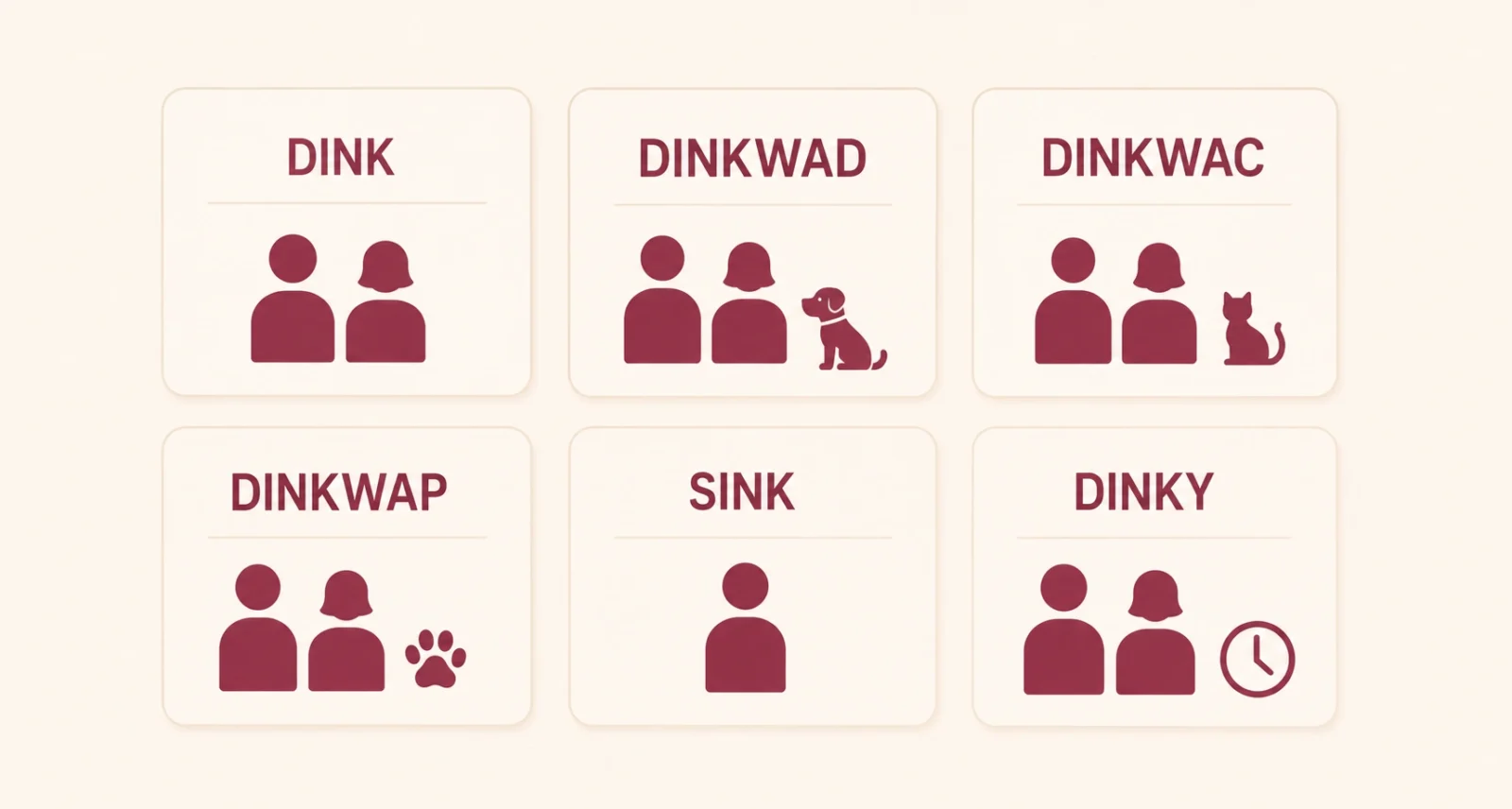
Once DINK became a TikTok phenomenon, the variations multiplied. Here is the current vocabulary as of 2026.
| Term | What it stands for | Who it describes |
| DINK | Dual Income, No Kids | The classic: two earners, no children |
| DINKWAD | Dual Income, No Kids, With A Dog | DINKs with a dog (the most popular variation) |
| DINKWAC | Dual Income, No Kids, With A Cat | DINKs with a cat |
| DINKWAP | Dual Income, No Kids, With A Pet | Broader term covering any pet |
| SINK | Single Income, No Kids | Solo version of the lifestyle |
| DINKY | Dual Income, No Kids Yet | Couples temporarily child-free, with kids planned |
Why DINKWAD Specifically Went Viral
The DINKWAD variation is by far the most viral. A single 2024 TikTok by creator Ness Baker labelling herself and her partner DINKWADs generated over 10 million views and reignited the entire trend. The dog-centric framing resonates because it answers the implicit question that DINK alone does not (what do you do with all that time and energy?) with a relatable, low-stakes answer (we have a dog).
How LGBTQ+ Communities Embraced DINK
LGBTQ+ couples have especially embraced DINK and DINKWAD framing, partly because the labels normalise child-free partnerships in a way that older lifestyle vocabulary did not. The Today show and Insider both noted that the hashtags trend strongly within queer creator communities.
4. Why More Couples Are Choosing the DINK Path in 2026
This is not a one-cause trend. Five distinct forces are pushing more couples into the DINK structure, sometimes by choice, sometimes not.
The economics of having kids are brutal
The USDA estimates it costs about $310,605 to raise a child to age 17. Add college and that figure climbs sharply. Childcare in many US cities now exceeds the cost of rent. According to surveys cited by Today, 67 percent of Gen Z and 65 percent of millennials feel consumed by money worries, and about half of parents say they feel completely stressed about finances no matter what they do. For many couples, the DINK path is partly a math problem.
Personal freedom is having a cultural moment
A 2021 Pew survey found that 44 percent of non-parents aged 18 to 49 say they are unlikely to have children, with the most common reason being a desire for freedom and personal time. The data from 2026 lifestyle research suggests 56 percent of DINKs specifically cite freedom as their primary motivation. This is not a new desire, but the cultural permission to act on it is new.
Women’s careers and earning power
More women than ever are in high-earning roles, and the wage penalty for motherhood (sometimes called the motherhood penalty) is well-documented. Federal Reserve data, as cited in 2026 lifestyle research, found that 80 percent of millennial women report some form of workplace penalty for motherhood. For two-career couples, especially when both spouses are ambitious, child-free can be a career-protective choice.
Climate and the future
A meaningful and growing minority of younger couples cite climate change, geopolitical uncertainty, and a sense that bringing children into the current world feels ethically heavy. Surveys repeatedly find this is a top-five reason among Gen Z couples specifically.
Better support for child-free identity
Twenty years ago, child-free couples were treated as either selfish or pitiable. Today, they have communities, content creators, financial advisers, and entire wellness brands oriented around their lives. The infrastructure of being a DINK has caught up with the demand, which makes the choice easier to make and harder to regret.
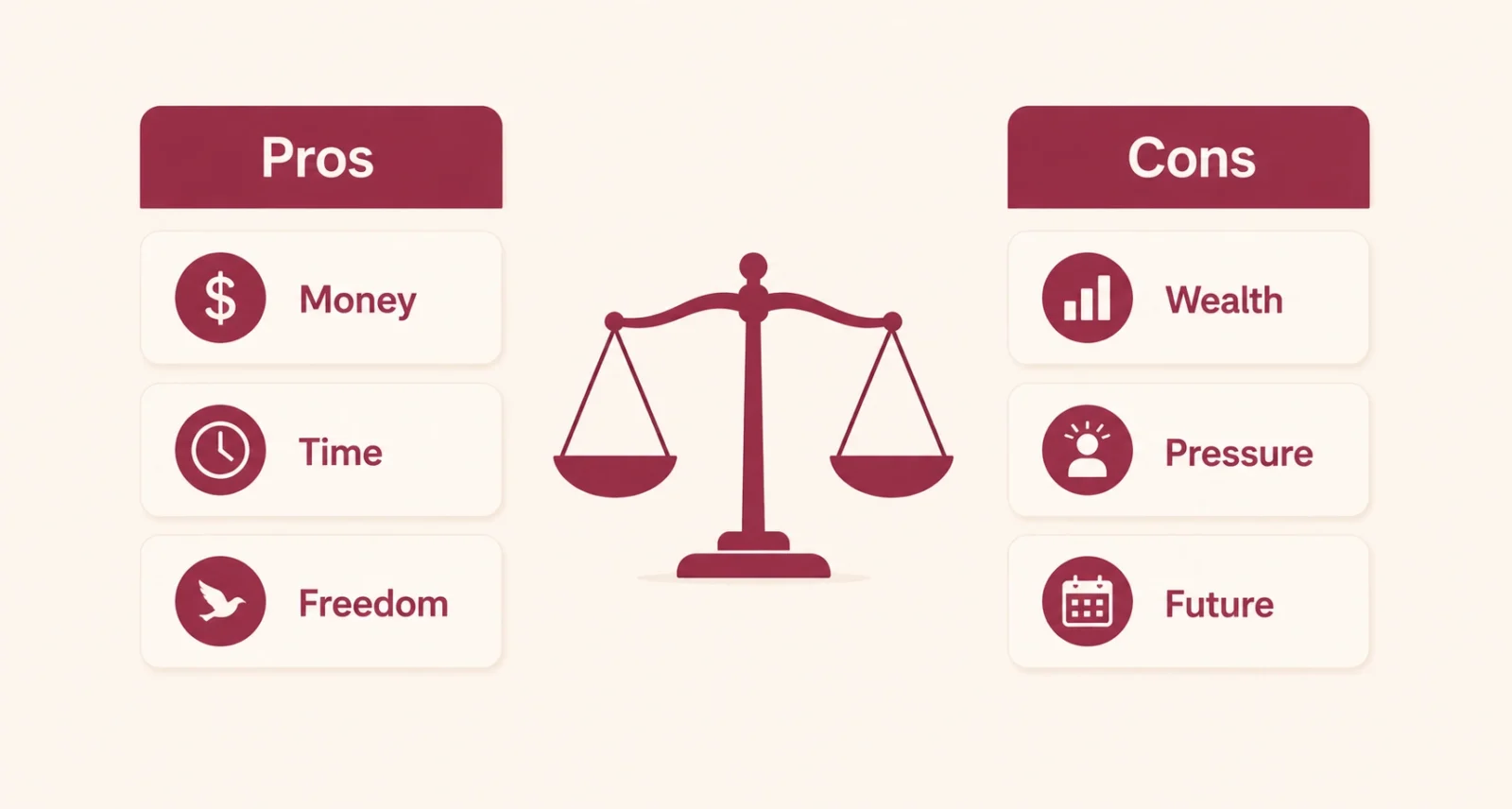
5. The 7 Real Benefits of the DINK Lifestyle
Not in order of importance. Different couples weight these differently.
1. Significantly more disposable income
The most obvious one. Without childcare, kid-specific groceries, school fees, sports leagues, birthday parties, summer camps, and 18-plus years of constant additional expenses, DINK couples have meaningful room in their budget for travel, hobbies, investing, or simply not feeling stretched. Research cited in 2026 lifestyle reports found DINKs spend about $816 per month on dining out, roughly four times the US national average.
2. Time flexibility that compounds
The hidden currency of being a DINK is calendar control. No school drop-offs, no parent-teacher conferences, no sick-kid days, no carpool rotations. Weekends are entirely your own. This compounds: more time for fitness, friendships, relationships, side projects, and the kind of focused work that builds careers over decades.
3. Stronger partner-focused relationship
DINK couples report investing more time and attention directly in their relationship, simply because nothing else is competing for it. Counsellors note that the relationship work that often gets deferred when kids arrive (date nights, shared hobbies, travel together) is just default behaviour for many DINKs.
4. Career flexibility and mobility
DINKs can relocate for a job, take career risks, start a business, or take an unconventional path more easily than parents tied to a school district. Both partners can pursue demanding careers in parallel without the logistical impossibilities most dual-career parent households face.
5. Higher savings and investment rates
Even though DINK total wealth is lower in their working years (because of the housing gap), DINKs typically save and invest a higher percentage of their income. That compounds powerfully over a 30-year horizon, especially for couples who funnel what would have been childcare money into retirement accounts and brokerage portfolios.
6. Less financial anxiety, on average
A 2026 wellness counselling survey found that 49 percent of DINKs report financial anxiety, compared to 61 percent of non-DINKs. That gap is not trivial. Money stress has measurable health consequences, and DINKs tend to have more margin in their budgets and more control over their financial future.
7. Freedom to invest in yourselves
Eighty-eight percent of DINK couples in recent surveys say their child-free status lets them invest meaningfully in themselves: education, therapy, fitness, travel, creative projects, second careers. The freedom is not just from responsibility; it is toward something.
6. The Honest Downsides Nobody Talks About
The TikTok feed mostly shows the wins. Here is the other side, presented without judgement.
Lower wealth in your prime earning years
As covered in Section 2, working-age DINKs typically have less total wealth than dual-income parents because they own homes less often and at lower values. If wealth accumulation through real estate matters to your long-term plan, DINK status can work against you without deliberate effort. This is fixable with intention, just not automatic.
Social judgment is real, especially for women
The Today show coverage of the DINK trend highlights how often DINK couples hear comments ranging from gentle (you will change your mind) to harsh (good luck dying alone). Women face this far more than men. A 2026 lifestyle survey found that 44 percent of childfree-by-choice respondents still feel pressure to explain their choice to family, colleagues, and strangers.
Aging without family caregivers
A 2021 US Census Bureau report found that older childless adults have both a higher median personal net worth AND a higher poverty rate than parents of similar ages. The distribution is bimodal: many older childless adults are doing very well, but a meaningful minority are not, and they are more likely to require paid care as they age. This is a real long-term planning consideration, not a reason to have kids you do not want, but worth thinking about explicitly.
FOMO when friends become parents
Around age 30 to 35, most friend groups undergo a sorting where some couples become parents and some do not. The DINK couples often find their social calendar emptying out as parent friends become unavailable. Some DINKs say this is the hardest part: not regret about kids, but the loss of the shared peer experience.
Identity questions, late at night
Even DINKs who are firmly child-free by choice report occasional waves of doubt, especially around major life events (siblings having kids, parents aging, friends’ baby showers). The choice does not always feel settled forever. Most counsellors note that what matters is being able to revisit the decision honestly with your partner without it destabilising the relationship.
7. How DINK Couples Actually Manage Their Money Well
The biggest financial mistake DINKs make is assuming the lifestyle is automatically a money win. It is not. The income advantage only translates into wealth if you deploy it deliberately. Here is what the financially-savvy DINK couples do differently.
Build the home-equity equivalent through investing
Parents accumulate wealth partly because mortgage payments are forced savings into an appreciating asset. DINKs need to replicate this discipline themselves. A common approach: automatically transfer 20 to 30 percent of combined take-home pay into retirement accounts and a brokerage account on payday. Treat it as untouchable. Over 30 years, this typically outperforms home equity for the same dollars.
Plan for long-term care explicitly
DINKs without adult children to lean on need to plan for elder care more deliberately. This typically means long-term care insurance bought in your forties or fifties (when premiums are still affordable), explicit savings for assisted living or in-home care, and clear advance directives. Most financial advisers familiar with DINK households flag this as the single most-deferred planning task.
Document your end-of-life wishes early
Without children to default to, DINK couples need wills, healthcare proxies, durable powers of attorney, and clear instructions for who handles your affairs if both partners are incapacitated. This is uncomfortable to think about at 35; it is much more uncomfortable to figure out at 70 without it in place.
Buy a home, even if you do not need to
Many DINKs avoid buying because they are mobile or in expensive cities. But owning even a modest home (or a duplex you rent half of) builds the housing wealth that the Pew data shows DINKs systematically miss out on. If buying in your current city is not feasible, some advisers recommend buying a smaller home in a lower-cost area as a long-term investment, or investing in REITs as a partial substitute.
Get the inheritance conversation right
DINKs without children often plan to leave their estates to nieces and nephews, siblings, friends, or charitable causes. Without explicit planning, US default inheritance laws may not match your intent. A will written in your thirties saves enormous complications later.
Important to note: This section is general financial information, not personalised advice. Nerdyinfo is not a registered financial adviser or attorney. The right specific moves depend on your tax situation, income, state, and goals. Talk to a qualified fee-only financial planner before making major decisions.
8. Should You Choose the DINK Lifestyle? 6 Questions to Ask Yourself
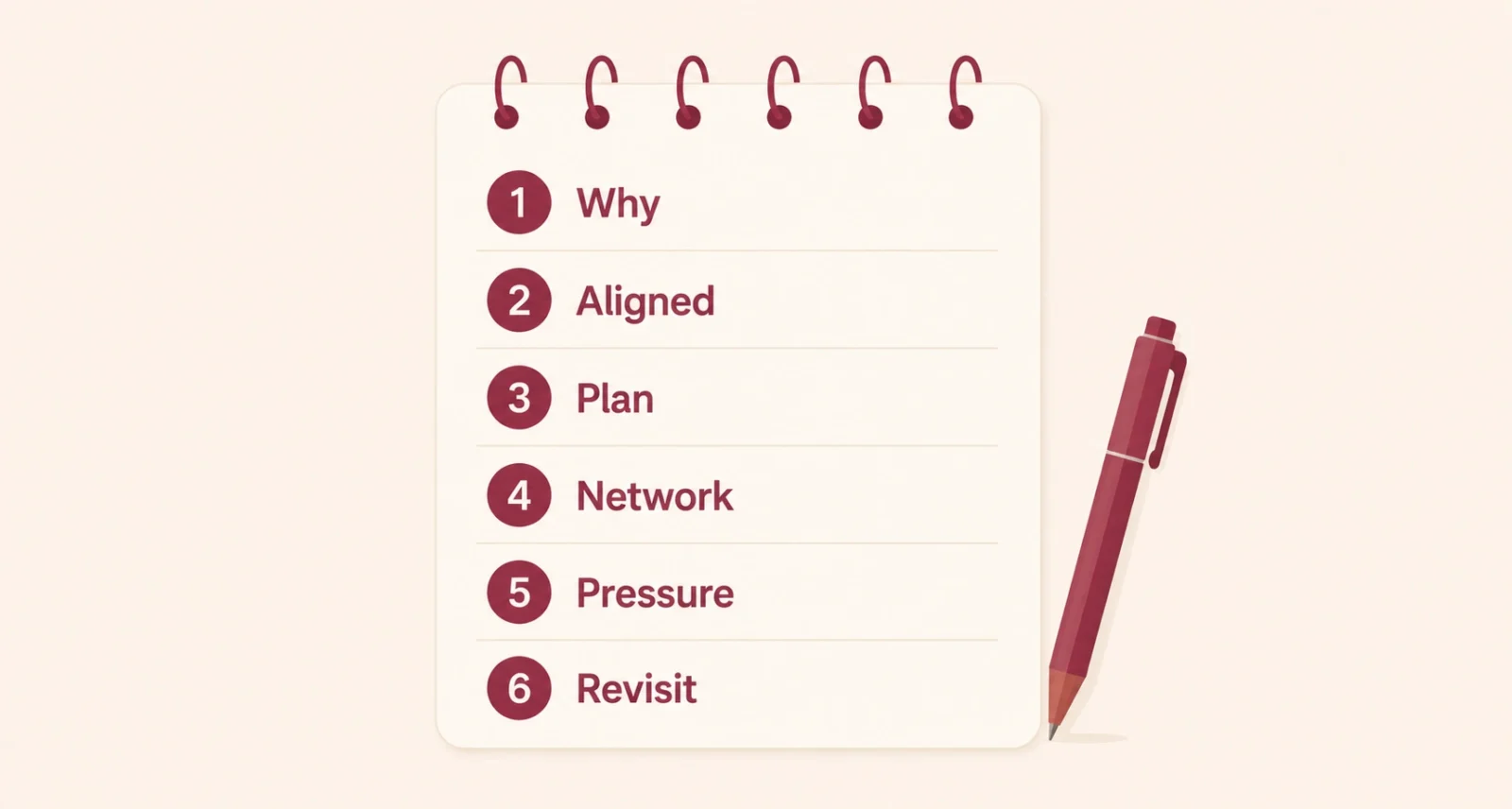
Nobody on the internet can tell you whether being a DINK is right for you, and the strongest version of any answer here is the one you and your partner arrive at honestly. These six questions are designed to help you get there.
Question 1: Why do you actually want this?
Be honest about whether you want a child-free life because of what you would gain (specific freedoms, career goals, travel, relationship focus) or because of what you fear (chaos, expense, responsibility). Both can be legitimate reasons, but they tend to age differently. People who choose DINK because of what they are running toward usually settle into the choice more comfortably than those running away.
Question 2: Are you and your partner genuinely aligned?
The number-one source of long-term DINK regret is not the choice itself; it is the discovery, ten years in, that one partner was quietly hoping the other would change their mind. Have the conversation explicitly. Have it again every few years. Be willing to hear the answer.
Question 3: What is your 30-year financial plan?
If you are going to skip the housing wealth track most parents are quietly riding, what is replacing it? Index funds, real estate investing, a business, a high-savings career path? Vague answers here are a yellow flag. The DINK financial advantage requires intentionality.
Question 4: Who will be in your life at 75?
Not as a guilt trip, just as a planning prompt. Build the friendships, family connections, and community ties now that you would want in your seventies. People with strong networks age well regardless of whether they have children. People who let their networks atrophy struggle, with or without kids.
Question 5: How do you handle social pressure?
If hearing you will change your mind at every family gathering is going to wear you down, you will need a plan for that. Some couples develop a short, kind, non-defensive script with some getting more comfortable with discomfort. Some limit time with persistent pressure sources. There is no one right approach, but having one matters.
Question 6: Are you giving yourself permission to revisit this?
Major life decisions made at 28 often look different at 38. Some DINKs become parents later (DINKY status). Some firmly stay DINKs forever. The key is treating the decision as live and reviewable, not as something you have to defend forever. That mental flexibility is healthier than rigid certainty in either direction.
Frequently Asked Questions
What does DINK stand for?
DINK stands for Dual Income, No Kids. It refers to couples (typically married, though the term is increasingly applied to long-term partners) where both spouses earn income and neither has children. The term was coined in the late 1980s and went viral on social media starting in 2023.
Are DINKs richer than couples with kids?
It depends on what you mean by richer. According to Pew Research’s November 2025 analysis of 2023 Census data, DINKs earn meaningfully more income (median $193,900 vs $151,900 for dual-income parents). But parents have higher total wealth (median $361,500 vs $214,700 for DINKs), mainly because they are more likely to own homes. The gap is income vs wealth, not one being categorically richer than the other.
What is the difference between DINK and DINKWAD?
DINK is Dual Income, No Kids. DINKWAD is Dual Income, No Kids, With A Dog. DINKWAD became the most viral variation on TikTok in 2024 because the dog gives the lifestyle a concrete, relatable focus beyond just the absence of kids.
Is DINK the same as childfree by choice?
Not exactly. Childfree by choice describes a worldview, a deliberate decision not to have children. DINK describes a current family and financial structure. Some DINKs are childfree by choice, some want kids but cannot have them, some are temporarily child-free (DINKY = no kids yet), and some are still deciding. The labels overlap but are not identical.
How much do DINK couples typically save?
Hard to give a single number, but DINKs typically save and invest a higher percentage of their income than parents because they have lower fixed costs. Financial planners often suggest DINKs target 20 to 30 percent of combined take-home pay going into retirement accounts and investments. Actual savings rates depend on income, location, and lifestyle choices.
Are DINKs happier than parents?
The research is mixed and depends on how you measure happiness. Studies generally find that parents report higher meaning and purpose in life, while non-parents report higher day-to-day happiness and lower stress. Neither group is uniformly happier. The bigger predictor of happiness in both groups is whether the choice felt aligned with the person’s actual values.
How common is the DINK lifestyle in the US?
More common than most people realise. According to US Census data, the proportion of US adults living without children has been climbing for decades, with more than 70 percent of US adults living a child-free lifestyle in recent census measurements (this includes singles, empty nesters, and DINKs). The specifically married, dual-income, no-kids segment is smaller, but it is growing visibly.
What are the biggest financial mistakes DINKs make?
Three common ones: (1) not buying a home or otherwise building housing-equivalent wealth, (2) deferring long-term care and estate planning until much later than parents typically do, and (3) lifestyle creep, spending up to income rather than saving aggressively. The DINK income advantage only becomes a wealth advantage with deliberate planning.
If you found this useful, you may also like our guides on Google AI Mode and agentic AI for the tech-side conversations shaping how we work and live in 2026.