Lacing up for the first time can feel intimidating, especially if the most running you have done lately is a dash for the bus. Here is the good news: every runner started exactly where you are now. You do not need to be fit, fast, or athletic to begin. You just need a plan that meets you where you are. This guide covers how to start running for beginners, even if you are completely out of shape, using a gentle run-walk approach that builds your fitness step by step. No pain, no burnout, just steady progress you can actually stick with.
| Quick Start Here is the whole approach in a nutshell. The secret for beginners is the run-walk method: alternate short bursts of running with walking breaks, so you are never gasping for air. Start slow enough to hold a conversation, run just three times a week, and take rest days in between to let your body adapt. Wear a proper pair of running shoes, and focus on consistency rather than speed or distance. Follow a simple week-by-week plan, and in a month or two, you will be running longer than you ever thought possible. |
First, a Quick Pep Talk (and a Safety Check)
Before anything else, let go of the idea that you are too out of shape to run. Running is a skill you build, not a talent you are born with. Plenty of people start in their fifties, sixties, and beyond, so your starting point matters far less than simply beginning. That said, a little caution is wise. If you have a health condition like asthma, heart trouble, or joint problems, or you have been very inactive for a long time, it is smart to check with your doctor before you start. The Mayo Clinic gives the same advice for anyone new to exercise. A quick conversation gives you peace of mind and a safe green light.
What You Need to Get Started
The best part about running is how little it requires. You do not need a gym, fancy gadgets, or expensive kit. Really, there is just one thing worth investing in: a good pair of running shoes that fit well and support your feet. The right shoes help prevent common aches like shin splints and knee pain. Beyond that, wear comfortable, breathable clothes, and grab a watch or phone to time your intervals. That is genuinely all you need to take your first steps.
How to Start Running for Beginners: The Run-Walk Method
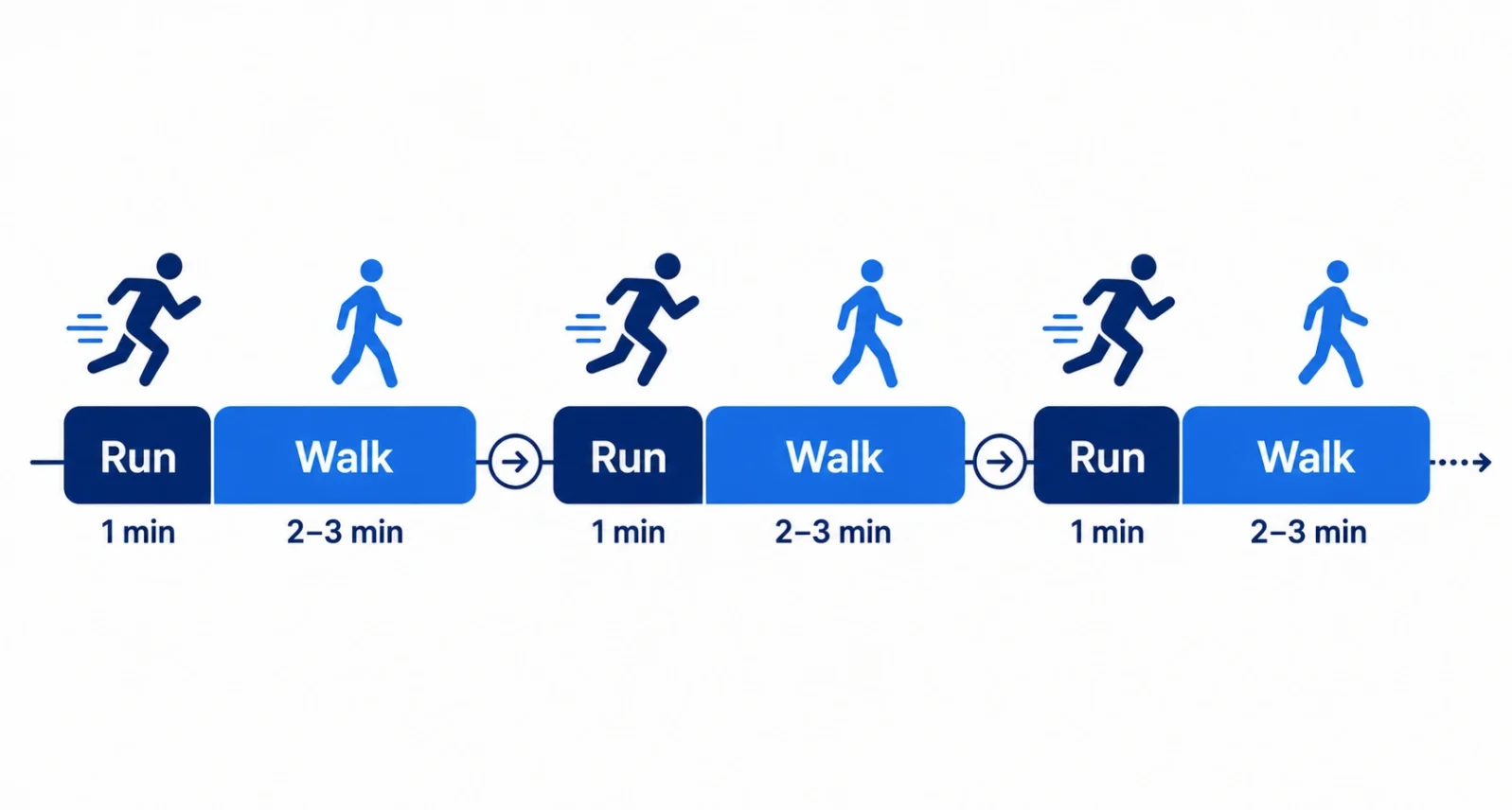
The single most useful trick for new runners is the run-walk method, and it is exactly what it sounds like. Instead of trying to run without stopping, you alternate short periods of running with periods of walking. This lets you build fitness without overwhelming your heart, lungs, or legs. A typical start might be running for one minute, then walking for two, repeated for around 20 minutes. Over the following weeks, you slowly run a little more and walk a little less. One golden rule keeps you on track: run slowly enough to pass the talk test. If you can speak in short sentences, your pace is right, and if you are gasping, ease off. This gentle approach is the backbone of the hugely popular NHS Couch to 5K plan.
A Simple 4-Week Beginner Plan
Ready to put it into action? Here is an easy four-week plan to get you moving, inspired by proven beginner programs like the NHS Couch to 5K schedule. Run three times a week, with a rest day in between each session. Start every workout with a five-minute brisk walk to warm up, and finish with a five-minute walk to cool down.
| Week | Each Session (after your warm-up walk) | Times a Week |
| Week 1 | Run 1 minute, walk 2 minutes, repeat for about 20 minutes | 3 |
| Week 2 | Run 2 minutes, walk 2 minutes, repeat for about 20 minutes | 3 |
| Week 3 | Run 3 minutes, walk 2 minutes, repeat for about 24 minutes | 3 |
| Week 4 | Run 5 minutes, walk 2 minutes, repeat for about 25 minutes | 3 |
If a week feels too hard, there is no shame in repeating it before moving on. Progress is not a straight line, and going at your own pace is the whole point.
8 Tips to Run Smarter and Stay Injury-Free
A few simple habits will keep you comfortable, safe, and coming back for more.
- Warm up first. Begin each session with a five-minute brisk walk and a few gentle leg movements. This wakes up your muscles and lowers your injury risk.
- Cool down after. Finish with a five-minute walk, then some light stretches. It helps your heart rate settle and eases next-day stiffness.
- Keep it slow with the talk test. If you cannot speak in short sentences while running, you are going too fast. Slowing down is a smart move, not a failure.
- Take your rest days. Run three times a week, not every day. Your body gets stronger on the off days, and skipping rest is a top cause of beginner injuries.
- Repeat a week if you need to. There is no rush. If a week feels tough, do it again before moving on, and rebuild from the last workout you finished comfortably.
- Mind your form. Stay relaxed and upright, look ahead rather than down, and land lightly without overstriding. Easy, natural movement beats forcing it.
- Fuel and hydrate. Drink water through the day, and a light carbohydrate snack an hour or two before a run can give you a little extra energy.
- Listen to your body. Mild soreness is normal, but sharp pain means stop. Good sleep helps you recover, as we cover in our guide on the signs you are not getting enough sleep.
How to Stay Motivated
Starting is one thing, but sticking with it is where the magic happens. Set process goals you control, like running three times this week, rather than chasing a finish time. Track your runs so you can see how far you have come, since visible progress is a powerful motivator. Find a friend to join you, or use an app for a little structure and encouragement. Celebrate every small win, and on days you would rather skip, remember why you started. If skipping runs begins to feel like a pattern, our guide on procrastination might help you push through.
When to Slow Down or See a Doctor
A bit of muscle soreness after a run is completely normal, especially early on. But some signs mean you should stop and pay attention. Sharp or sudden pain, chest pain, dizziness, or trouble breathing are all reasons to stop right away and rest. If pain lingers for days, does not improve with rest, or keeps coming back, check in with a doctor rather than running through it. A little caution now keeps you running for years to come.
Learning how to start running for beginners really comes down to one thing: starting small and staying consistent. With the run-walk method, a simple plan, and a little patience, you can go from completely out of shape to a confident runner, no matter your age or fitness level.
Do not worry about speed or distance at first. Just lace up, take that first step, and let the rest follow. Future you will be so glad you started today.
Frequently Asked Questions
How do I start running if I’m completely out of shape?
Start with the run-walk method. Alternate short runs, such as one minute, with two-minute walking breaks, three times a week. Keep the pace easy enough to talk, and slowly increase your running time each week. It is fine to begin with mostly walking.
How long should a beginner run?
At first, aim for total sessions of about 20 to 30 minutes, most of it a mix of running and walking. The actual running might only be a few minutes to start, and that is perfectly fine. Time on your feet matters more than distance early on.
How often should beginners run?
Three times a week is ideal, with a rest day between each run. Running every day too soon is a common cause of injury, since your muscles and joints need time to recover and rebuild between sessions.
Is it okay to walk while running?
Absolutely, and it is encouraged. Walking breaks are the whole idea behind the run-walk method. They let you build endurance safely without burning out, and even experienced runners use them.
How long before running feels easier?
Most people notice it getting easier within a few weeks of consistent training. Everyone is different, so focus on showing up rather than a fixed timeline. Small, steady gains add up faster than you expect.
Do I need special running shoes?
A proper pair of running shoes is the one piece of gear worth buying. They cushion your stride and help prevent aches like shin splints and knee pain. A shoe shop can check your fit, but you do not need the most expensive pair.