
We spend about a third of our lives asleep, and a good chunk of that time lost in dreams. Some are joyful, some are strange, and a few are downright terrifying. But have you ever stopped to ask the bigger question: why do we dream at all? It is one of the oldest puzzles in science. And while researchers still do not have a single, final answer, they have learned a great deal. This guide breaks down what dreams are, the leading scientific theories, and where our understanding stands in 2026, all in plain, easy language.
| The Short Answer Science has not pinned down one single reason why we dream, but the leading theories agree that dreams are useful, not random. The strongest ideas are that dreams help us process emotions, store memories, rehearse threats, and keep our brains flexible and creative. Most researchers now believe dreaming serves more than one purpose at once. In short, dreams are likely your brain’s overnight workshop for sorting out your feelings, your memories, and your day. |
What Are Dreams, Exactly?
Dreams are the images, stories, emotions, and sensations your mind creates while you sleep. They can happen during any sleep stage, but the most vivid ones occur during REM sleep, short for rapid eye movement. During REM, your brain is remarkably busy. The areas that handle emotion, memory, and vision light up, while the region responsible for logic and reasoning quiets down. That combination is exactly why dreams can feel so intense and so bizarre at the same time. Here is a reassuring fact: everyone dreams, even people who swear they never do. We simply forget most dreams within minutes of waking. According to Cleveland Clinic, your brain essentially splices together familiar and strange scenes into the wildest movies you will ever watch.
Why Do We Dream? The Leading Theories
So what is the point of all this nighttime activity? Scientists have proposed several theories, and the exciting part is that they may all be partly true. Here are the main ideas at a glance, followed by a closer look at each.
| Theory | The Core Idea |
| Emotional processing | Dreams help us work through feelings, a bit like overnight therapy |
| Memory consolidation | Dreams help sort and store the day’s memories |
| Threat simulation | Dreams rehearse dangers so we are readier in real life |
| Activation-synthesis | Dreams are the brain making stories from random signals |
| Keeping the brain flexible | Dreams add variety so we do not over-learn our routine |
Dreams Help Us Process Emotions
One of the strongest theories is that dreams help us work through our feelings, a kind of overnight therapy. During REM sleep, the brain revisits emotional experiences in a safe space, which may soften their sting by morning. Research backs this up. In one study, people felt stressed before bed and then dreamed about it. They felt more at peace with the experience the next day. Other work found that people who had more fear-filled dreams showed calmer responses to fear while awake. As reported in the journal Nature, dreaming appears to play an active role in cooling down our emotional reactions.
Dreams Help Us Store Memories
Another leading idea is that dreams help lock in what we learn. While you sleep, your brain sorts through the day’s events, deciding what to keep and what to let go. It then moves the important information into long-term storage. Sleep experts note that the brain activity seen during dreaming looks a lot like the memory processing that happens when we are awake. This suggests dreaming may be part of how the brain files away skills, facts, and experiences. It is one reason a good night’s sleep helps you remember what you studied or practiced the day before.
Dreams May Rehearse Threats
A more evolutionary theory suggests that dreams are a safe training ground for danger. Known as threat simulation, this idea holds that dreaming lets us rehearse scary or risky situations without any real-world consequences. By practicing our responses to threats overnight, our distant ancestors may have been better prepared to face them in waking life. It could help explain why so many dreams involve being chased, falling, or facing some other kind of danger.
Dreams Might Be the Brain Making Sense of Noise
Not every theory sees deep meaning in dreams. One well-known idea, called activation-synthesis, suggests that during REM sleep the brainstem fires off bursts of more or less random signals. The higher brain then tries to weave those signals into a coherent story, doing its best to make sense of the chaos. Under this view, the odd, jumbled quality of many dreams is simply the result of your brain improvising a plot from scattered pieces. The meaning, if there is any, comes from how your mind stitches it all together.
Dreams Could Keep the Brain Flexible
A newer theory offers a clever twist. The overfitted brain hypothesis compares your mind to a computer that learns from data. If a system only ever sees the same routine, it can become too narrowly tuned to it and struggle with anything new. The theory suggests that dreams inject strange, novel scenarios to shake things up. That helps your brain stay adaptable and creative rather than stuck in a rut. As the Sleep Foundation notes, this links dreaming to better performance and creativity. In other words, a weird dream might be your brain’s way of staying sharp. 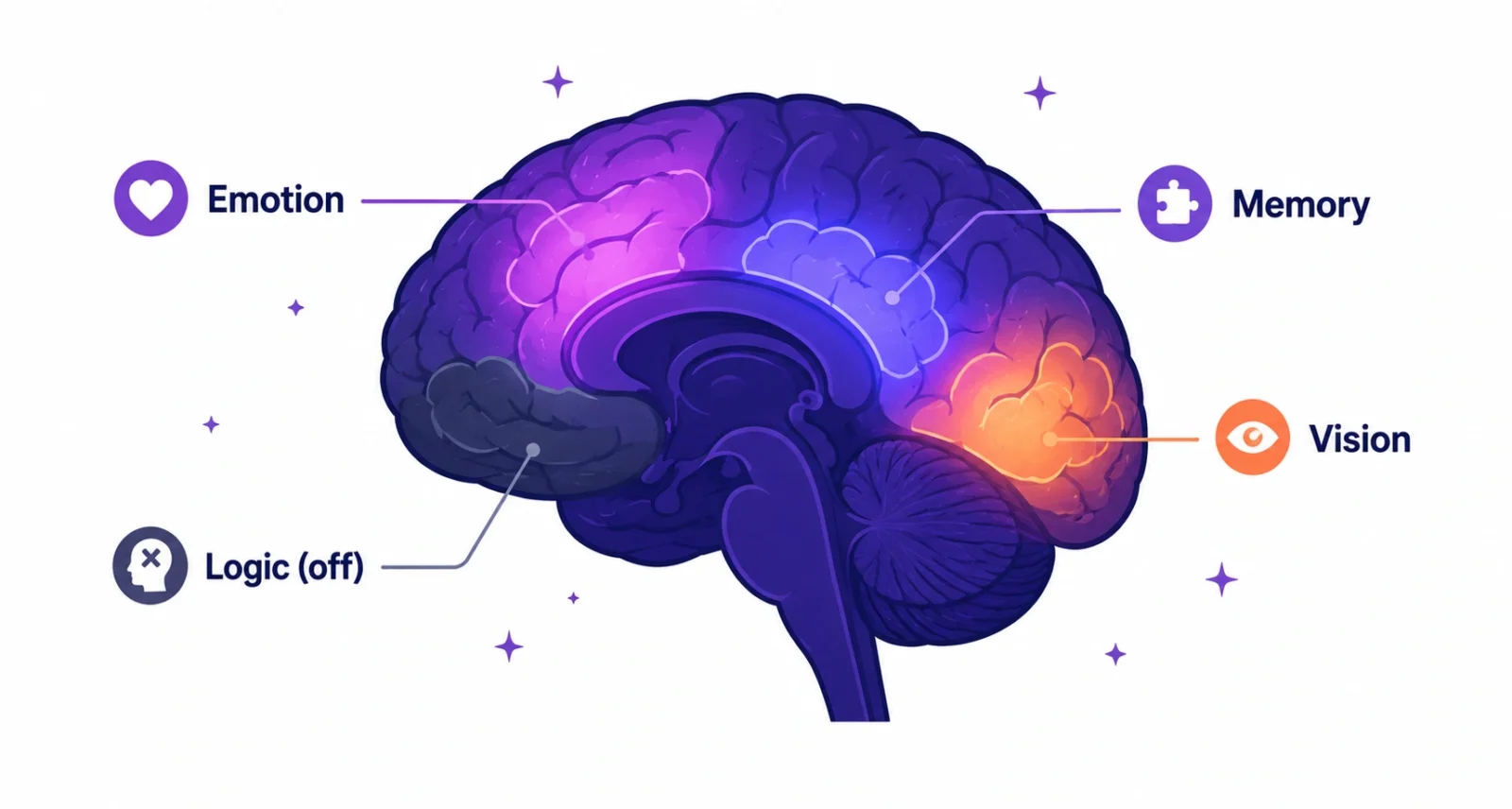
So, Why Do We Dream? The 2026 Verdict
After decades of research, here is where science stands. There is still no single, proven reason why we dream, and that is okay. The most likely answer is that dreams do several jobs at once. They help us manage our emotions, strengthen our memories, prepare us for challenges, and keep our minds flexible. These theories do not really compete, they overlap. What experts do agree on is that dreaming, and the REM sleep it rides on, matters for both emotional balance and mental sharpness. So while the full mystery is not solved, one thing is clear: your dreams are far from meaningless. Good sleep gives you more of them, which is one more reason to watch for the signs you are not getting enough sleep.
5 Fascinating Facts About Dreams
Before you drift off, here are a few things that make dreams even more intriguing.
- Everyone dreams, even people who never remember a single one.
- We forget most dreams within minutes of waking up.
- You spend around two hours dreaming on a typical night.
- Your longest, most vivid dreams tend to come just before you wake up.
- The logical part of your brain switches off during dreams, which is why they feel so strange.
So, why do we dream? The honest answer is that science is still piecing it together, but the picture grows clearer and more fascinating every year. Your dreams likely help you process emotions, store memories, and keep your mind flexible, all while you sleep. Far from being random noise, they seem to be a meaningful part of a healthy brain.
The next time you wake from a vivid dream, you can appreciate it as your mind quietly doing some of its most important work. Dreams remain one of science’s great mysteries, much like the questions we explore about the secrets of the ocean.
Frequently Asked Questions
Why do we dream?
Science has no single confirmed answer. But the leading theories say dreams help us process emotions, store memories, rehearse threats, and keep the brain flexible. Most researchers believe dreaming serves several of these purposes at once, rather than just one.
Do dreams actually mean anything?
Sometimes, but not in the fixed, symbolic way old theories suggested. Modern science sees dreams as reflections of your emotions, memories, and recent experiences. They can reveal what is on your mind, but there is no universal dictionary that decodes every dream.
Why do we forget our dreams?
The brain chemistry that helps store memories is low during REM sleep, when most dreaming happens. That makes dreams slip away fast, often within minutes of waking, unless you write them down or think about them right away.
Does everyone dream?
Yes. Research suggests virtually everyone dreams every night, usually several times. People who say they never dream almost always do, they just do not remember them after waking.
Why do we have nightmares?
Nightmares are often tied to stress, anxiety, trauma, or poor sleep. Under the emotion-processing theory, they may be the brain’s attempt to work through difficult or frightening feelings. Frequent nightmares are worth discussing with a doctor.
What is REM sleep?
REM stands for rapid eye movement, a sleep stage where the brain is highly active and most vivid dreams occur. REM periods get longer toward morning, which is why you often wake up in the middle of a dream.

