
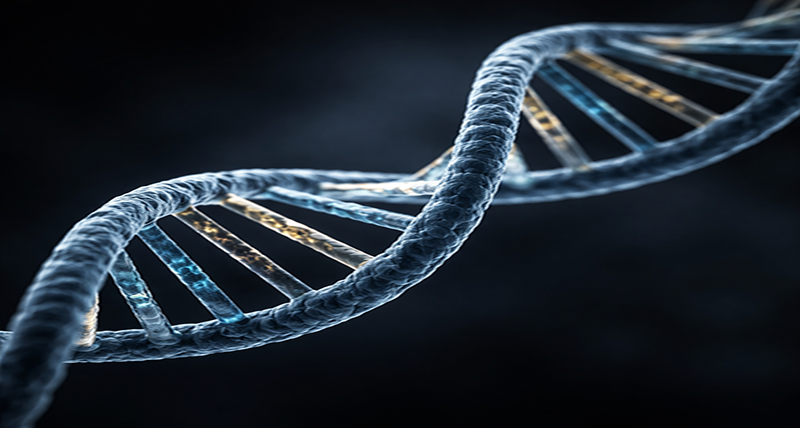
Biology has entered a programmable era. Just as software developers edit code to fix bugs or improve performance, scientists are now editing the code of life itself. At the center of this transformation is CRISPR technology, a breakthrough that has shifted gene editing from a complex laboratory process into a precise, scalable, and increasingly intelligent system powered by artificial intelligence.
CRISPR and gene editing advances are not just scientific milestones. They are redefining medicine, agriculture, biotechnology, and even how we understand disease prevention. As search interest in AI-driven healthcare, genetic engineering, personalized medicine, and biotechnology innovation continues to grow, CRISPR stands at the intersection of biology and machine intelligence.
This article explores how CRISPR works, what the latest advancements mean, how AI is accelerating discovery, and what the future holds for gene editing in 2026 and beyond.
Understanding CRISPR and How It Works
CRISPR stands for Clustered Regularly Interspaced Short Palindromic Repeats. Scientists discovered it within a natural defense system that bacteria use to fight viruses. Scientists adapted this biological mechanism into a powerful gene editing tool known as CRISPR Cas9.
The CRISPR Cas9 system works in three main steps
- A guide RNA identifies the specific DNA sequence scientists want to edit
- The Cas9 enzyme acts like molecular scissors and cuts the DNA at that location
- The cell repairs the cut DNA, allowing scientists to insert, remove, or modify genetic material
Compared to older gene editing technologies, CRISPR is faster, cheaper, and far more precise. That efficiency has accelerated research in genetic disorders, cancer therapies, and regenerative medicine.
Major CRISPR and Gene Editing Advances
Base Editing
Traditional CRISPR cuts DNA. Base editing refines this process by changing a single DNA letter without cutting the entire strand. This reduces unintended mutations and improves safety. Base editing has shown promise in correcting genetic mutations responsible for inherited diseases.
Prime Editing
Experts often describe prime editing as a search-and-replace tool for DNA. It allows scientists to rewrite the genetic code with higher precision and fewer off-target effects. This technology expands the range of treatable genetic conditions.
CRISPR 2.0 and Beyond
Next-generation CRISPR systems are more compact and more accurate. Researchers are developing smaller Cas proteins that enter human cells more efficiently, which makes gene therapy more practical and scalable.
AI and CRISPR Integration
Artificial intelligence is dramatically accelerating CRISPR research. Machine learning models analyze massive genomic datasets to predict optimal editing targets and minimize unintended changes.
Researchers use AI-driven tools to:
Predict off target effects before experiments begin
Design more accurate guide RNAs
Optimize protein structures for improved precision
Analyze gene expression data at scale
By combining AI and CRISPR, researchers reduce trial and error in laboratories. This shortens development timelines for gene therapies and improves safety profiles.
Users increasingly search for terms like AI in gene editing, AI-powered CRISPR tools, machine learning genomics, and predictive gene therapy design as these technologies converge.
CRISPR in Medicine
The most transformative impact of CRISPR is visible in healthcare. Researchers are exploring gene editing for:
Inherited blood disorders
Certain types of cancer
Rare genetic diseases
Neurodegenerative conditions
Immune system modulation
One of the most significant milestones was the development of CRISPR-based therapies for sickle cell disease, marking a turning point in real-world gene editing applications. Clinical trials are expanding rapidly, and regulatory approvals in multiple regions signal growing trust in the technology.
Personalized medicine is another frontier. Doctors customize therapies to match individual genetic profiles by editing patient-specific cells. AI further enhances this personalization by analyzing genomic risk factors at scale.
Agricultural and Environmental Applications
Scientists apply CRISPR beyond human medicine. Agriculture is experiencing a genetic revolution. Scientists are engineering crops that are:
More resistant to drought
Less dependent on chemical pesticides
Higher yielding under climate stress
More nutritious
Gene editing also plays a role in environmental sustainability. Research includes modifying microbes to break down plastic waste and engineering plants that capture carbon more efficiently.
These developments align with global search trends around climate resilience, sustainable farming, food security, and biotech innovation.
Ethical and Regulatory Considerations
With great power comes significant responsibility. Gene editing raises ethical questions, especially around germline editing, because it can pass genetic changes to future generations.
Global regulatory frameworks are evolving. Governments and scientific bodies are balancing innovation with safety and ethical oversight. Transparency, international collaboration, and AI-driven risk assessment tools are becoming central to responsible deployment.
Public interest searches often focus on CRISPR ethics, gene editing risks, the designer babies debate, and genetic privacy concerns. Addressing these concerns is essential for long-term trust and adoption.
The Future of CRISPR and Gene Editing
Researchers are focusing the next phase of CRISPR development on precision, accessibility, and scalability. Scientists are exploring –
- In vivo gene editing, where edits occur directly inside the body
- RNA editing technologies that temporarily modify gene expression
- Automated AI laboratories that design and test gene edits autonomously
- Global genomic databases that accelerate rare disease research
As AI models grow more sophisticated, the synergy between computational biology and gene editing will define the next decade of biotechnology.
CRISPR is moving from experimental research to mainstream therapeutic application. It is no longer just a laboratory tool. It is becoming a foundational technology of modern healthcare and bioengineering.
Conclusion
CRISPR and gene editing advances represent one of the most profound scientific revolutions of the 21st century. By transforming DNA from a fixed blueprint into editable code, humanity has unlocked new possibilities for curing disease, improving food systems, and addressing global challenges.
The integration of artificial intelligence has accelerated discovery, increased precision, and reduced risks. Together, CRISPR and AI are reshaping medicine, biotechnology, and environmental science.
For users searching for CRISPR breakthroughs, AI in genomics, gene editing therapy updates, biotechnology trends 2026, and the future of precision medicine, the conclusion is clear. Gene editing is no longer theoretical. It is real, evolving, and rapidly expanding.
The era of programmable biology has begun, and CRISPR is leading the transformation.

