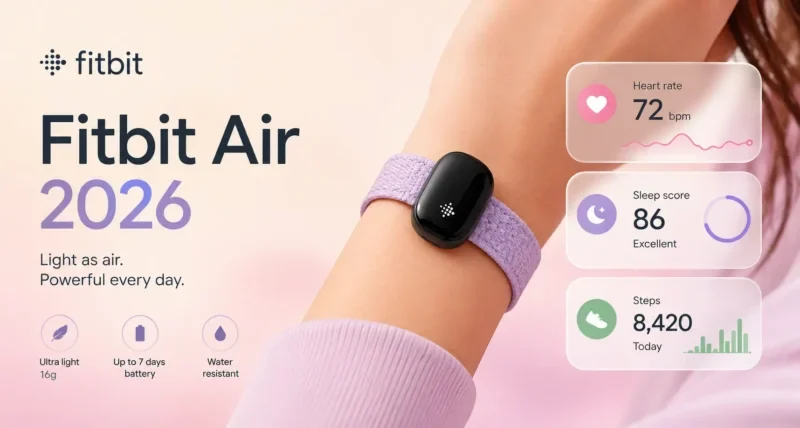
The Fitbit Air is Google’s new screenless fitness tracker, launched May 7, 2026 and shipping May 26, 2026. It costs $99.99, tracks 24/7 heart rate, SpO2, sleep stages, HRV, and Afib rhythm alerts, lasts up to a week on a charge, and works with the new Google Health app on both Android and iOS. It is Google’s direct answer to Whoop and Oura.
Key Takeaways
- Price: Fitbit Air starts at $99.99. The Stephen Curry Special Edition is $129.99.
- Battery: Up to 7 days per charge, plus a 5 minute fast charge that gives a full day of use.
- No screen, no monthly fee: Most core health features work without any subscription.
- App shift: The Fitbit app is being replaced by Google Health, with a 3 month free Premium trial included.
- Compatibility: Works with Android 11+ and iOS 16.4+, so iPhone users are fully supported
What Is the Fitbit Air?
The Fitbit Air is Google’s smallest and most affordable wearable yet, designed as a screenless pebble that clips into a soft fabric or silicone loop band. It tracks your health 24/7 without a display getting in the way. You see your data through the Google Health app on your phone, not on your wrist.
Google announced the Fitbit Air on May 7, 2026 and opened pre-orders the same day. The device ships in the United States on May 26, 2026 at $99.99, with a special edition co-designed with NBA star Stephen Curry available for $129.99.
This launch matters because it puts a mainstream brand into the fast growing screenless fitness tracker category, where Whoop and Oura have been dominant. Sales for screenless wearables surged 88% between 2024 and 2025, according to industry reporting from Entrepreneur magazine.
Fitbit Air Specs at a Glance
| Feature | Fitbit Air (2026) |
| Launch Price | $99.99 (Special Edition $129.99) |
| Release Date | May 26, 2026 (pre-orders open now) |
| Display | None (screenless) |
| Battery Life | Up to 7 days |
| Fast Charge | 5 minutes = 1 day of use |
| Heart Rate | 24/7 continuous |
| Afib Alerts | Yes (irregular rhythm) |
| SpO2 | Yes |
| HRV | Yes |
| Sleep Tracking | Stages, duration, smart wake |
| Auto Workout Detect | Yes (improves over time) |
| Compatibility | Android 11+, iOS 16.4+ |
| App | Google Health (replaces Fitbit app) |
| Bands | Performance Loop, Active, Elevated Modern |
| Subscription | 3 months Google Health Premium free, then optional $9.99/mo |
Quick Tip: Pre-orders include a free 3 month Google Health Premium trial. After that it auto renews at $9.99 per month unless you cancel.
Why Did Google Make a Screenless Fitbit?
Because the market is loudly telling them to. Screenless fitness trackers grew 88% in sales between 2024 and 2025, while smartwatch fatigue has crept into mainstream conversation. Whoop’s CEO Will Ahmed put it bluntly: “If it has a screen, then it’s a watch.” Google is positioning the Fitbit Air for users who want health data without notifications buzzing on their wrist all day.

Design: A Pebble That Disappears on Your Wrist
The Fitbit Air uses a tiny sensor pebble that pops in and out of three swappable band styles. The whole point is comfort. Many users report that screenless trackers feel almost invisible compared to a smartwatch, which is why people wear them to bed without thinking about it.
The three band families launching at release are:
- Performance Loop Band: The default. Made from at least 35% recycled materials, micro adjustable, breathable. Comes in Fog, Obsidian, Lavender, and Berry.
- Active Band: Sweatproof and wetproof silicone for tough workouts. Ribbed design, sporty colors.
- Elevated Modern Band: A dressier metal mesh style band that turns the tracker into a bracelet.
The Stephen Curry Special Edition ships in a rye brown and game day orange colorway, with a raised interior print inspired by athletic racing stripes for better airflow during intense workouts.
You can pop the pebble out in seconds and swap bands for the gym, the office, or a night out. Accessory bands start at $34.99.0
Health and Fitness Tracking Features
Despite the small size, Fitbit Air packs a long sensor list. Many of these features were previously locked behind Fitbit Premium on older devices, and now most of them are free with the hardware purchase.
The Fitbit Air tracks:
- 24/7 continuous heart rate
- Heart rhythm with Afib alerts (not for users under 22 with known arrhythmias)
- Blood oxygen saturation (SpO2)
- Resting heart rate
- Heart rate variability (HRV)
- Sleep stages and total duration
- Auto workout detection that gets smarter over time
- Manual workout logging
- Cardio Load and Daily Readiness scores
- Smart wake alarms
- Women’s health tracking
You can even snap a photo of a piece of cardio equipment or a whiteboard workout, and the Google Health Coach will log it as a workout. That feature requires a Premium subscription.
Important: The Fitbit Air is not a medical device. Heart rate, sleep, and rhythm features are intended for general wellness, not diagnosis. Studies suggest wrist based heart rhythm sensors are useful for awareness but should not replace clinical testing. Always confirm health concerns with your doctor.
Battery Life: Why a Week Matters
Fitbit Air offers up to 7 days of battery per full charge, with a fast charge that delivers a full day of use in 5 minutes. By comparison, the Apple Watch Series typically lasts under 2 days, and the Pixel Watch 3 usually needs a daily top up.
Why does this matter? Because daily charging is the number one reason people stop wearing their smartwatch at night, which is when sleep tracking actually happens. A week long battery removes that friction completely.
You can also pair Fitbit Air with a Pixel Watch: wear the watch during the day, switch to the Air for sleep, and your health data syncs to one Google Health timeline. That is a smart use case Google is actively promoting.

The Bigger Story: Fitbit App Is Becoming Google Health
Alongside the Fitbit Air, Google announced that the Fitbit app is being replaced by Google Health. According to reporting from 9to5Google, the new Google Health app rolls in features from Google Fit (which is being shut down) and on iOS will pull in Apple Health data so iPhone users keep one health hub.
Key changes for existing Fitbit users:
- The new app uses Google’s redesigned interface with four tabs: Today, Fitness, Sleep, Health.
- An AI powered Coach is now available to all Premium users, suggesting workouts based on weather, recovery, and goals.
- Some legacy Fitbit features are being retired, including badges and sleep animals.
- Older Fitbit hardware like Versa 4 and Sense 2 will continue to be sold and supported.
- Google Health is opening APIs for third party devices including Garmin, Whoop, and Oura (rolling out through 2026).
The app shift is genuinely the bigger headline. Even if you do not buy the Air, your existing Fitbit account will move to Google Health.
Fitbit Air vs Whoop vs Oura: How It Stacks Up
Here is the head to head most readers actually want. The Fitbit Air is the first $99 entry into a category dominated by subscriptions.
| Feature | Fitbit Air | Whoop 5.0 | Oura Ring 4 | Apple Watch Series 10 |
| Device Cost | $99.99 | $0 (sub only) | $349 to $499 | $399+ |
| Subscription | Optional ($9.99/mo) | Required ($199 to $359/yr) | Required ($5.99/mo) | None |
| 5 Year Cost (estimate) | ~$99 free tier, ~$500 with Premium | ~$995 to $1,795 | ~$649 to $799 | ~$399 to $499 |
| Battery | 7 days | 14 days | 7 days | ~36 hours |
| Form Factor | Wrist pebble | Wrist strap | Finger ring | Smartwatch |
| Screen | None | None | None | Yes |
| Water Resistance | 50m | 10m | 100m | 50m |
| AI Coach | Yes (Premium) | Yes | Yes | Limited |
| Best For | Casual to mid level wellness | Athletes and recovery | Discreet sleep tracking | All round smartwatch users |
Insight Box: A new analysis by the5krunner finds that compared with Whoop Peak (the most popular Whoop tier), buying a Fitbit Air with Premium saves roughly $626 over 5 years. Against Whoop Life with MG hardware, the saving stretches to about $1,226. Cost is now the Air’s biggest weapon.
Who Should Buy the Fitbit Air?
The Fitbit Air is a strong pick if you are:
- A first time tracker buyer who does not want a smartwatch
- An Apple Watch or Pixel Watch owner who wants a comfortable sleep tracker for nights
- A Fitbit fan looking for the cheapest way into the Google Health Coach ecosystem
- A budget conscious shopper who is tired of mandatory subscriptions
Skip it if you:
- Already wear a Whoop and need bicep band or clothing integration
- Want screen based notifications and contactless payments
- Need elite training analytics like Whoop’s Strain or Recovery scores
Myths vs Facts About the Fitbit Air
| Myth | Fact |
| You need a Google Health Premium subscription to use it. | No. Most core features including HRV, SpO2, sleep stages, and Afib alerts work without a subscription. |
| It only works with Android phones. | It works on iOS 16.4 or higher too. |
| It can replace a smartwatch. | Not really. It has no screen, no notifications, and no contactless pay. |
| It diagnoses heart conditions. | No. Afib alerts are wellness signals, not medical diagnoses. Always see a doctor for any cardiac concerns. |
Final Thoughts: Is the Fitbit Air a Smart Buy in 2026?
The Fitbit Air is the first time a mainstream tech brand has matched Whoop’s screenless form factor at a price most people can actually afford. It is not the most advanced tracker on the market. Whoop still wins on battery and athlete grade analytics. Oura wins on long term sleep trends in a discreet ring. But at $99.99 with no required subscription, the Fitbit Air is the lowest friction way to start tracking your health in 2026. US buyers can also use pre-tax funds, since the Fitbit Air is now HSA and FSA eligible.
If you have been curious about screenless wearables and never wanted to commit to a recurring monthly fee, this is your green light.
Frequently Asked Questions
When does the Fitbit Air ship?
The Fitbit Air ships in the U.S. on May 26, 2026, with pre-orders open since May 7.
Is the Fitbit Air waterproof?
Yes, it resists water up to 50 meters, so swimming and showers are fine.
Does the Fitbit Air work with iPhone?
Yes, it works with iOS 16.4 or higher through the Google Health app.
Do I have to pay a subscription for the Fitbit Air?
No, you get most features for free, plus a 3 month Google Health Premium trial.
How is the Fitbit Air different from the Pixel Watch 3?
The Fitbit Air has no screen and lasts a week per charge, while the Pixel Watch 3 is a full smartwatch.
Can the Fitbit Air detect Afib?
Yes, it sends Afib alerts through its heart rate sensor, but it does not replace a doctor.
What happens to the old Fitbit app?
Google is replacing the Fitbit app with the new Google Health app, and your data will migrate automatically.