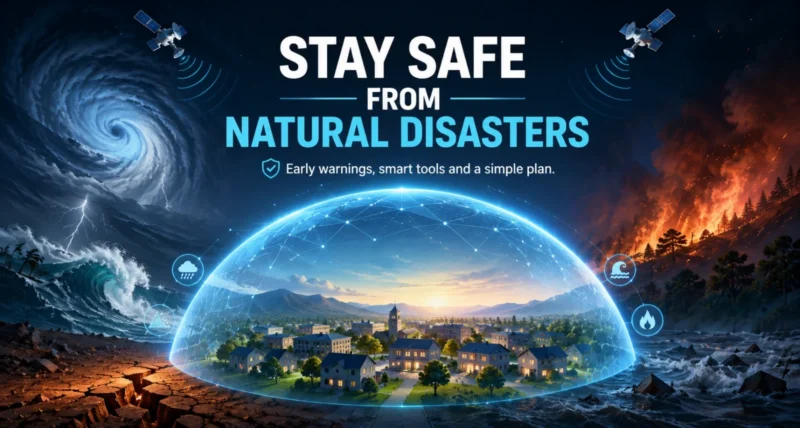
Imagine getting a warning on your phone hours before a flood reaches your street. Or seconds before the ground starts to shake. That used to be science fiction. Today, it is real, and it is free. As Google shared at a recent event, a decade of AI research now powers early warnings that reach billions of people. This guide tells that story. It also shows you exactly how to use these tools, plus a simple plan, to protect yourself and your family from natural disasters.
| The Short Version Extreme weather and natural disasters are on the rise, but early warning has never been better. Google now uses AI to forecast floods up to 7 days ahead for 2 billion people, predict hurricanes days in advance, track wildfires by satellite, and alert Android phones before an earthquake’s shaking arrives. The goal is simple: no one should be surprised by a natural disaster. This guide shows you the free tools to turn on, plus a basic emergency plan that could save your life. |
Why Disaster Preparedness Matters More Than Ever
There is no easy way to say it. The world is seeing a sharp rise in extreme weather events and natural disasters, from devastating floods and wildfires to stronger hurricanes and dangerous heatwaves. Communities everywhere are feeling the impact.
Here is the hopeful part. While we cannot stop these events, we are getting far better at seeing them coming. Over the past decade, researchers have used artificial intelligence to change the game. They have moved from simply sharing information after a crisis to actually forecasting and detecting disasters before they strike. That shift, from reacting to preparing, matters enormously. It is the single biggest reason more people can now get out of harm’s way in time.
| Why It Matters A warning is only useful if it arrives early enough to act on. The whole goal of modern disaster technology is to buy you time: minutes to find cover, hours to move valuables, or days to evacuate safely. Time is the one thing that saves lives in a disaster, and that is exactly what early warning gives you. |
The Free Tools That Warn You Before Disaster Strikes
Let us start with the most useful part. These are the tools you can use right now, most already built into your phone through Google Search, Maps, and Android. Here is what is available for each type of disaster, and what it does for you.
| Disaster | How You Get Warned | Warning Time |
| Floods | Flood Hub forecasts and alerts, covering 2 billion people in 150-plus countries | Up to 7 days (rivers), 24 hours (urban flash floods) |
| Hurricanes and storms | AI weather forecasts and Public Alerts from official agencies | Several days in advance |
| Earthquakes | Android Earthquake Alerts, sent before the shaking reaches you | Seconds, enough to take cover |
| Wildfires | Satellite fire boundary tracking in Search and Maps, in 34 countries | Live tracking of fire spread |
| Extreme heat | Extreme heat alerts on Search with health and safety tips | Ahead of dangerous heatwaves |
| Air quality | Live air quality data in Google Maps, in 30-plus countries | Real-time, daily |
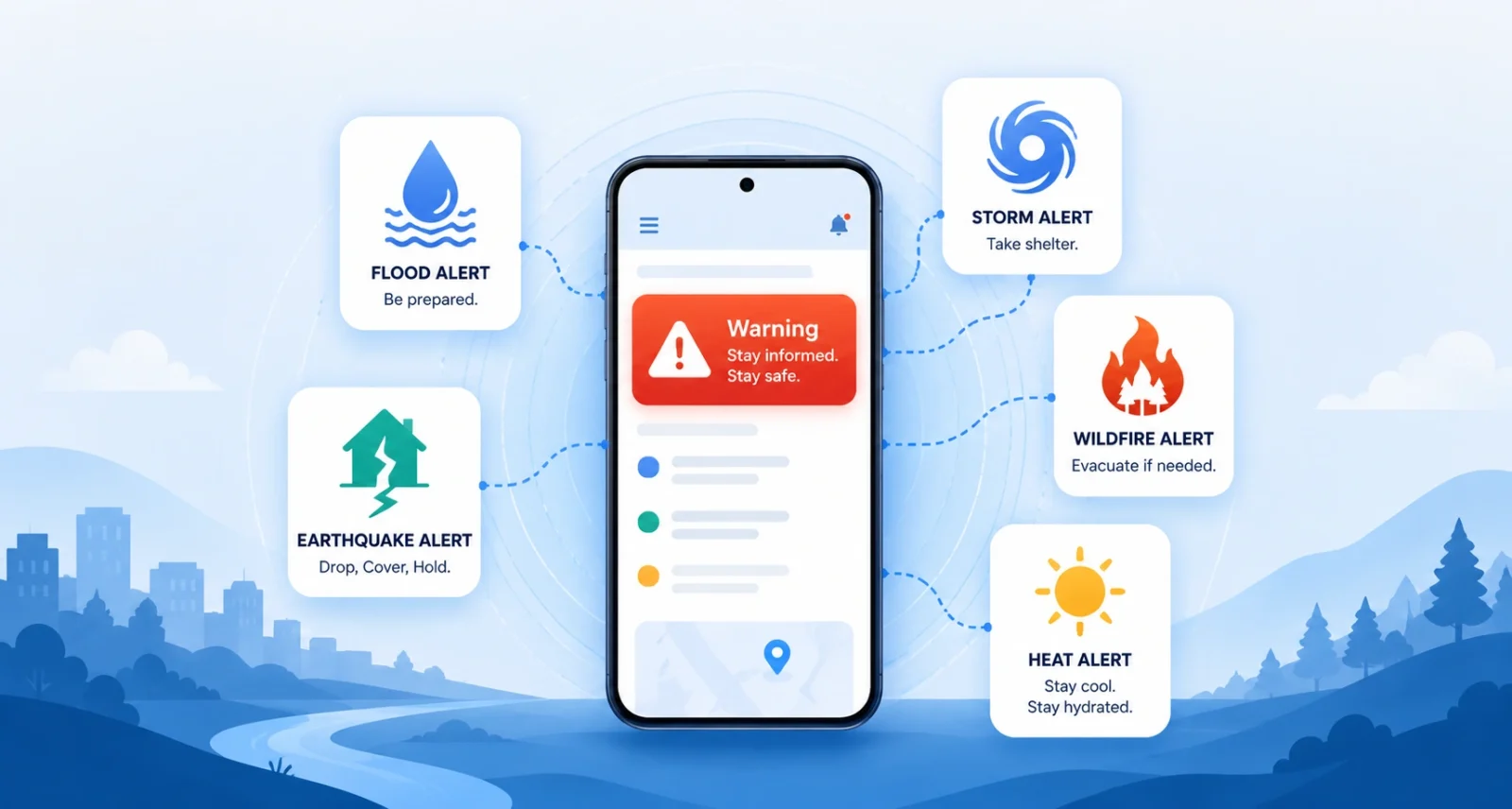
| Quick Tip Most of these alerts work automatically, but it is worth checking. On an Android phone, open Settings and search for Earthquake alerts and Safety and emergency to confirm they are switched on. In Google Maps, look for the air quality and wildfire layers. A two-minute check today could give you a life-saving heads-up later. |
The Story Behind the Technology: How AI Sees Disasters Coming
So how is any of this possible? The answer is a decade-long research journey, and it makes for a remarkable story. The mission driving it all is a simple but powerful idea: no one should be surprised by a natural disaster.
Predicting Floods, Years Ahead of Schedule
A decade ago, experts thought reliable flood prediction at a large scale was nearly impossible. The journey began with a single pilot project in Patna, India, in 2018, testing whether AI could predict floods. It worked. Today, that research has grown into Flood Hub, which provides forecasts for 2 billion people across more than 150 countries. It gives up to seven days of warning for river floods, and up to 24 hours for sudden urban flash floods.
Forecasting Hurricanes With New Accuracy
For powerful storms, an AI weather model called WeatherNext 2 now delivers Google’s most accurate predictions yet. It can generate detailed forecasts for the entire globe in minutes, predicting a storm’s path and strength. During the 2025 hurricane season, it forecast the track and intensity of cyclones with high confidence, days before they arrived.
Spotting Wildfires From Space
To fight wildfires, Google uses satellite imagery to track fire boundaries live in Search and Maps, now across 34 countries. It is also helping build FireSat, a planned constellation of more than 50 satellites. Once complete, it could detect a fire as small as 5 by 5 meters almost anywhere on Earth. It would refresh that view every 20 minutes.
| The Cool Part A full FireSat satellite network could spot a wildfire the size of a small classroom from space, and refresh that view every 20 minutes. Catching fires that early, when they are still tiny, is one of the best ways to stop them before they become deadly. |
Proof It Works: Real Lives, Real Warnings
This is not just impressive technology in a lab. It is already protecting real people and changing how communities respond to danger.
In Nigeria and Bangladesh, aid organizations have used these AI flood forecasts to act before the water rises, sending emergency cash to families so they can evacuate and protect their belongings ahead of time. This approach, called anticipatory action, flips the old model of waiting for disaster on its head.
During Hurricane Melissa, forecasters used Google’s AI weather model to predict the storm’s landfall in Jamaica a full five days ahead. That early warning gave the national weather service crucial time to notify the public and prepare. These are the moments where a few extra days, or even seconds, save lives.
| 10 million+ | times per day, on average, Google connected people with crisis information last year |
Your Personal Disaster Plan: 5 Steps to Stay Safe
Technology gives you the warning, but you still need a plan. Pairing these tools with a few simple preparations is the smartest way to protect yourself from any natural disaster. Here are five essential steps.
| # | Step | What to Do |
| 1 | Turn on alerts | Enable emergency and earthquake alerts on your phone, and allow notifications from weather and maps apps so warnings reach you instantly |
| 2 | Make a plan | Agree on an evacuation route and a meeting point with your family, and learn the risks specific to your area, such as floods or wildfires |
| 3 | Pack a kit | Prepare a go-bag with water, non-perishable food, medicines, a flashlight, a power bank, copies of documents, and some cash |
| 4 | Stay informed | Follow official local authorities and trusted media, and never ignore an official warning or evacuation order |
| 5 | Act early | When a warning comes, act right away. Leaving early and calmly is far safer than waiting until the danger is at your door |
| Heads Up The most common and dangerous mistake is waiting too long, hoping a storm or flood will pass. If officials issue a warning or evacuation order, treat it as real and act immediately. It is always better to be safe and inconvenienced than to be trapped. |
Natural disasters may be rising, but so is our power to see them coming and stay safe. A decade of AI research now changes what is possible. Floods, storms, fires, and earthquakes can be forecast or detected earlier than ever, with free warnings reaching billions of phones. The technology has done its part by buying you precious time. Your job is to turn on those alerts, make a simple plan, and act the moment a warning arrives. Do that, and you give yourself the best possible chance to protect what matters most. Check our coverage of the latest Google and AI updates.
Frequently Asked Questions
How Can I Get Early Warnings for Natural Disasters?
Many early warnings are free and built into your phone. On Android, the Earthquake Alerts System and emergency alerts warn you of quakes and other dangers. Google Search and Maps also show SOS alerts, flood forecasts, wildfire tracking, extreme heat warnings, and air quality data. Check your phone settings to make sure alerts are enabled, and follow your local authorities.
How Does AI Predict Floods and Hurricanes?
AI studies vast amounts of data, such as weather patterns, river levels, and decades of past events. From all that, it spots the early signs of a coming disaster. Google’s Flood Hub forecasts floods up to seven days ahead for 2 billion people. Its WeatherNext model predicts hurricane paths and intensity days in advance, often more accurately than older methods.
What Should Be in a Natural Disaster Emergency Kit?
A basic emergency kit, or go-bag, should cover the essentials. Pack drinking water, non-perishable food, any essential medicines, a flashlight, a battery power bank, a first-aid kit, copies of important documents, and some cash. Keep it somewhere easy to grab so you can leave quickly if you need to evacuate.
What Is the Most Important Thing to Do in a Disaster?
Act early and follow official warnings. The biggest risk is waiting too long. So when an alert or evacuation order is issued, take it seriously and move right away. Having alerts enabled on your phone and a simple family plan ready means you can respond in seconds instead of panicking.
Does Google Warn You About Earthquakes?
Yes. The Android Earthquake Alerts System can detect earthquakes and send a warning to Android phones before the shaking reaches you. Even a few seconds of notice gives you time to drop, cover, and hold on, or to move away from danger. It works automatically on most Android phones where the feature is available.
How Far in Advance Can Floods Be Predicted?
With AI, river floods can now be forecast up to seven days in advance. Fast-moving urban flash floods can be predicted up to 24 hours ahead. These forecasts, available through Google’s Flood Hub, cover areas at risk for 2 billion people in more than 150 countries. That gives families time to prepare or evacuate.