
Apple had one last card to play, and it just lost it. The iPhone 18 Pro price was already expected to climb because of a global memory shortage, but the company had a plan to soften the blow. That plan has now quietly collapsed, for a reason almost nobody saw coming: the way the new chip is packaged. Here is a clear, no-hype breakdown of why the next iPhone will cost more, how much more, and whether you should wait.
| The Short Answer Apple has not announced pricing yet, but a hike is close to certain. Outgoing CEO Tim Cook has said price increases are unavoidable, because an AI-driven memory shortage has sent chip costs soaring. Apple hoped to use a cheaper Chinese memory supplier to hold the line, but the iPhone 18 Pro’s new chip packaging rules that out in time for launch. Analyst estimates now point to a starting price between roughly $1,220 and $1,399, up from $1,099. Expect the phones in early September. |
Why the iPhone 18 Pro Price Is Going Up
The root cause has nothing to do with Apple. It is artificial intelligence. The AI data centre boom has created enormous demand for memory chips. Manufacturers like Samsung, SK Hynix, and Micron have shifted their production lines toward high-bandwidth memory for servers. That leaves less capacity for phones and laptops, and prices have rocketed. Reports suggest data centres could absorb 15 to 20 percent of the memory capacity earmarked for consumer electronics in 2027. The same AI wave driving tools like Microsoft’s Copilot is quietly making your next phone more expensive.
Apple has already passed those costs on elsewhere. Prices went up on MacBooks, the iPad Pro, and Vision Pro this year, with some products rising by a quarter or more. Tim Cook told The Wall Street Journal the company had tried to shield customers. But, he added, “the situation has become unsustainable.” In other words, the question stopped being whether the iPhone would get more expensive. It became by how much.
Apple’s Escape Plan, and Why It Just Collapsed
Here is the part that makes this week’s news genuinely interesting. Apple currently buys memory from Samsung, SK Hynix, and Micron. To secure supply and ease costs, it has reportedly courted two Chinese suppliers, CXMT and YMTC. Cheaper memory from CXMT was the one realistic path to holding the iPhone 18 Pro price steady.
That path is now blocked, and the reason is oddly technical. As PhoneArena reports, the new A20 Pro chip moves to a packaging design called WMCM, short for Wafer-Level Multi-Chip Module. Instead of stacking the memory on top of the processor, it places the memory beside it. It is the first time Apple has made this change. And it demands months of tight coordination between the memory supplier and Apple’s chip team.
Samsung and SK Hynix have had years of that coordination. CXMT has not. With the iPhone 18 Pro shipping in September, there is simply not enough runway to certify its chips. The Pro line is locked into its existing, pricier suppliers, and the cheap-memory escape hatch has closed.
How Much Will the iPhone 18 Pro Cost?
Nobody knows for sure, and Apple will not confirm anything until launch day. But the estimates now clustering around the phone tell a consistent story. For reference, the iPhone 17 Pro starts at $1,099 with 256GB of storage and 12GB of RAM.
| Source | Estimated iPhone 18 Pro Starting Price |
| iPhone 17 Pro (today) | $1,099 |
| Digital Chat Station (leaker) | Around $1,220, roughly 11% more |
| Widely reported analyst range | $1,299 to $1,399 |
| TechInsights | A $270 rise is needed to hold margins |
| The Wall Street Journal | As high as $1,399, about 27% more |
Why such a jump for a phone that looks similar? Look at the components. The parts inside have exploded in cost, which is the clearest way to understand the whole story.
| Component | iPhone 17 Pro | iPhone 18 Pro (estimated) |
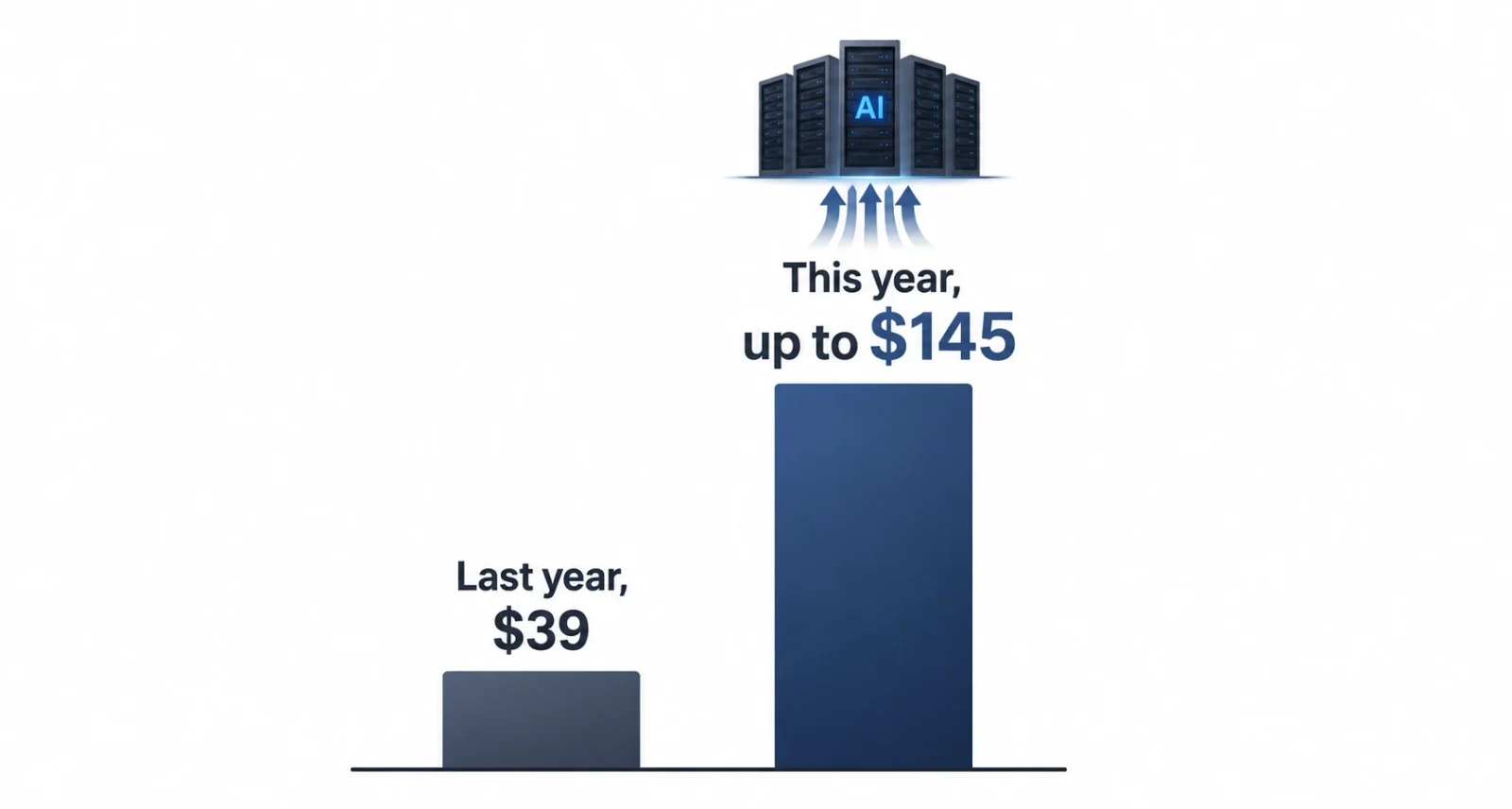
| 12GB of RAM | About $39 | Up to $145 |
| Base storage | About $13 | About $51 |
The Clever Part: Apple Is Launching Last on Purpose
Now for the strategy, and it is smarter than it looks. Samsung and Google are launching their flagships in late July and early August. Apple waits until September. Writing for Forbes, Ewan Spence argues that going last hands Apple a real advantage.
By the time the iPhone 18 Pro arrives, Samsung’s Galaxy Z Fold 8 and Google’s Pixel 11 will already have raised their own prices. The memory crunch hits them too. Those rivals absorb the shock and set a new, higher normal for what a flagship costs. Apple then steps into a market that has already accepted higher prices, so a $200 rise reads as an industry-wide trend rather than Apple being greedy. Samsung gets roughly six weeks at full price before the iPhone lands, and Google gets about four. You can read more about Samsung’s launch in our guide to Galaxy Unpacked.
Going last has another benefit: intelligence. Apple gets to watch how buyers react to its rivals, then tune its own marketing accordingly. It is a quietly ruthless bit of timing.
What Else We Know About the iPhone 18 Pro
So what does the extra money actually buy? Current reports point to the A20 Pro chip on a 2nm process, an upgraded camera system, a smaller Dynamic Island, and 12GB of RAM. That RAM matters more than it sounds. Apple’s advanced Siri and Apple Intelligence features require 12GB, which rules out most older iPhones.
It ships alongside iOS 27, whose public beta is arriving now, as noted by MacRumors. Bloomberg’s Mark Gurman describes the new software as “Snow Leopard-like.” It focuses on making things run smoothly rather than piling on features, with the AI upgrades as the headline act.
Should You Wait for the Standard iPhone 18?
Here is the practical takeaway, and it is a genuinely useful one. The standard iPhone 18 is not expected until spring 2027, which gives CXMT roughly another year to get its cheaper memory approved. The base models should also stick with the older packaging that the Pro line is leaving behind. That is exactly what makes the Chinese memory possible.
Put simply, want a cheaper iPhone? Waiting for the standard model in spring 2027 beats hoping the Pro gets a reprieve. And if you are eyeing an Android flagship instead, do not assume you are dodging the problem. Samsung has already raised its own higher storage tiers for the very same reason. And as Reuters has reported, memory costs are squeezing discounts across the whole industry.
The iPhone 18 Pro price is going up, and the last plausible escape route just closed. A packaging change most buyers will never notice has locked Apple into its expensive memory suppliers, exactly when memory has never been pricier.
The smart move, if you want value, is to wait for the standard iPhone 18 next spring. If you want the Pro, budget for a bigger number and take some comfort in this: nobody in the industry is escaping it either.
Frequently Asked Questions
How much will the iPhone 18 Pro cost?
Apple has not confirmed a price. Analyst estimates range from about $1,220 to $1,399, up from the iPhone 17 Pro’s $1,099 starting price. Most reports point to a rise of roughly $200 to $300.
Why is the iPhone 18 Pro price going up?
Memory and storage chips have become far more expensive, because the AI data centre boom is consuming the supply. Apple’s estimated cost for 12GB of RAM alone may jump from around $39 to as much as $145 per phone.
What is WMCM packaging?
WMCM stands for Wafer-Level Multi-Chip Module. It places the memory beside the processor rather than stacking it on top. It is new for Apple, and it needs deep coordination with the memory supplier, which is why a cheaper new supplier could not be added in time.
When does the iPhone 18 Pro launch?
Apple is expected to hold its usual event in early September 2026, with the iPhone 18 Pro, iPhone 18 Pro Max, and a new iPhone Ultra. The standard iPhone 18 is not expected until spring 2027.
Will the standard iPhone 18 be cheaper?
Possibly. It arrives in spring 2027, giving Apple time to qualify cheaper memory from CXMT. It should also use the older chip packaging that makes those chips viable. That makes it the better bet for value.
Are Android phones getting more expensive too?
Yes. The memory shortage affects everyone. Samsung has already raised prices on higher storage tiers. Both the Galaxy Z Fold 8 and Pixel 11 should cost more year on year for the same reason.

